

A student room is the only home most people ever move into where they are told, in writing, what they are not allowed to buy. No candles. No space heaters. No extra fridge. Nothing screwed, nailed or glued to a wall. On top of that you do not control the heating, you do not control the fridge, and you share a kitchen with between four and twelve people whose washing-up standards you will discover the hard way. Every packing list on the internet ignores this and tells you to buy fairy lights and a mattress topper. A list of student room essentials that ignores the rules you have already agreed to is just a shopping list.
This guide takes the opposite approach. The seven student room essentials below were chosen because each one solves a problem created by that lack of control — and because none of them modifies the room, overloads a socket or assumes anything about your flatmates. There is a wearable blanket instead of a heater, a sealed box instead of a fridge shelf you cannot defend, a label maker because ownership is the real shared-kitchen problem, an e-reader because there is no bookshelf, and a wallet built to be found again. Deliberately absent: bedding, decor, a mini fridge and a printer.
Every one of these student room essentials has been reviewed individually on SoftPickr, and each entry links to that full review. We judged them on four things: whether the item works without permanent fixings, whether it runs without a permanent mains draw, whether it survives being shared, and whether it still earns its footprint in a room of roughly 10 to 13 square metres.
Prices and links go to Amazon.com; UK readers moving into halls can search the same models on Amazon.co.uk, where most of them are stocked under identical names. Because the two markets differ in more than currency, there is a full US-versus-UK section further down covering voltage, fridge law, council tax, the TV Licence and the paperwork nobody reads.
Student Room Essentials — Quick Comparison
Seven roles, seven products. The table below is every one of our student room essentials in a single screen; the detailed entries follow underneath.
| # | Product | Role | Key spec | Best for | Price | Score |
|---|---|---|---|---|---|---|
| 1 | Berkshire Blanket Primalush Cape | Heat you control | 300 GSM, 58 x 64 in | Cold rooms with fixed radiators | $29.99 | 8.5 |
| 2 | DYMO LetraTag 100H Label Maker | Ownership in a shared kitchen | 1/2 in tape, 4 x AA | Anyone sharing a fridge | ~$43 | 8.5 |
| 3 | Tafura Airtight Bread Container | Food that survives the cupboard | 5.8 L, silicone gasket | Bread, snacks and pests | ~$20 | 7.8 |
| 4 | LE TAUCI Anti-Soggy Divided Bowls | Eating at the desk | 2 x 17 oz, glazed ceramic | Breakfast and one-bowl meals | $41.99 | 8.8 |
| 5 | Amazon Kindle Paperwhite (2024) | A library with no shelf | 7 in, 300 PPI, IPX8 | Heavy reading lists | $124.99 | 9.1 |
| 6 | Raymay Fujii Pen Case | Work that happens elsewhere | Magnetic flat-open lid | Library and lecture days | $11.76 | 8.5 |
| 7 | Hawanik Slim AirTag Wallet | Carrying your identity | 0.12 in thick, RFID block | Losing things, often | $9.99 | 8.0 |
What Is in This Student Room Essentials Guide
The 7 Best Student Room Essentials in 2026
The order below follows the room rather than a ranking: the thing that keeps you warm, the two things that protect your food, the thing you eat from, the thing you read, the thing you carry to the library, and the thing that carries your ID. Scores are SoftPickr expert scores for each of these student room essentials, taken from the individual reviews rather than from Amazon averages.
1. Berkshire Blanket Primalush Cape — Best Wearable Heat for a Room You Cannot Warm
Price: $29.99 | Amazon rating: 4.6 / 5 from 1,100+ ratings | Role: Heat you actually control | Key spec: 300 GSM Primalush, 58 x 64 in cape with pockets
Almost every accommodation contract in both countries bans portable heaters, and almost every student room has a radiator on a building-wide timer that somebody in an office decides. The honest fix is not to fight the building. It is to heat the person instead of the room, which costs nothing, breaks no rule and cannot trip a breaker. A cape-style wearable blanket is the least stupid version of that idea.
The Berkshire is a 300 GSM Primalush wrap measuring 58 by 64 inches, open at the front, with front pockets. The open cape shape matters more than the fabric weight. A closed hooded blanket traps heat with nowhere to vent and pins your arms, so you take it off to type, then get cold, then put it back on. A cape drapes, leaves your forearms free, and lets you carry a mug down a corridor without a small extraction routine first. At 1.6 lb it also packs into a suitcase, which the sleeping-bag-sized alternatives do not.
It carries a 4.6-star average across more than 1,100 Amazon ratings, and machine-washes cold on a gentle cycle — relevant when the laundry room charges by the load and you will be washing it more than you expect. Of all the student room essentials on this list it is the one that will get used every single evening between October and March, and in a British hall with a 7am-to-9am and 5pm-to-11pm heating window, it is doing real work.
Best for: Anyone in a hall with centrally timed heating, north-facing rooms, and students who have been told in writing that a plug-in heater will get them fined.
Skip if: Your accommodation is genuinely warm, you already own an oversized hoodie you like, or you want something you can sleep under — this is a wrap for sitting up in, not a duvet.
Read the full Berkshire Blanket wearable blanket review →
Where to Buy — Berkshire Blanket Primalush Cape

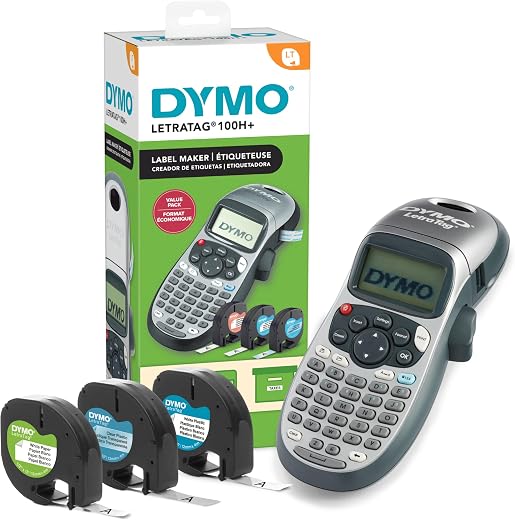
2. DYMO LetraTag 100H Label Maker — Best Fix for the Shared-Kitchen Problem
Price: ~$43 | Amazon rating: 4.6 / 5 from 31,000+ ratings | Role: Ownership, enforced politely | Key spec: 1/2 in LT tape, 5 fonts, 4 x AA, 3 cassettes included
This is the entry people laugh at until week three. The single most common source of friction in shared student accommodation is not noise or washing-up; it is food that disappears, and the argument about whether it was taken or forgotten. A shared fridge with eight anonymous bags in it is a system with no ownership. A shared fridge where every container has a name and a date on it is a system with ownership, and the sociology changes overnight.
Masking tape and a marker do the same job for a week, then peel off in the condensation and stop being legible. The LetraTag prints thermal-transfer black on half-inch tape and ships with three cassettes — paper, white plastic and clear plastic. The plastic ones are the point: they stay stuck inside a fridge, survive being wiped, and come off a plastic tub cleanly at the end of the year. Five font sizes, seven print styles and eight box borders is more than anyone needs, but the graphical preview means you never waste tape on a typo.
It runs on four AA batteries with auto-off, so it needs no permanent socket — which matters in a room where sockets are the scarcest resource. A 4.6-star average from more than 31,000 ratings makes it one of the most-reviewed office products on Amazon, and it has been essentially unchanged for over a decade, which in this category is a compliment. Among these student room essentials it is the only one whose main benefit is other people’s behaviour rather than your own.
Best for: Self-catered halls, six-to-twelve-person shared kitchens, anyone who has already lost food, and labelling chargers, cables and door keys as well as tubs.
Skip if: You are in catered halls with no real kitchen, you have an en-suite studio with a private fridge, or your budget is tight — this is the most expensive non-electronic item here and a permanent marker plus freezer tape covers 70% of the benefit.
Read the full DYMO label maker review →
Where to Buy — DYMO LetraTag 100H Label Maker
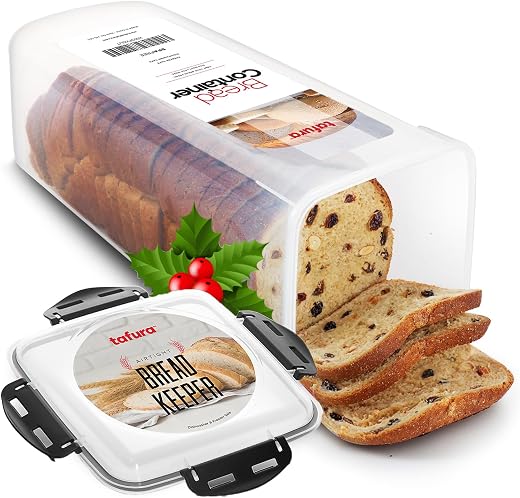
3. Tafura Airtight Bread Container — Best Defence for a Shared Cupboard
Price: ~$20 | Amazon rating: 4.6 / 5 from 2,400+ ratings | Role: Dry food that survives the term | Key spec: 5.8 L BPA-free polypropylene, silicone gasket, 4 latches
Where the label maker handles the fridge, this handles the cupboard. Student kitchens generate the two things that ruin dry food fastest: warmth from constant cooking, and the small population of insects and mice that a building with twelve kitchens and one bin store inevitably supports. A gasketed box with four latches is the cheapest hard barrier against both, and it is why this earns a place among student room essentials that a decorative bread bin never would.
The Tafura is a 5.8-litre slim rectangle in food-grade polypropylene with a silicone gasket, sized for a sandwich loaf, a halved baguette, bagels or rolls. It is dishwasher, freezer and microwave safe, and it stacks — genuinely important when your allocated cupboard is one shelf that somebody else’s pasta is already colonising. In practice most students use it for cereal, crackers, pasta and biscuits rather than bread, and it is better at that job than at its stated one.
Be clear about what airtight storage actually does. It slows moisture loss, so a sandwich loaf stays soft for noticeably longer. It does not stop mould — a warm sealed box can hasten it — and it will soften the crust on a crusty loaf within hours. For a student kitchen that trade is fine, because the sourdough problem is not the problem you have. The 4.6-star average across 2,400-plus ratings reflects that most buyers use it as a general dry-goods box.
Best for: Self-catered halls, shared cupboards, anyone who has found a moth in the cereal, and freezing half a loaf at a time in a shared freezer drawer.
Skip if: You buy crusty artisan bread and care about the crust, or you have no cupboard depth — check your shelf before ordering, because 5.8 litres is a real footprint. If cold storage rather than dry storage is your problem, the label maker above is the better $20 spend.
Read the full Tafura bread box review →
Where to Buy — Tafura Airtight Bread Container
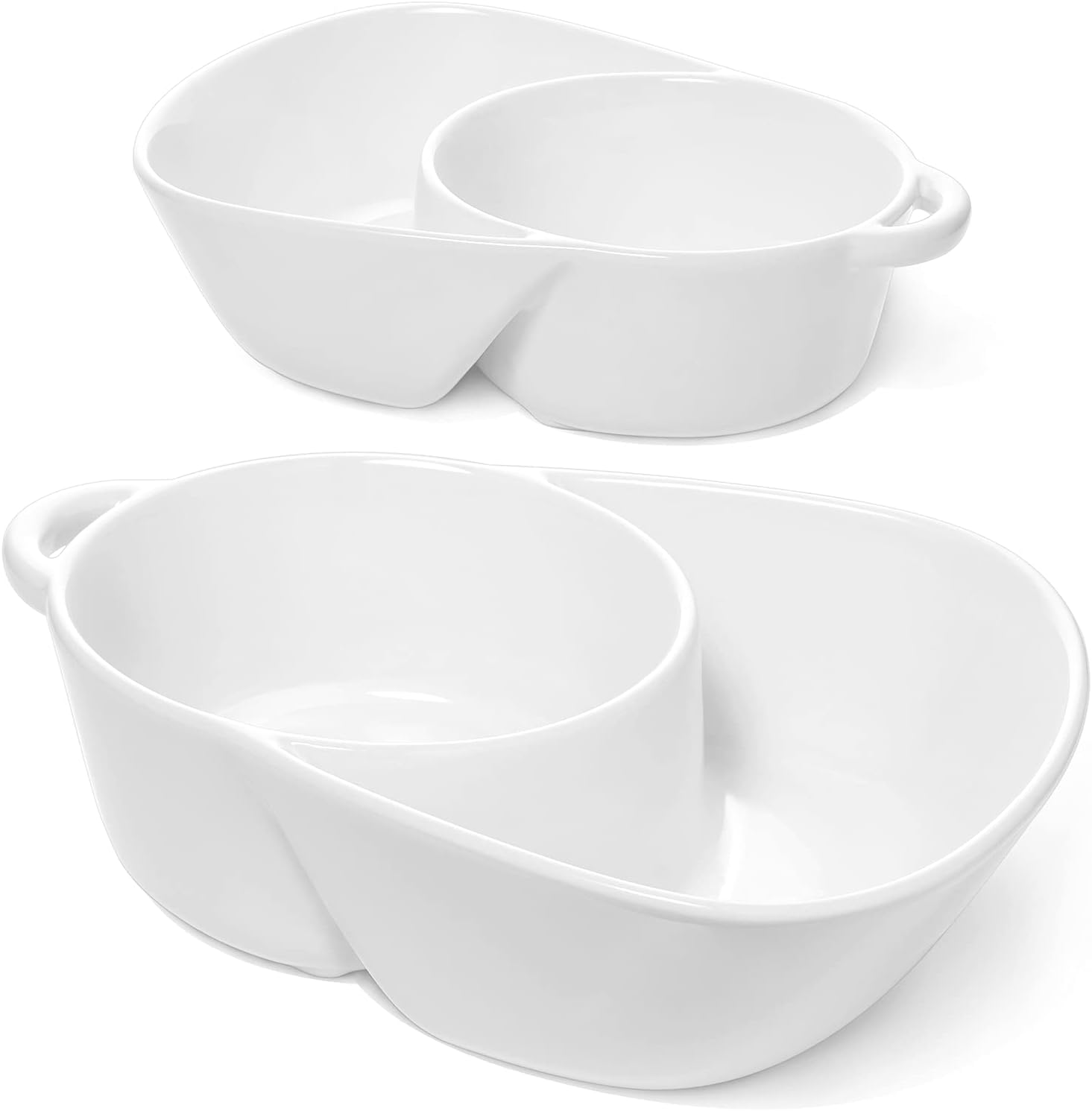
4. LE TAUCI Anti-Soggy Divided Bowls — Best Bowl for Eating at a Desk
Price: $41.99 | Role: The meal you eat in your room | Key spec: Set of 2, ~17 oz per bowl, glazed ceramic, ~10 x 2.9 in
Be honest about where you will eat. In catered halls you eat in a dining room; in self-catered halls you cook in a shared kitchen and then, most nights, carry the result back to your desk because that is where your laptop, your heating and your door lock are. That single behaviour is why crockery for a student room is a different problem from crockery for a house, and why two good bowls beat a twelve-piece dinner set nobody has cupboard space for.
The LE TAUCI set is two white glazed ceramic bowls with connected compartments, roughly 17 ounces each, about 10 inches wide. The divider was designed so cereal does not sit in milk, and it does that well — you move a spoonful across at a time instead of racing a bowl of increasingly grey mush. The more useful application is everything else: soup and crackers, curry and rice, chips and dip, pasta and salad, or a main and a side without carrying two pieces of crockery down a corridor.
Ceramic rather than plastic is the right call for shared living. It comes out of a dishwasher clean, does not stain with turmeric or tomato, does not warp, and is microwave, oven and freezer safe according to the listing — so batch-cooked portions go from freezer to microwave in the same dish. Two bowls is also the correct number: one in use, one in the sink. The price is the weak point, and at $41.99 for a pair it is the least defensible per-unit cost among these student room essentials.
Best for: Self-catered students who eat in their room, batch cooks who reheat single portions, and anyone tired of soggy cereal.
Skip if: You are in catered halls, you are furnishing on a strict budget — supermarket bowls cost a fifth of this — or you are flying in with a 23 kg allowance, because 4 lb of ceramic is a poor use of it.
Read the full LE TAUCI anti-soggy cereal bowl review →
Where to Buy — LE TAUCI Anti-Soggy Divided Bowls
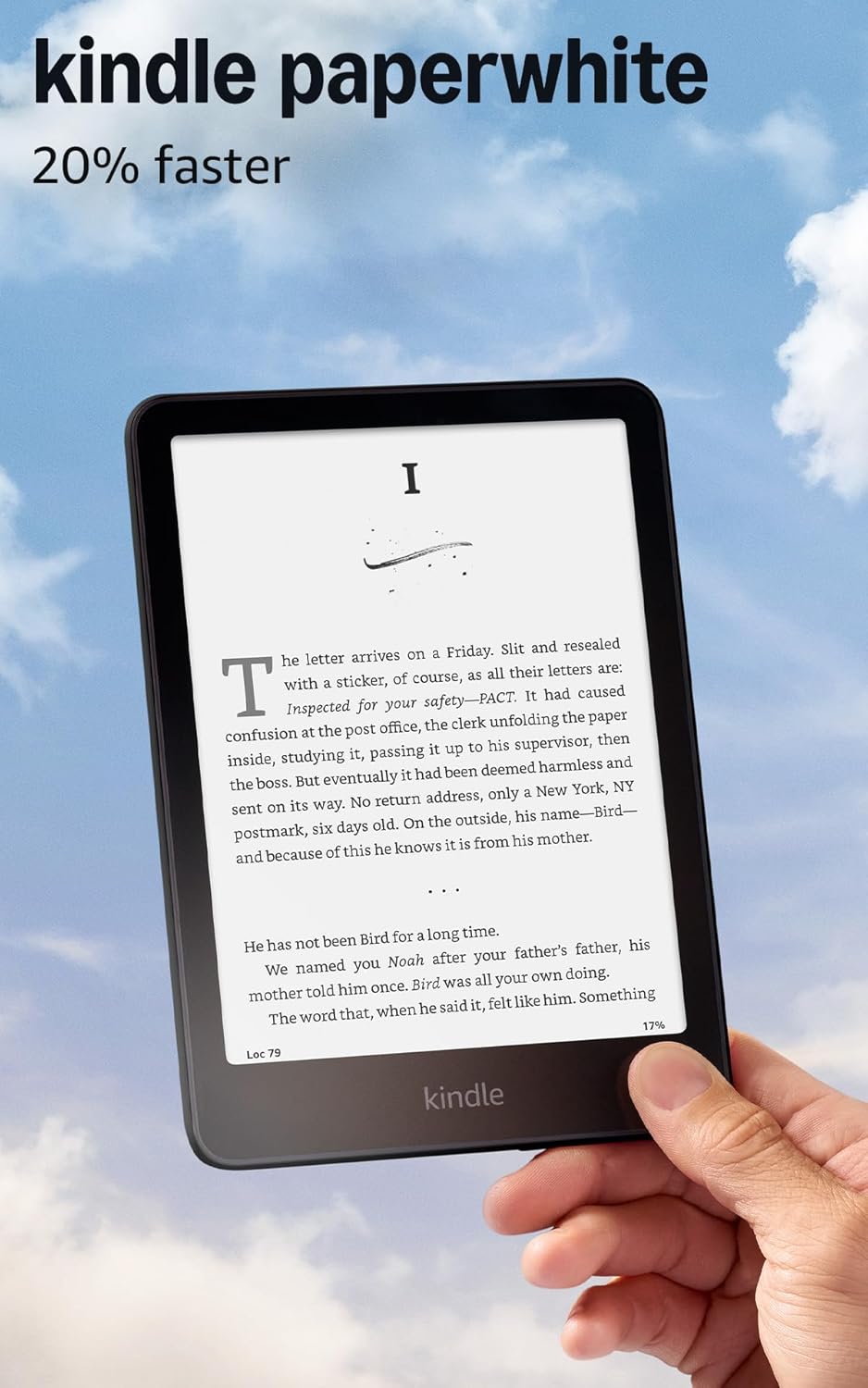
5. Amazon Kindle Paperwhite (2024) — Best Answer to Having No Bookshelf
Price: $124.99 | Role: A reading list with no shelf | Key spec: 7 in E Ink Carta 1300, 300 PPI, IPX8, 16 GB, ~12-week battery
A humanities reading list weighs more than your luggage allowance, and a student room has one small shelf that is already holding a kettle. This is the clearest case in the list of a device that exists because of a physical constraint rather than a preference. Sixteen gigabytes holds a degree’s worth of texts, out-of-copyright set works are free, and public library lending through Libby and OverDrive means a large part of a reading list can cost nothing beyond a library card.
The 2024 Paperwhite uses a 7-inch E Ink Carta 1300 panel at 300 PPI with the highest contrast of any Kindle so far, and page turns about 25 per cent faster than the previous generation. Glare-free matters more than it sounds: it reads identically in a sunlit library window and under the fluorescent tube in a seminar room, neither of which an LCD handles well. The adjustable warm light, 10 white and 9 amber LEDs, is what makes late-night reading in a shared room tolerable without a lamp.
Two practical points for this context. The roughly 12-week battery means it is the only screen you own that will survive a term of forgetting to charge things, and IPX8 waterproofing means a bath, a rainy walk to campus or a spilled drink on a desk is not a £500 problem. The cost is real — it is by some distance the most expensive of these student room essentials — but per book carried it is the cheapest thing here.
Best for: Heavy reading lists, commuters, anyone flying in with a weight limit, and readers who want a screen that does not also deliver notifications.
Skip if: Your course runs on PDFs with diagrams and annotation — E Ink handles those badly and a tablet is the better tool — or your set texts are only sold as physical editions.
Read the full Kindle Paperwhite 2024 review →
Where to Buy — Amazon Kindle Paperwhite (2024)
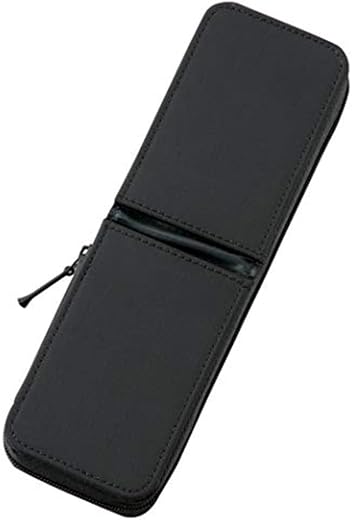
6. Raymay Fujii Pen Case — Best Study Kit for Work That Happens Elsewhere
Price: $11.76 | Amazon rating: 4.6 / 5 from 320+ ratings | Role: The kit that leaves the room | Key spec: Magnetic flat-opening top lid, inner pocket, nib protection wall
Most academic work does not happen in the room. It happens in a library, a lab, a lecture theatre or a café, which means the useful desk kit is not a desk organiser but a bag-sized container that opens flat on a surface you did not choose. That is exactly what this is, and at under twelve dollars it is the cheapest genuinely good thing on this page.
It won a 2017 Good Design Award, Japan’s main industrial design honour, for a specific reason: the magnetic top lid opens flat so the whole contents are visible at once, instead of items burrowing under a zip flap. There is no zip track to jam or wear out, an inner pocket keeps an eraser, a USB stick or a hall key card away from the pens, and a moulded wall protects nibs from being crushed when the case is squeezed into a bag.
The compromise is capacity, and it is not a small one. This is a case for a curated kit — three or four pens, a highlighter, a pencil, a USB drive — not for someone who carries a full set of markers. In a list of student room essentials it is the item that most rewards being honest about how much stationery you actually use, which for most students at university is far less than they packed. A 4.6-star average from over 320 ratings comes from a small but consistent group of people who wanted precisely this.
Best for: Library-based study, students who carry a small kit daily, and anyone replacing a bulky zippered case with something that fits beside a laptop.
Skip if: You are an art, architecture or design student with a real materials list — you need a large zippered roll, not this — or you want something that will also hold a calculator.
Read the full Raymay Fujii pen case review →
Where to Buy — Raymay Fujii Pen Case
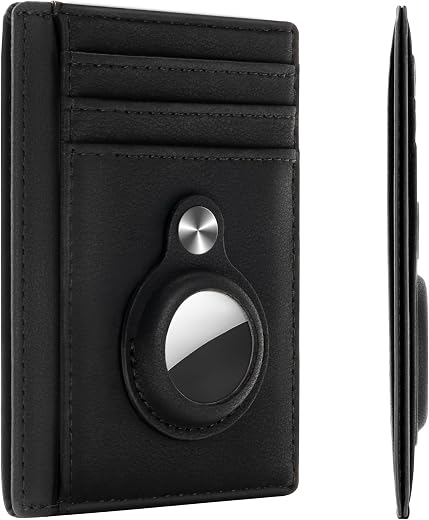
7. Hawanik Slim AirTag Wallet — Best Way to Stop Losing Your Whole Identity
Price: $9.99 | Amazon rating: 4.6 / 5 from 5,100+ ratings | Role: Everything that gets you back in | Key spec: 3.3 x 4.1 x 0.12 in, 6 card slots, RFID blocking, AirTag slot
A student wallet is not just money. It holds the campus card that opens your building, the card that pays for laundry and printing, a bank card, a transit card and photo ID. Losing it on a night out is not an inconvenience, it is a day of queuing at three different offices and, in most institutions, a replacement fee for the door card. That asymmetry is the entire argument for putting a tracker in it before term starts rather than after the first loss.
The Hawanik is a leather card holder measuring 3.3 by 4.1 inches and 0.12 inches thick, with seven pockets across two sections giving six card slots and an ID window, a button closure and RFID blocking. What distinguishes it is a moulded slot built for an Apple AirTag, so the tracker sits flush and protected instead of being taped inside a billfold where it slides, scratches and eventually falls out. Apple’s Find My network then does the rest. The AirTag itself is not included.
Capacity is deliberately small, and that is the point: six cards and folded notes is the front-pocket loadout, and a slim wallet you actually carry beats a thick one you leave in a coat. At 30 grams it disappears into jeans. One caveat for UK readers — the same tracker logic applies, but Android users should look at a Tile or Chipolo equivalent instead, since Find My requires an iPhone. It is the cheapest of these student room essentials and probably the highest-value one.
Best for: iPhone users, anyone who has already lost a campus card, front-pocket carriers, and students moving to a new city where replacing ID is a bureaucratic ordeal.
Skip if: You are on Android — Find My will not track it — you carry more than six cards, or you need a coin pocket, which UK and euro-zone students often do.
Read the full Hawanik AirTag wallet review →
Where to Buy — Hawanik Slim AirTag Wallet
Student Room Essentials — Buyer’s Guide: What to Look For
Packing lists fail because they are written as inventories rather than as rules. The five rules below are what separate genuinely useful student room essentials from a box that goes home unopened at Christmas, and they apply whether you are furnishing a dorm room in Ohio or a study bedroom in Sheffield.
Rule One of Student Room Essentials: Nothing That Modifies the Room
Your contract almost certainly forbids adhesive hooks that damage paint, anything screwed into a wall, blu-tack on some surfaces, and additional furniture. Charges for damage come out of a deposit or an accommodation account at the end of the year and are not negotiable. Everything on this page is free-standing, wearable or pocketable for that reason. If a product’s core function requires attaching it to the building, it is not a student purchase — it is a homeowner purchase, and you should buy it in three years’ time.
Power, Plugs and Why Student Room Essentials Should Run on Batteries
A typical study bedroom has two to four sockets, and one is taken by the laptop. Most accommodation handbooks ban multi-way adaptors, daisy-chained extension leads and any appliance above a stated wattage. Two of the seven items here need no mains power at all, two use AA batteries or charge occasionally, and none draws continuously. When you are comparing student room essentials, count the sockets before you count the features — the fastest way to break a rule you did not know existed is to arrive with four things that all need charging overnight.
Storage: The Student Room Essentials That Earn Their Footprint
A standard single study bedroom in UK halls runs roughly 10 to 13 square metres including a bed, desk, wardrobe and often a small en-suite. A US double dorm is commonly quoted at around 12 square metres shared between two people. In that space, footprint is the real currency. Ask of every item: does it stack, fold, nest or hang? The bread container stacks. The blanket folds. The bowls nest. The Kindle replaces a shelf. Anything that only sits is competing directly with your own floor space.
Shared Space: Student Room Essentials That Survive Other People
Anything that leaves your room enters a commons where it will be used, moved, borrowed and occasionally binned. Two design features matter disproportionately: whether an item is identifiably yours, and whether it is dishwasher-safe, because a shared kitchen’s dishwasher runs on somebody else’s schedule. Ceramic beats plastic for staining, sealed beats open for pests, and labelled beats unlabelled for everything. This is why a label maker sits at number two on a list of student room essentials rather than being a joke entry.
Budget: What Student Room Essentials Actually Cost
The full seven-item set here comes to roughly $281 at the prices listed, which is more than most students should spend at once. Treat it as a sequence rather than a shopping trip. Buy the cheap high-frequency items before you arrive — the wallet, the pen case — take the blanket if you are starting in autumn, and wait two weeks before deciding whether your kitchen needs the label maker and the sealed box. You will know by then, and you will not have shipped things you do not use.
US vs UK: What Changes When Student Room Essentials Cross the Atlantic
American and British student accommodation look superficially similar and differ in almost every detail that affects which student room essentials are worth buying. The vocabulary is the least of it, but it is where the confusion starts.
Vocabulary: Dorm Room Essentials vs Student Halls Essentials
In the US you live in a dorm or residence hall, you are a freshman, and an RA — resident assistant — lives on your corridor. In the UK you live in halls or a hall of residence, you are a fresher, and the corridor is looked after by a residential life or welfare team. Americans search for dorm room essentials; British students search for student halls essentials or simply what to take to uni. Beyond that: closet is wardrobe, trash can is bin, faucet is tap, countertop is worktop, stovetop is hob, cell phone is mobile, and a flat is what Americans call an apartment.
Voltage, Plugs and the Appliances Not to Ship
The US runs 120 V at 60 Hz with NEMA 1-15 and 5-15 plugs; the UK runs 230 V at 50 Hz with the BS 1363 three-pin plug, which uniquely contains its own cartridge fuse — normally 3 A or 13 A. That fuse is why a British extension lead is a different safety object from an American power strip. Anything with a heating element or a motor should be bought locally rather than shipped: a US kettle, hairdryer or lamp on a travel adaptor is at best slow and at worst dangerous. Battery-powered and 100–240 V dual-voltage items, which covers most of the student room essentials here, travel fine on a plug adaptor.
The UK-Only Bills: Council Tax and the TV Licence
Two costs exist in Britain with no American equivalent. First, council tax: households where everyone is a full-time student are exempt, with full-time defined by GOV.UK as a course lasting at least one year and involving at least 21 hours of study a week. Halls are exempt automatically; a shared house needs certificates from every occupant, and one non-student adult in the property brings the bill back. Second, the TV Licence. It costs £180 a year from 1 April 2026, and TV Licensing is explicit that a hall’s communal licence does not cover your room: you need your own to watch anything live on any channel or streaming service, or to use BBC iPlayer, on any device.
The Laptop-in-the-Room Loophole
The TV Licence rule has one genuinely useful exception worth knowing before somebody knocks on your door. TV Licensing states that you may already be covered by a licence at another address — typically your parents’ — if you only watch on devices that are not plugged into the mains, such as a laptop, phone or tablet running on battery, and there is a valid licence at your out-of-term address. That is a real rule, not a myth, and it is the single most-searched piece of British student administrivia every September.
Contracts, Deposits and What You Are Actually Signing
An American on-campus housing agreement is generally a licence tied to enrolment, and states regulate security deposits for private rentals rather than campus housing. In the UK the distinction matters more: university halls are usually let under a licence rather than an assured shorthold tenancy, so the statutory tenancy deposit protection schemes — DPS, MyDeposits and the Tenancy Deposit Scheme — do not automatically apply. Move into a private student house in second year and they do. Read which document you have signed before you assume your money is protected — the same agreement also governs which student room essentials you are permitted to bring.
Fridge Rules: 40°F Is Not the Same Advice as 5°C
Both countries publish domestic fridge guidance, and it does not match. USDA FSIS advises keeping the refrigerator at 40°F (4°C) or below and eating leftovers within three to four days. The UK’s Food Standards Agency says the fridge should sit between 0 and 5°C, that cooked food should be cooled and refrigerated within one to two hours, and — the significant difference — that leftovers should be eaten within 48 hours. In a shared halls fridge stuffed with eight people’s shopping and opened forty times a day, the British 48-hour rule is the safer one to follow whichever country you are in.
Student Room Essentials — Which One Should You Buy?
Nobody should buy all seven student room essentials at once. Three tiers, depending on how much you are furnishing and how much you can carry.
Under $50: The Minimum Viable Student Room Essentials
Two items, about $22 together, and they are the two you will use daily from the first week. The Hawanik slim AirTag wallet at $9.99 protects the single most annoying loss a student can suffer, and the Raymay Fujii pen case at $11.76 is the cheapest object here that you will still be using in three years. Add the Tafura bread container at around $20 if you are self-catered and you are still under fifty dollars.
Under $150: The Balanced Student Room Essentials Kit
Add warmth and kitchen order. The Berkshire Blanket Primalush cape at $29.99 is the highest-impact purchase on this page for an autumn start in a cold building, and the DYMO LetraTag 100H at around $43 pays for itself the first time your food is still in the fridge in week six. With the two entry-tier items that is roughly $105 for a kit that covers warmth, ownership, storage and carry.
The Full Set: All Seven Student Room Essentials
Around $281 for everything, and the two additions are the expensive ones. The Kindle Paperwhite (2024) at $124.99 only makes sense if your course has a heavy reading list or you are flying in under a weight limit — for those students it is the best value item here despite being the priciest. The LE TAUCI divided bowls at $41.99 are a genuine luxury; buy them if you eat in your room most nights, skip them if you are catered.
Fire, Food and Fine Print: The Rules Behind Your Student Room Essentials
The restrictions in an accommodation handbook are not arbitrary, and understanding where they come from makes it much easier to predict what will and will not be allowed. Three bodies of rule shape almost every list of student room essentials: fire safety, food safety and the contract you signed.
Fire: Why Student Room Essentials Must Not Include a Space Heater
Cooking dominates the fire statistics for student accommodation. The National Fire Protection Association’s research on structure fires in dormitories, fraternities, sororities and barracks found that across 2003–2006, US fire departments responded to an annual average of about 3,570 such fires, and that cooking equipment was involved in 75 per cent of them. Those fires caused an annual average of 7 civilian deaths, 54 injuries and $29.4 million in direct property damage, clustered in the evening between 5pm and 11pm, and peaking in October.
The same research shows why bedrooms are treated so seriously. Bedroom fires made up only 5 per cent of incidents but accounted for 62 per cent of the civilian deaths and 26 per cent of the injuries. That is the reasoning behind the blanket bans on candles, halogen lamps, portable heaters and cooking appliances in study bedrooms that both countries’ handbooks share. Heating the person rather than the room is not a lifestyle choice in this context; it is the compliant option.
Lithium-Ion: The Newest Rule in Every Halls Handbook
The fastest-growing restriction in student accommodation concerns batteries rather than flames. London Fire Brigade recorded 206 e-bike and e-scooter fires across London in 2025 — 171 e-bikes and 35 e-scooters, up from 171 total in 2024 — with two deaths in the year and five since 2023. The Brigade has noted that none of the five people who died owned the device involved, which is precisely why halls now ban charging e-bikes indoors or in escape routes. Expect the same rule wherever you study, and check it before adding anything with a large battery to your student room essentials.
Food: The Shared Fridge Is a Regulated Object
Neither country regulates your personal fridge, but both publish guidance that halls kitchens are inspected against. The UK Food Standards Agency’s advice is that a fridge should run between 0 and 5°C, cooked food should be cooled and refrigerated within one to two hours, leftovers eaten within 48 hours, and that food can be frozen right up until midnight on the use-by date. USDA FSIS sets 40°F (4°C) and three to four days for leftovers. The gap between 48 hours and four days is the single most useful thing to know when you are sharing a fridge that is opened constantly and rarely holds its temperature.
This is also where the label maker stops being a joke. Date labels are the mechanism both agencies rely on, and a shared fridge without them is a fridge where nobody can tell a two-day-old curry from a nine-day-old one. Writing the date on the lid takes four seconds and is the cheapest food-safety intervention available to anyone in self-catered halls.
The Paperwork: Fire Reports, Codes and Contracts
American students have a legal right to information British students do not. Under the Higher Education Opportunity Act of 2008, institutions must publish an annual fire safety report covering on-campus student housing — including fire statistics, fire safety systems, drills, evacuation procedures, prohibited appliances and planned improvements — and must notify current students and staff by 1 October each year. If you are choosing between halls in the US, that document is public and worth ten minutes.
The British equivalents are contractual and voluntary rather than statutory: accommodation providers typically sign up to a national student housing code administered by ANUK/Unipol or Universities UK, and your licence agreement lists the prohibited items. Read the prohibited-items list before you order anything on this page, not after. It is usually one page long and it is the definitive answer to what counts as student room essentials in your particular building.
Student Room Essentials — Frequently Asked Questions
What are the true student room essentials, as opposed to what packing lists say?
Anything that solves a problem created by not owning the room: warmth you control, food storage you can defend, a carry system for work that happens elsewhere, and identification you will not lose. Bedding, decor, kitchenware sets and furniture are either supplied, cheaper locally, or against the rules.
Should I buy things before I arrive or after?
Buy small, high-frequency, hard-to-source items in advance — the wallet, the pen case, the blanket if you are starting in autumn. Wait on anything sized to a space you have not seen, especially storage boxes, and on anything that depends on whether your kitchen is functional. Two weeks is enough to know.
Is a mini fridge worth it in a dorm or halls?
Usually not, and often not permitted. Many UK halls prohibit additional fridges outright on electrical-load grounds, and US dorms typically cap capacity and require the room’s single approved unit. Check the prohibited-items list first; where a fridge is banned, sealed dry storage and a labelled shelf in the shared fridge are the workaround that most student room essentials lists miss.
Do UK students in halls need their own TV Licence?
Yes, if you watch anything live on any channel or streaming service, or use BBC iPlayer, in your room. TV Licensing states the hall’s communal licence does not cover your room. The exception is watching only on battery-powered devices while covered by a licence at your out-of-term address. A licence costs £180 a year from 1 April 2026.
Do students pay council tax in the UK?
Households where everyone is a full-time student are exempt, and halls are exempt automatically. GOV.UK defines full time as a course of at least one year involving at least 21 hours of study per week. In a shared house, one non-student adult brings the bill back, though a discount may apply.
How much should a full set of student room essentials cost?
The seven student room essentials here total roughly $281, but the sensible entry point is about $22 for the wallet and pen case, or around $105 for a kit that also covers warmth and kitchen order. Anything beyond that should follow two weeks of living in the room.
Can I bring appliances from the US to the UK, or the other way?
Not anything with a heating element or a motor. The US runs 120 V and the UK 230 V, and the British BS 1363 plug carries its own fuse. Battery-powered items and dual-voltage 100–240 V chargers travel fine on a plug adaptor; kettles, hairdryers, lamps and small kitchen appliances should be bought locally.
How long can I keep leftovers in a shared halls fridge?
Follow the stricter of the two national guidelines: the UK Food Standards Agency says 48 hours, USDA FSIS says three to four days. In a communal fridge opened dozens of times a day, temperature stability is worse than in a domestic one, so 48 hours with the date written on the lid is the safer default.
What is actually banned in most student rooms?
Candles, incense, portable and halogen heaters, deep fat fryers, toasters and kettles in bedrooms, multi-way adaptors, anything fixed to walls or ceilings, and increasingly e-bikes and e-scooters charged indoors. The prohibited-items list in your accommodation agreement is authoritative, specific to your building, and overrides any student room essentials list including this one.
What did you deliberately leave off this list of student room essentials?
Bedding, a mattress topper, decorative lighting, a printer, a mini fridge and a full crockery set. Bedding and crockery are cheaper and heavier than they are worth shipping, printing is provided on every campus, and the other three are commonly restricted or genuinely unnecessary in a room this size.
Student Room Essentials — Final Thoughts
The reason most packing lists are useless is that they describe a bedroom rather than a set of constraints. A student room is small, borrowed, shared at the edges, governed by a contract you signed in July and unheated at the hours you are actually in it. Once that is the starting point, the list of student room essentials gets shorter and considerably more specific: heat the person, seal the food, label everything that leaves your door, and make the two things you carry every day as light and as findable as possible.
All seven of these student room essentials come from products SoftPickr has reviewed in full, and every entry above links to that review if you want the detail behind the score. If you buy nothing else, buy the wallet and the pen case before you travel, take a wearable blanket if you are starting in the autumn, and give yourself a fortnight in the building before deciding what else you need. The room will tell you.
Sources and Further Reading
- NFPA — Structure Fires in Dormitories, Fraternities, Sororities and Barracks
- NFPA report (full text, 2003–2006 data) — dormitory-type property fire statistics
- London Fire Brigade — record number of e-bike and e-scooter fires in London in 2025
- Food Standards Agency / GOV.UK — How to chill, freeze and defrost food safely
- USDA FSIS — Leftovers and Food Safety
- GOV.UK — Council Tax discounts for full-time students
- TV Licensing — Do I need a TV Licence in a hall of residence?
- TV Licensing — How much does a TV Licence cost?
- Unipol — Tenancy deposit protection: what students need to know
- UCAS — Student rights before you sign your accommodation contract
- Higher Education Opportunity Act 2008 — annual fire safety report requirements (institutional summary)
- US Fire Administration — Cooking Fires in Residential Buildings
Disclosure: SoftPickr is a participant in the Amazon Services LLC Associates Program. Product links in this article are affiliate links, and we may earn a commission on qualifying purchases at no additional cost to you. Prices and availability were accurate at the time of writing and are set by Amazon; check the listing for the current price. Links point to Amazon.com — UK readers can search the same models on Amazon.co.uk. Nothing here is legal, financial or safety advice; always follow the prohibited-items list in your own accommodation agreement.