
The carry on essentials that actually earn their space are a bag that fits your airline’s under-seat limit, something to read that holds its charge, a layer for a cold cabin, a slim wallet with a tracker in it, a packable rain shell, a small torch, and — only if you film — a lightweight camera. That is the whole list, in the order you should buy it. The bag comes first, because it sets the ceiling for everything else, and airlines disagree wildly about how big it may be.
This comparison is research-based. We did not physically test these products; specifications, ratings and prices are taken from the live listings on the date shown. Seven products are compared below, each with its own full review on this site: a foldable personal item bag, an e-reader, a wearable cabin blanket, a slim tracker wallet, a packable rain shell, a rechargeable torch and a hands-free travel camera. Between them they cover the four things that reliably go wrong on a flight — nothing to do, too cold, nothing found, nothing charged.
The rules genuinely differ by country, so this guide answers both. American passengers still pack to the TSA’s 3-1-1 liquids rule; British passengers at several airports now walk through with two-litre bottles and their laptops in the bag. Where American readers search for carry on essentials, British readers search for hand luggage essentials — sizes are quoted in inches and centimetres throughout. Product links go to Amazon.com and carry our associate tag; UK readers can search the same model names on Amazon.co.uk, where availability and pricing differ.
Carry On Essentials — Quick Comparison
All seven carry on essentials at a glance, with the specification that decides whether each one fits, the price and owner rating read from the live listing on 5 October 2026, and our score.
| # | Product | Role | Key spec | Owner rating | Price | Score |
|---|---|---|---|---|---|---|
| 1 | BAGSMART Foldable Travel Bag | Personal item bag | 24-37 L, 45 x 33 x 20 cm | 4.5 / 789 | $19.99 | 8.3 |
| 2 | Kindle Paperwhite (2024) | E-reader | 7 in E Ink, 211 g, 12-week battery | 4.6 / 23,323 | $199.99 | 9.1 |
| 3 | Berkshire Blanket Primalush | Wearable blanket | 300 GSM fleece, 58 x 64 in, 0.73 kg | 4.6 / 1,181 | $29.99 | 8.5 |
| 4 | Hawanik AirTag Wallet | Wallet and tracker | 6 card slots, RFID blocking, AirTag slot | 4.6 / 4,793 | $8.98 | 8.0 |
| 5 | COOFANDY Packable Rain Jacket | Rain shell | Waterproof shell, packs to own pouch | 4.4 / 6,577 | $18.98 | 8.2 |
| 6 | ZF8313 Magnetic EDC Flashlight | Flashlight / torch | 2,000 lumens, 144 m, built-in 2,000 mAh cell | 4.6 / 1,138 | $24.99 | 8.4 |
| 7 | Insta360 GO Ultra | Action camera | 4K60, 1/1.28 in sensor, 53 g | 4.3 / 1,307 | $449.99 | 8.7 |
The 7 Best Carry On Essentials in 2026
The seven picks below are ordered the way you should buy them, not by price. Each entry gives our expert score, the specification that decides the purchase, who it suits and who should skip it. Prices and owner ratings were read from the live Amazon listings on 5 October 2026 and will move.
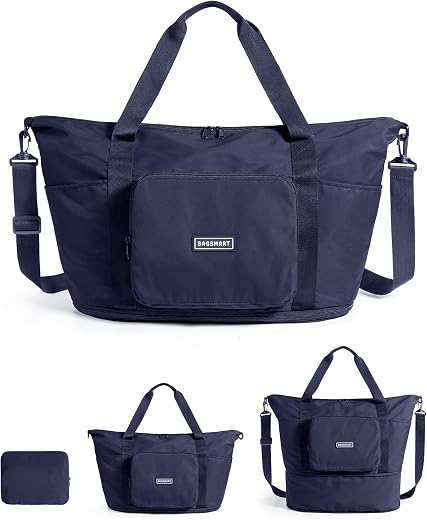
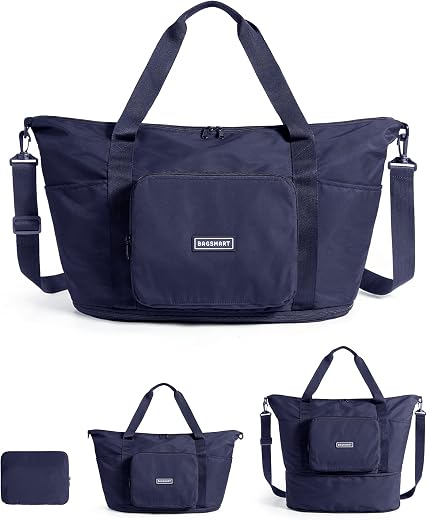
1. BAGSMART Foldable Travel Bag (37L) — Best Personal Item Bag for Budget Airlines
Price: $19.99 | Amazon rating: 4.5 / 5 from 789 ratings | Role: Under-seat personal item bag | Key spec: 24-37 L expandable, 45 x 33 x 20 cm unfolded, folds flat
Everything else on this list has to live somewhere, so the bag comes first. The BAGSMART folds flat into its own pocket, weighs very little empty, and expands from 24 to 37 litres when you need the space on the way home.
The numbers matter more than the marketing. Unfolded it measures 45 x 33 x 20 cm, which slides under the seat at most American carriers but is too long for the strictest European ones.
The compromise is the fabric. Water-resistant polyester sheds a shower and wipes clean, but packed loosely the bag sags and a laptop needs its own sleeve.
Best for: Flying an airline with a generous under-seat allowance and wanting a second bag that weighs almost nothing.
Skip if: You fly Ryanair (40 x 30 x 20 cm) or United (43 x 25 x 22 cm) – at 45 cm long this bag is too big.
Read the full BAGSMART Foldable Travel Bag review →
Where to Buy — BAGSMART Foldable Travel Bag
2. Amazon Kindle Paperwhite (2024) — Best In-Flight Entertainment for Long Flights
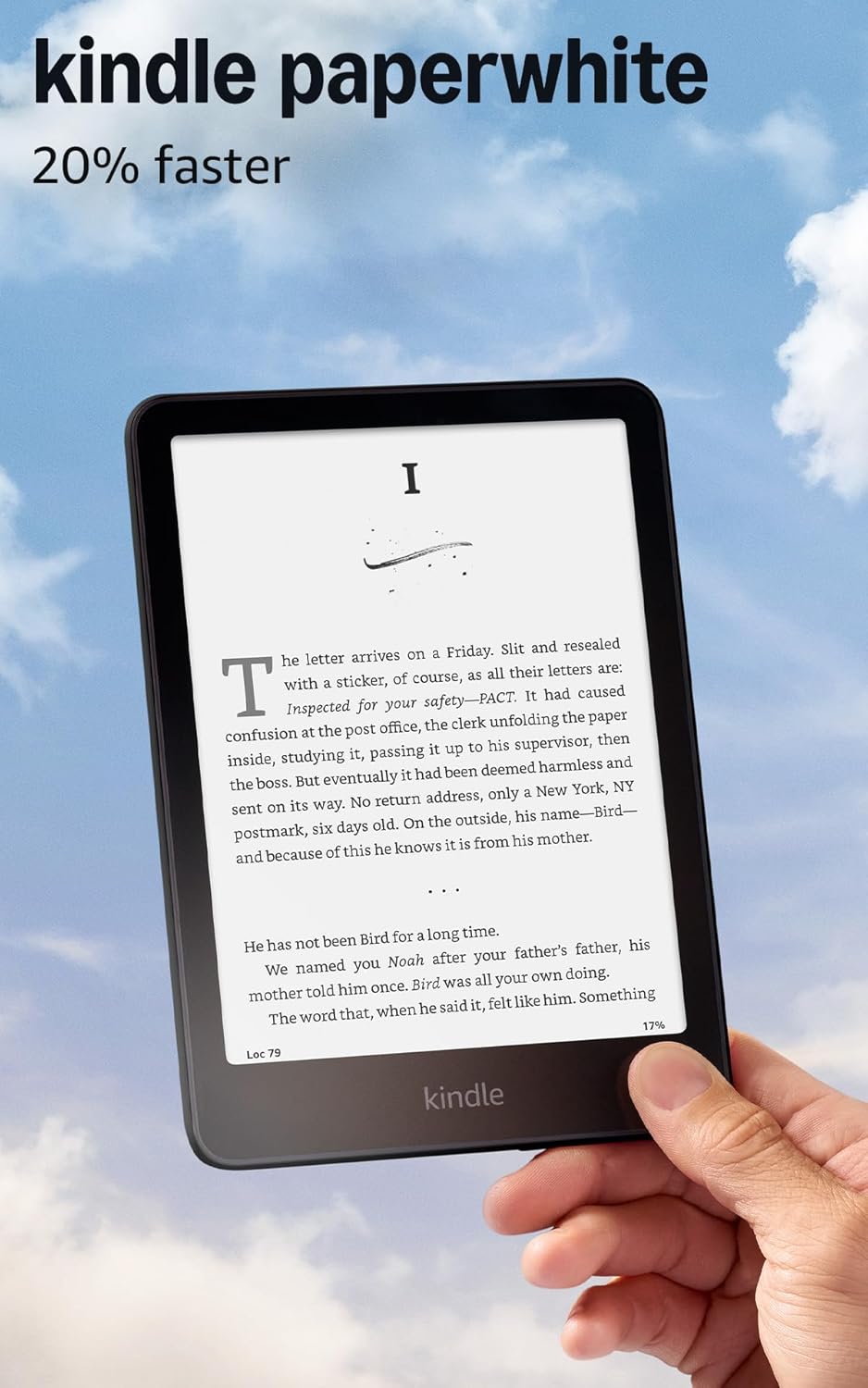
Price: $199.99 | Amazon rating: 4.6 / 5 from 23,323 ratings | Role: In-flight reading | Key spec: 7 in glare-free E Ink, 211 g, 16 GB, weeks of battery
A seat-back screen that will not respond and a phone at 14% are the two most predictable failures of a long flight. An e-reader fixes both for the length of the trip, and at 211 grams it costs less weight than a paperback.
Battery is the reason it beats a tablet. E Ink draws power only when the page changes, so Amazon quotes up to twelve weeks between charges at half an hour a day – on a two-week trip you can leave the cable at home.
It is not a do-everything device. PDFs reflow badly, there is no colour, and the browser is a novelty. Note also that the rating count is shared across four merged listings of this model, so 23,323 describes the family, not this exact box.
Best for: Long-haul and multi-leg trips where charging is scarce.
Skip if: You mainly read PDFs, comics or anything in colour, or you already carry a tablet you are happy with.
Read the full Kindle Paperwhite (2024) review →
Where to Buy — Kindle Paperwhite (2024)
3. Berkshire Blanket Primalush Wearable Blanket — Best Cabin Layer for Cold Flights
Price: $29.99 | Amazon rating: 4.6 / 5 from 1,181 ratings | Role: Cabin warmth layer | Key spec: Primalush fleece, 58 x 64 in cape cut, about 0.73 kg
Cabin temperature is set between 22 and 24 C, which sounds warm until you have sat still for nine hours under an air vent, and airline blankets are thin.
The cape cut is the reason this beats packing a hoodie. At 58 x 64 inches it wraps rather than fastens, so it works as a blanket in the seat and as a layer in the terminal, and it does not need to come off to use the tray table.
Because it is worn rather than packed it does not touch your allowance at all, which matters on carriers that weigh. The limit is bulk: a fleece compresses poorly if you do pack it.
Best for: Overnight and long-haul flights, and anyone reliably cold in a cabin.
Skip if: You run hot, or you are checking a bag anyway and would rather carry a compressible down jacket.
Read the full Berkshire Blanket Primalush Wearable Blanket review →
Where to Buy — Berkshire Blanket Primalush Wearable Blanket

4. Hawanik AirTag Wallet — Best Slim Wallet for Carry On Essentials
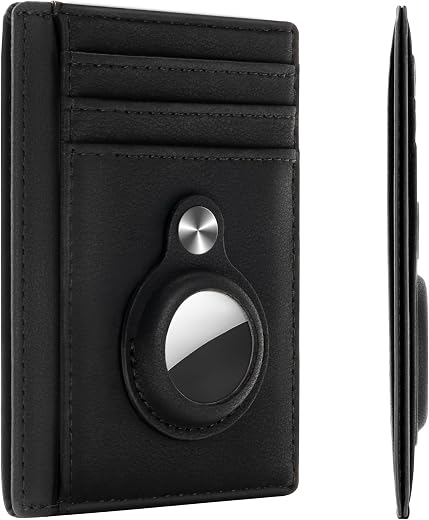
Price: $8.98 | Amazon rating: 4.6 / 5 from 4,793 ratings | Role: Documents, cards and tracking | Key spec: 3 mm thick, 6 card slots, RFID blocking, dedicated AirTag slot
Travel is where a fat wallet becomes a liability. This one is 3 mm thick, holds six cards and folded notes, and blocks RFID reads – which matters more in a queue than at home.
The tracker slot is the part worth thinking about. An AirTag runs on a CR2032 coin cell holding a fraction of a gram of lithium, far below any airline threshold, so it travels in the cabin or the hold without a declaration.
At this price the leather is corrected-grain and the stitching ordinary – a two-year wallet, not an heirloom – and it holds no coins, which UK readers will notice.
Best for: Minimalists who want cards, a little cash and a tracker in one pocket-sized item for under ten dollars.
Skip if: You carry coins, more than six cards, or want full-grain leather.
Read the full Hawanik AirTag Wallet review →
Where to Buy — Hawanik AirTag Wallet
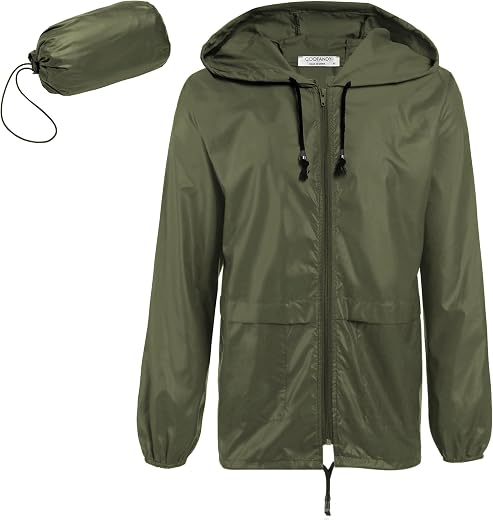
5. COOFANDY Packable Rain Jacket — Best Packable Layer for Hand Luggage Essentials
Price: $18.98 | Amazon rating: 4.4 / 5 from 6,577 ratings | Role: Weather protection | Key spec: Waterproof shell, hood, packs into its own pouch
A rain shell is the single highest-value piece of clothing you can carry, because it removes the need to pack for weather you cannot predict. This one packs into its own pouch.
It earns its place on city trips more than mountain ones: over a fleece a warm layer, over a shirt a windbreaker, in the bag the space of a folded newspaper.
The limits are what you expect under twenty dollars: untaped seams that sustained rain will find, and a shell that does not breathe well enough for uphill walking.
Best for: City breaks and shoulder-season travel where rain is likely but you are never far from shelter.
Skip if: You need taped seams and a breathable membrane for hiking, or you already own a hardshell.
Read the full COOFANDY Packable Rain Jacket review →
Where to Buy — COOFANDY Packable Rain Jacket
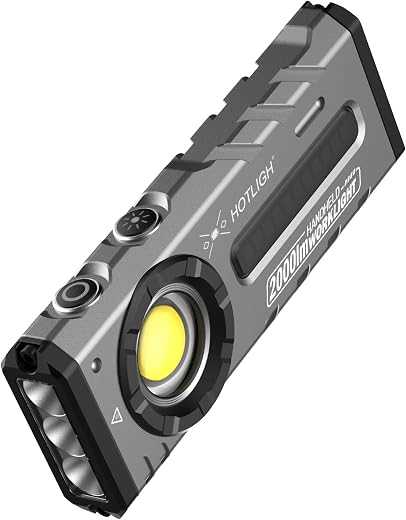
6. ZF8313 Magnetic EDC Flashlight — Best Torch to Keep in Your Carry On
Price: $24.99 | Amazon rating: 4.6 / 5 from 1,138 ratings | Role: Light and emergencies | Key spec: 2,000 lumens, 144 m throw, built-in 2,000 mAh cell, magnetic base
A phone torch is fine until you need the phone for the boarding pass, the map and the light at the same time. A separate light is one of the few items here that is genuinely safety equipment.
Two details make it a travel light rather than a workshop light: the magnetic base sticks to anything ferrous, turning a dark rental bathroom into a lit workspace, and it recharges over USB-C from the same brick as everything else.
The built-in 2,000 mAh cell is rated at roughly 7.4 watt-hours, well inside the 100 Wh limit below which no airline approval is needed. Because it is sealed in, the light is disposable when the cell dies.
Best for: Hostels, rentals and anywhere with unreliable power, and travellers who walk after dark.
Skip if: You want hands-free light – a headtorch is a better answer – or you prefer swappable cells.
Read the full ZF8313 Magnetic EDC Flashlight review →
Where to Buy — ZF8313 Magnetic EDC Flashlight
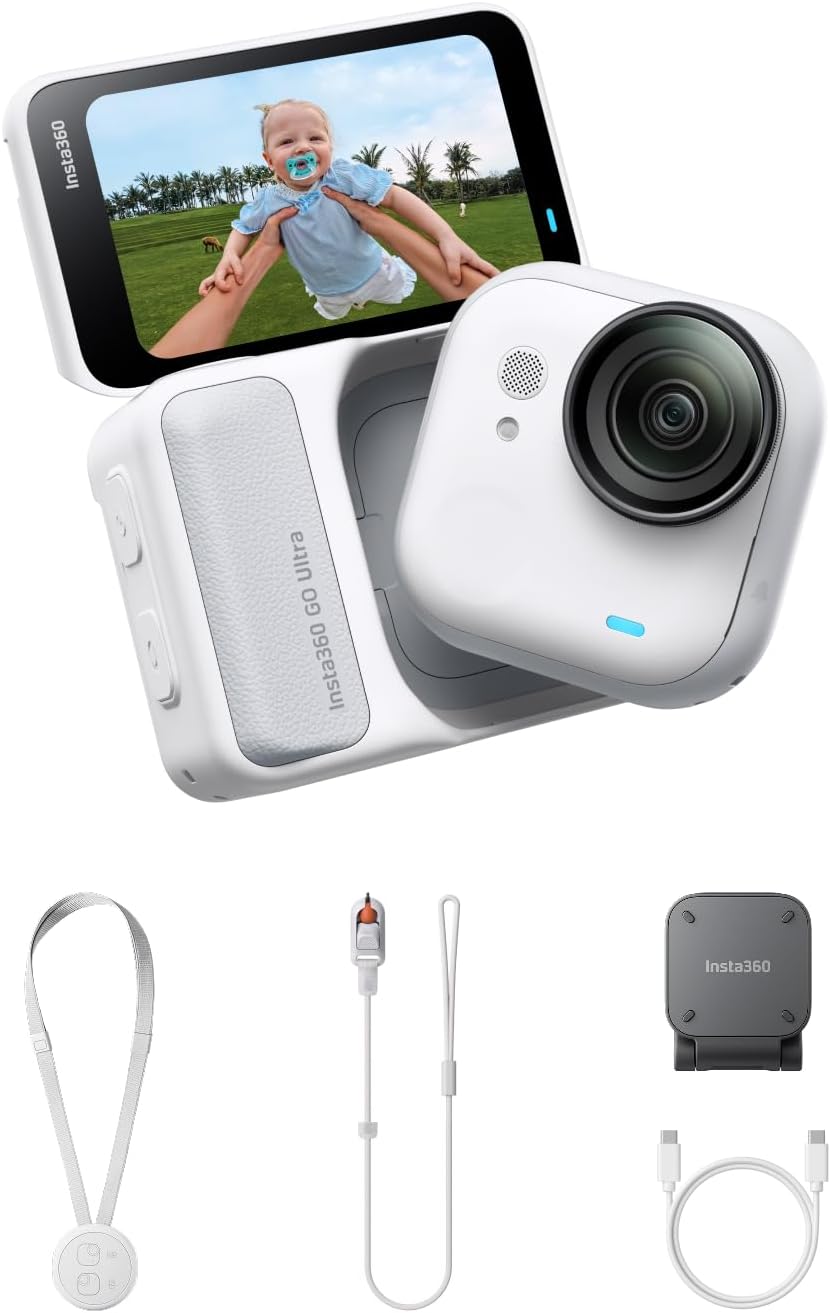
7. Insta360 GO Ultra — Best Hands-Free Travel Camera for Your Carry On
Price: $449.99 | Amazon rating: 4.3 / 5 from 1,307 ratings | Role: Travel camera | Key spec: 4K60 video, 1/1.28 in sensor, 53 g, magnetic mounting
The case for a dedicated camera in 2026 is narrow, and this is its shape: 53 grams, magnetic, small enough to clip to a jacket so your hands stay free.
The sensor is what changed. At 1/1.28 inches it is 221% larger than the GO 3S, and it shows most in low light – terminals, trains and evenings, which is when travel footage is usually taken.
The price is the problem. At $449.99 it costs more than the other six items on this list combined ($302.92), and its 1,307 ratings are pooled across six merged listings of the same camera, so that figure tells you about the model rather than this variant.
Best for: Travellers who make video and want it captured hands-free, in low light, without a gimbal.
Skip if: Your phone camera is good enough, or the budget is better spent on the trip itself.
Read the full Insta360 GO Ultra review →
Where to Buy — Insta360 GO Ultra
Carry On Essentials — Buyer’s Guide: What to Look For
Most packing lists fail because they are lists of objects rather than lists of constraints. These are the constraints that decide which carry on essentials are worth the space.
Start With the Bag, Not the Gadgets
The bag sets the ceiling for every other item in your carry on essentials, and airlines disagree wildly about how big it may be. American under-seat allowances are generous; Ryanair’s 40 x 30 x 20 cm and United’s 43 x 25 x 22 cm are not. Buy the bag for the strictest airline you actually fly, then fill it.
Choose Carry On Essentials That Do Two Jobs
Space in a personal item is measured in litres, so single-purpose items are expensive. The best carry on essentials each do two jobs: the shell is a windbreaker and a rain layer, the blanket is a terminal coat, the wallet is a tracker, the torch is a power source.
US vs UK: What Changes When You Pack Hand Luggage
Americans call it a carry-on; the British call it hand luggage. The same seven carry on essentials work in both countries, but five things change.
Sizes: Inches Versus Centimetres
US airlines publish carry-on limits in inches, and 22 x 14 x 9 in is near-universal. UK and European carriers publish centimetres and set them smaller. Convert before you buy: 22 x 14 x 9 in is 56 x 36 x 23 cm, larger than Ryanair allows.
Liquids: 3-1-1 Versus the New UK Scanners
This is the biggest live difference. In the US the 3-1-1 rule still applies almost everywhere: containers of 3.4 oz or less, in one quart bag. In the UK, airports with next-generation CT scanners – Heathrow, Gatwick, Edinburgh, Birmingham and Bristol among them – allow containers up to two litres and laptops to stay in the bag.
Vocabulary: Torch, Trainers and Trolleys
If you are reading UK guidance, translate as you go. A flashlight is a torch, sneakers are trainers, a trolley is a cart, and hand luggage essentials is the British name for this list. The products are identical; only the search term changes.
Carry On Essentials — Which One Should You Buy?
You do not need all seven. Here is how the carry on essentials stack up by budget, using the prices read on 5 October 2026.
Under $60 — The Starter Kit
Start with the three carry on essentials that fix the most common failures for the least money: the Hawanik AirTag Wallet at $8.98, the COOFANDY Packable Rain Jacket at $18.98 and the BAGSMART Foldable Travel Bag at $19.99 – $47.95 for the bag, the weather and the tracking.
$60 to $150 — The Comfortable Kit
Add warmth and light. The Berkshire Blanket Primalush at $29.99 and the ZF8313 Magnetic EDC Flashlight at $24.99 take the set to $102.93, and between them they cover the cold cabin and the dark rental – the two failures the starter kit leaves open.
Over $150 — The Full Carry On Essentials Setup
The Kindle Paperwhite (2024) at $199.99 is the next purchase for anyone who flies long-haul more than twice a year, taking the full set to $302.92. The Insta360 GO Ultra at $449.99 only makes sense if you actually publish video; otherwise your phone is the better answer.
If you are travelling by car rather than by air, the same thinking applied to a vehicle is in our road trip essentials guide, and the everyday version of this list – the things worth carrying when you are not going anywhere in particular – is in commuter essentials. For the charging and device side in more depth, see everyday tech essentials.
Carry On Essentials — Frequently Asked Questions
What essentials can I take on a plane?
The carry on essentials that matter, ranked by how often they save the trip: a bag that fits your airline’s under-seat limit, something to read that holds charge, a layer for the cold, a slim wallet with a tracker, a rain shell, a torch, and a camera only if you publish video. Everything on that list is allowed in the cabin.
Is hand luggage a personal item, or a separate carry on?
They are different allowances, and the distinction governs your whole set of carry on essentials. A personal item goes under the seat; a carry-on is the larger bag for the overhead bin. US sizes vary by carrier and are published in inches, while UK carriers publish smaller limits in centimetres. Check your airline before buying a bag.
Can I take a power bank in my hand luggage?
Yes, and only in hand luggage — power banks are banned from checked bags on both sides of the Atlantic. Up to 100 Wh needs no approval; 100–160 Wh requires the airline’s permission and is capped at two per passenger. The UK CAA also says power banks must not be used or recharged during the flight.
Is the 100 ml liquids rule still in force in the UK?
It depends on the airport. Heathrow, Gatwick, Edinburgh, Birmingham, Bristol and both Belfast airports now run next-generation CT scanners and permit containers up to two litres. Airports still on older equipment keep the 100 ml limit, so pack to 100 ml if any leg of your route might.
How much does hand luggage have to weigh?
American carriers mostly police size and ignore weight. European ones weigh: Ryanair caps its larger cabin bag at 10 kg and easyJet at 15 kg. Anything worn through the gate – a jacket or a wearable blanket – counts towards neither limit, which is why a worn layer is better value than a packed one.
Can I bring a flashlight or torch in my carry-on?
Yes — a torch is one of the few carry on essentials people assume is banned and is not. A compact rechargeable torch with the battery installed in the device is permitted in the cabin in both the US and the UK. Very large metal torches can be treated as a potential club at the officer’s discretion, which is another argument for a pocket-sized one.
Will a wearable blanket count towards my hand luggage allowance?
Not if you are wearing it. Anything worn through the gate is outside the allowance, which is exactly why wearable layers earn a place among carry on essentials on weight-limited European carriers more than on US ones. Fold it into the bag once you are seated.
What items are not allowed in carry-on?
Tools over 7 inches, anything with a blade, and liquids over the limit for the airport you are leaving from. The one that catches people out runs the other way: spare lithium batteries and power banks are banned from checked bags and must travel in the cabin.
Carry On Essentials — Final Thoughts
The seven carry on essentials here work because each one removes a specific, predictable failure rather than adding a feature: the bag sets the limit, the e-reader removes the dead screen, the blanket removes the cold, the wallet removes the lost card, the shell removes the forecast, the torch removes the dark and the camera removes the full hands.
If you take one thing from this guide, make it the measuring tape. The most common reason a set of carry on essentials fails is not a bad product but a bag measured against the wrong airline, and prices move – the figures here were read on 5 October 2026.
Sources and Further Reading
- Transportation Security Administration — the 3-1-1 liquids rule
- UK Civil Aviation Authority — what items you can travel with, and battery rules
- Federal Aviation Administration PackSafe — lithium batteries and power banks
- Which? — which UK airports have scrapped the 100 ml rule
- BBC News — airport changes rules on liquids in hand luggage
- Carry-on luggage size chart for 64 airlines, in inches and centimetres
Disclosure: Blue Rays Technologies is a participant in the Amazon Services LLC Associates Program. Links in this carry on essentials guide to Amazon.com are affiliate links, and we may earn a commission on qualifying purchases at no additional cost to you. Prices and Amazon ratings were correct at the time of writing and change frequently. This does not influence which products we recommend or the scores we give them.