
Most homes do not have a cleaning problem. They have a tooling problem. The weekly tidy keeps surfaces presentable, but the jobs that actually change how a house feels — grout that has gone grey, an extractor hood with a film on it, a hallway floor that never quite dries clean — get postponed because the equipment on hand turns them into a whole afternoon. The right deep cleaning tools do not make you clean more often. They shorten the specific jobs you keep avoiding until you stop avoiding them.
This guide covers seven products that between them handle the full sequence: check the house is safe to work on, keep outside dirt outside, wash and dry hard floors in one pass, scrub tile and grout without wrecking your shoulder, contain kitchen grease before it becomes a job, and deal with waste hygienically at the end. They are deliberately not seven versions of the same thing. Two of the seven are not powered at all, and one of them exists purely so that a future deep clean is smaller.
Every product was judged on four things: how much manual effort it removes, whether it survives being cleaned itself, what it costs against the job it replaces, and whether it works as well in a British house as an American one — because voltage, water hardness and the words on the bottle all differ. Prices and links go to Amazon.com; UK readers can search the same model names on Amazon.co.uk, and the US vs UK section below explains which of these deep cleaning tools cross the Atlantic unchanged and which do not.
Deep Cleaning Tools — Quick Comparison
All seven of the deep cleaning tools below, ranked by the job they do rather than by price. Scores are our own expert ratings out of 10.
| # | Product | Role | Key spec | Best for | Price | Score |
|---|---|---|---|---|---|---|
| 1 | Tineco iFLOOR 5 Breeze | Hard floors | Wet + dry in one pass | Whole-floor deep cleans | $179.90 | 8.4 |
| 2 | JOYMOOP flat mop | Floors, no power needed | Hands-free wringing | Rentals and small flats | $35.49 | 7.9 |
| 3 | Leebein spin scrubber | Tubs, tile, grout | 8 heads, dual speed | Limescale and soap scum | $37.98 | 8.2 |
| 4 | silicone splatter screen | Kitchen grease control | 3 sizes, heat resistant | Avoiding the clean entirely | $21.99 | 8.6 |
| 5 | BestOffice touchless bin | Waste and odour | 13 gal / 49 L, touchless | Kitchens with cross-contamination risk | $54.99 | 8.1 |
| 6 | Buself shoe covers | Entryway dirt control | 100 covers, non-slip | Protecting a floor you just washed | $8.97 | 8.8 |
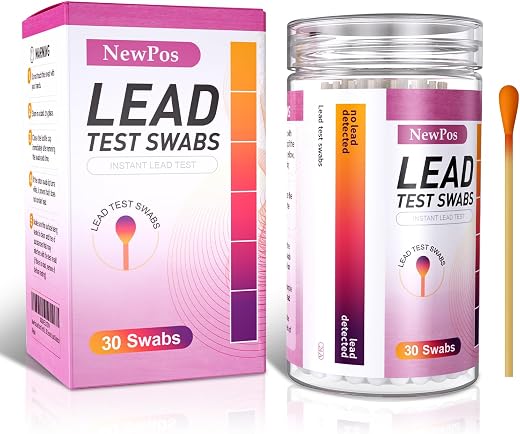
| 7 | NewPos lead test kit | Pre-clean safety check | 30 swabs, 30-second result | Homes built before 1978 | $12.99 | 8.0 |
- Deep Cleaning Tools — Quick Comparison
- The 7 Best Deep Cleaning Tools in 2026
- Buyer’s Guide: What to Look For
- US vs UK: What Changes When You Deep Clean
- Which One Should You Buy?
- Cleaning Chemical Safety: What the EPA, CDC and HSE Say
- Frequently Asked Questions
- Final Thoughts
- Sources and Further Reading
The 7 Best Deep Cleaning Tools in 2026
Each of these deep cleaning tools was chosen for a different job. Read the role line before the score — the highest-scoring product here is not the one most households should buy first.
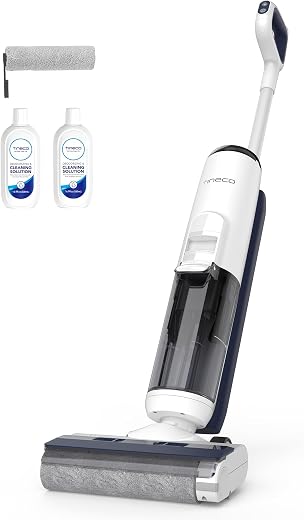
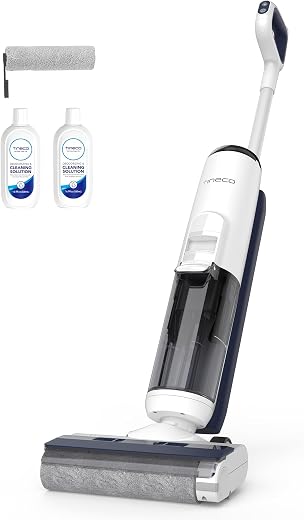
1. Tineco iFLOOR 5 Breeze — Best Deep Cleaning Tool for Hard Floors
Price: $179.90 | Amazon rating: 4.2 / 5 (2,529 ratings) | Role: Cordless wet-dry floor washer | Key spec: Washes and vacuums in one pass, auto self-cleaning cycle
The iFLOOR 5 Breeze is the only machine here that vacuums and washes in the same pass, and that single fact reorganises how a deep clean runs. A conventional session is sweep, then mop, then wait for the floor to dry, then notice the streaks. This one pulls dry debris into a dirty-water tank while laying down clean solution behind it, so the water going onto the floor is always clean and the water coming off it is always the last thing to touch the tile. On a kitchen floor with cereal, crumbs and a dried juice ring, one slow pass did what previously took a sweep and two mop-and-rinse cycles.
The self-cleaning cycle is the part that decides whether a machine like this stays in the rotation. Park it back on the dock, press the button, and it flushes the roller with clean water and spins it until it is damp rather than sodden. That matters because a wet roller left in a dark base is exactly how a floor washer starts smelling of pond. It is not a substitute for pulling the dirty tank out and rinsing it — you still have to do that, and the tank holds a genuinely unpleasant grey soup after one room — but it does mean the roller does not need hand-washing every time.
The compromises are real. Battery life is around 25 to 30 minutes of continuous washing, which covers an open-plan ground floor but not a whole house without a recharge. It is a hard-floor tool only: sealed tile, vinyl, laminate and sealed wood are fine, carpet and unsealed timber are not. And at $179.90 it is roughly five times the price of everything else on this list, which makes it the piece most worth borrowing before you buy. Among cordless deep cleaning tools it earns its place on capability rather than value.
Best for: Households with mostly hard floors, pets, or small children — anywhere the floor gets both dry crumbs and wet spills daily.
Skip if: Your home is mostly carpet, you have unsealed timber floors, or you want one machine to cover more than about 800 sq ft (75 m²) per charge.
Read the full Tineco iFLOOR 5 Breeze review →
Where to Buy — Tineco iFLOOR 5 Breeze
2. JOYMOOP Wall Mop and Bucket Set — Best Manual Mop in a Deep Cleaning Kit
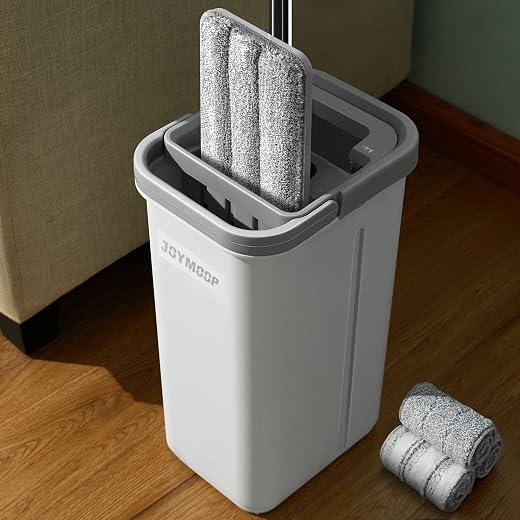
Price: $35.49 | Amazon rating: 4.3 / 5 (18,583 ratings) | Role: Hands-free flat mop and wringing bucket | Key spec: 3 washable microfiber pads, wet and dry use
Not every deep clean should involve a battery. The JOYMOOP flat mop is the low-tech control in this group, and it is here because the hands-free wringing genuinely works: you drop the pad into the bucket’s wringing chamber, push down on the handle, and the pad comes out at whatever dampness you left it at. No twisting, no wet hands, no lifting a heavy mop head. For anyone who has fought a string mop with a foot-pedal wringer, the difference is immediate.
The flat pad shape is what makes it useful for deep work rather than maintenance. A rectangular microfiber head reaches under kickboards and radiators, presses evenly against skirting boards, and can be flipped mid-room so you are always working with a clean face. The set includes three washable pads, which is the right number — one on the mop, one drying, one in the wash. They survive a 60°C machine wash without shedding, and at that temperature you are actually sanitising the pad rather than redistributing last week’s floor.
It is a mop, so the limits are the limits of mops. Dried-on residue still needs a scrubbing pass first; the mop spreads solution and lifts loosened dirt, it does not dissolve anything on its own. The bucket is bulky to store and the wringing chamber will not fit a round mop head, so you are committed to this system’s pads. But at roughly a fifth of the price of a floor washer, and with no battery to degrade, it is the most sensible starting point of all the deep cleaning tools in this guide.
Best for: Renters, small flats, upstairs rooms, and anyone who wants a floor tool that will still work in five years with no charging and no spare parts.
Skip if: You have a large single-level home with a lot of hard floor and would rather not push a mop around it, or you physically struggle with the pressing motion.
Read the full JOYMOOP flat mop review →
Where to Buy — JOYMOOP flat mop
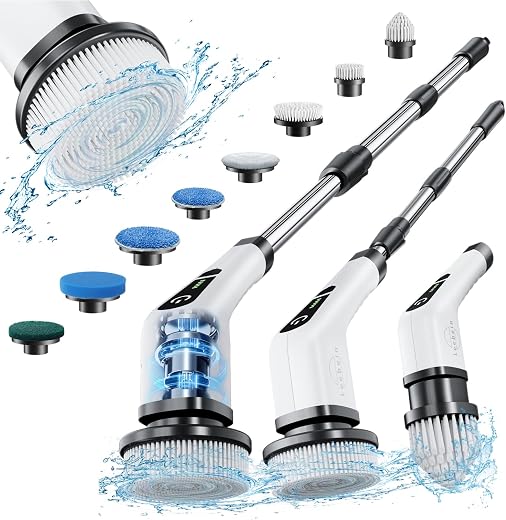
3. Leebein Electric Spin Scrubber — Best Deep Cleaning Tool for Bathrooms
Price: $37.98 | Amazon rating: 4.3 / 5 (22,922 ratings) | Role: Cordless powered scrubbing brush | Key spec: 8 brush heads, dual speed, extendable handle
Bathrooms are where deep cleaning stops being about coverage and starts being about torque. The Leebein spin scrubber spins a brush head at a steady speed against tile, grout, tub enamel and shower screens so your arm does not have to. Set against a hard-water shower door with a fortnight of soap scum on it, the flat brush and a standard bathroom spray cleared it in about ninety seconds — the same job takes several minutes and considerable pressure with a hand pad.
Eight replaceable heads is more than most people will use, but three matter. The large flat brush covers tub and tile, the corner cone gets into the join where the screen meets the tray, and the small stiff head handles grout lines. The handle detaches and extends, which turns it into a tool for shower ceilings and skirting boards as well as the obvious surfaces. Dual speed is worth having: the low setting is for painted or enamelled surfaces where a fast brush can burnish and mark.
The honest limitations are runtime and noise. You get roughly 60 to 90 minutes on a charge depending on speed and pressure, which is plenty for one bathroom, and the motor is loud enough that you will not want to use it late at night in a flat. It also flings water — expect to be damp. Used sensibly it is one of the highest-value deep cleaning tools you can buy, because it converts scrubbing effort into something you can do standing upright.
Best for: Hard-water areas, older bathrooms with grout that has stopped responding to sprays, and anyone with wrist, shoulder or back problems.
Skip if: You have delicate natural stone, acrylic that scratches easily, or you need a silent tool because of neighbours or sleeping children.
Read the full Leebein spin scrubber review →
Where to Buy — Leebein spin scrubber
4. Silicone Splatter Screen — The Deep Cleaning Tool That Prevents the Mess
Price: $21.99 | Amazon rating: 4.6 / 5 (1,477 ratings) | Role: Grease containment for the hob | Key spec: 3-piece set (9.8in, 11.4in, 13in), dishwasher safe
The cheapest deep clean is the one you never have to do, which is why a splatter screen belongs in a list of deep cleaning tools rather than in a list of cooking gadgets. Airborne grease from frying is what turns an extractor hood sticky, glazes the wall behind the hob, and builds the yellow film on cabinet doors that no spray removes in one pass. A screen laid over the pan catches the droplets while letting steam escape, which is the crucial distinction from a lid — a lid traps moisture and ruins the sear.
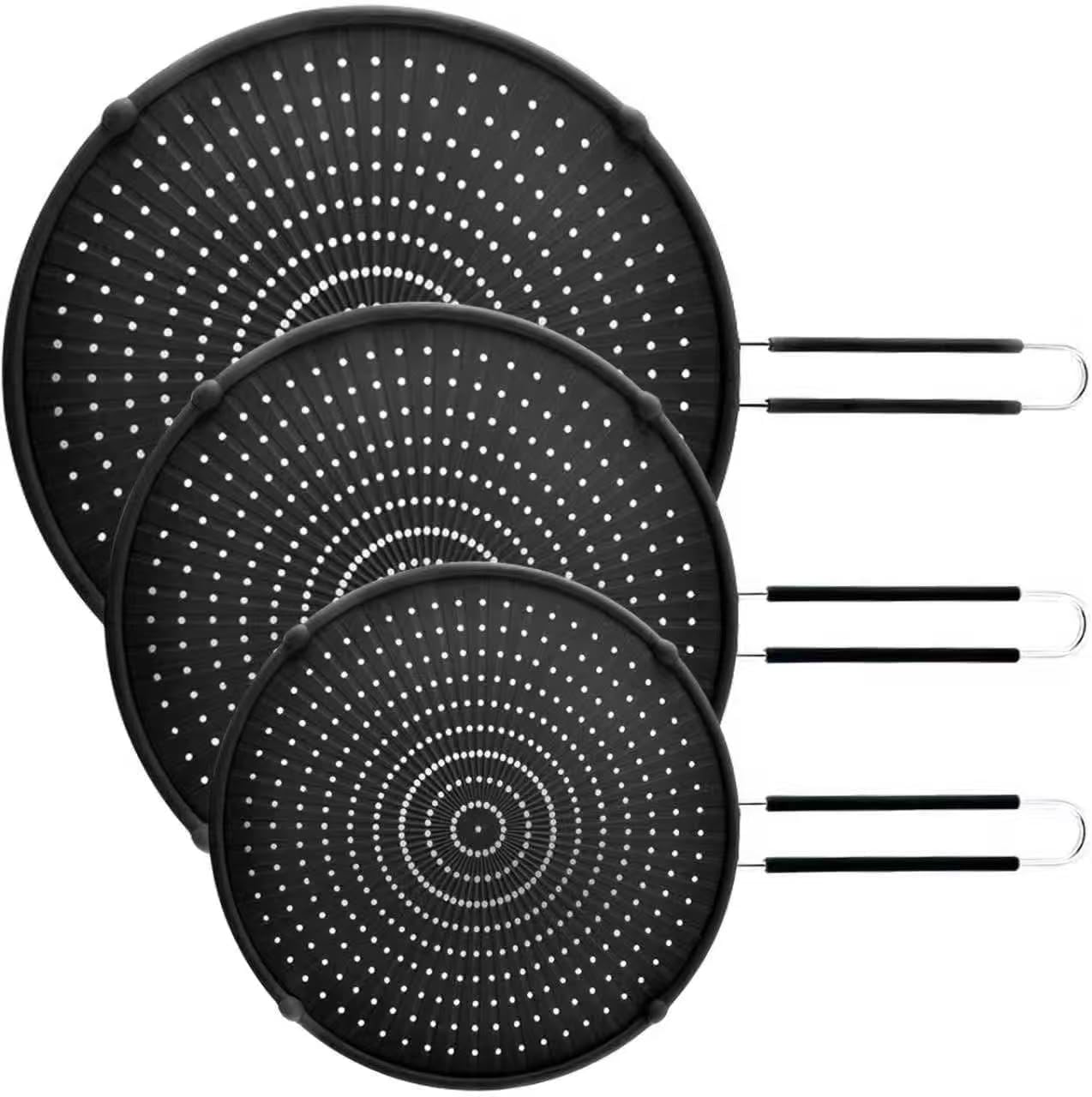
This is a three-piece silicone set at 9.8, 11.4 and 13 inches (25, 29 and 33 cm), which covers a small saucepan through to a large skillet. Silicone has one clear advantage over the traditional mesh screen: it goes in the dishwasher and comes out clean, whereas mesh clogs with polymerised grease and eventually has to be thrown away. It folds rather than needing flat storage, and it does not rust.
Two caveats. Silicone screens are rated to around 480°F (250°C), so they are for frying and searing, not for use under a broiler or grill. And because silicone is slightly heavier than mesh, a screen sitting on a very light pan can shift if the pan is knocked. Neither is a reason to skip it — at $21.99 for three, the payback is the first extractor hood degrease you do not have to schedule.
Best for: Anyone who fries regularly, has an open-plan kitchen, or has ever tried to degrease a range hood filter and vowed never again.
Skip if: You cook almost entirely by boiling, steaming or oven roasting, or you need something rated for direct grill and broiler heat.
Read the full silicone splatter screen review →
Where to Buy — silicone splatter screen
5. BestOffice Automatic Trash Can — Best Deep Cleaning Tool for Waste and Odour
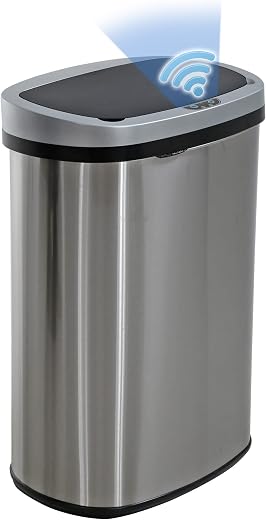
Price: $54.99 | Amazon rating: 4.2 / 5 (21,440 ratings) | Role: Touchless 13-gallon stainless bin | Key spec: 49 L capacity, infrared lid, removable inner bucket
A deep clean that ends by touching a greasy bin lid with clean hands has undone part of itself. The BestOffice touchless can uses an infrared sensor to open at about six inches, which sounds like a convenience feature and is really a cross-contamination one — it is the single most-touched object in most kitchens and the one least likely to be wiped. At 13 gallons (49 L) it takes a standard kitchen liner without the bag slipping down inside.
The stainless body matters more than the electronics. The inner bucket lifts out, which means the thing can actually be washed rather than wiped around, and the oval footprint sits flat against a wall or in the gap beside a fridge where a round bin wastes space. The lid closes slowly rather than slamming, and there is a manual mode if you want it propped open while you are working through a room.
The compromises are the usual ones for sensor bins. It runs on four D batteries that last months but always fail at an inconvenient moment; the sensor occasionally triggers when you walk past with a full laundry basket; and fingerprints show on brushed stainless in exactly the way you would expect. At $54.99 it is mid-priced among these deep cleaning tools, and its value is entirely about the hygiene of the last thirty seconds of every cleaning session.
Best for: Kitchens where raw meat is handled, homes with anyone immunocompromised, and anyone who deep cleans and then immediately re-contaminates their hands.
Skip if: You want something you never have to buy batteries for, or you need a small bin for a compact flat — 49 L dominates a tiny kitchen.
Read the full BestOffice touchless bin review →
Where to Buy — BestOffice touchless bin
6. Buself Disposable Shoe Covers — Best Deep Cleaning Tool for Entryway Dirt
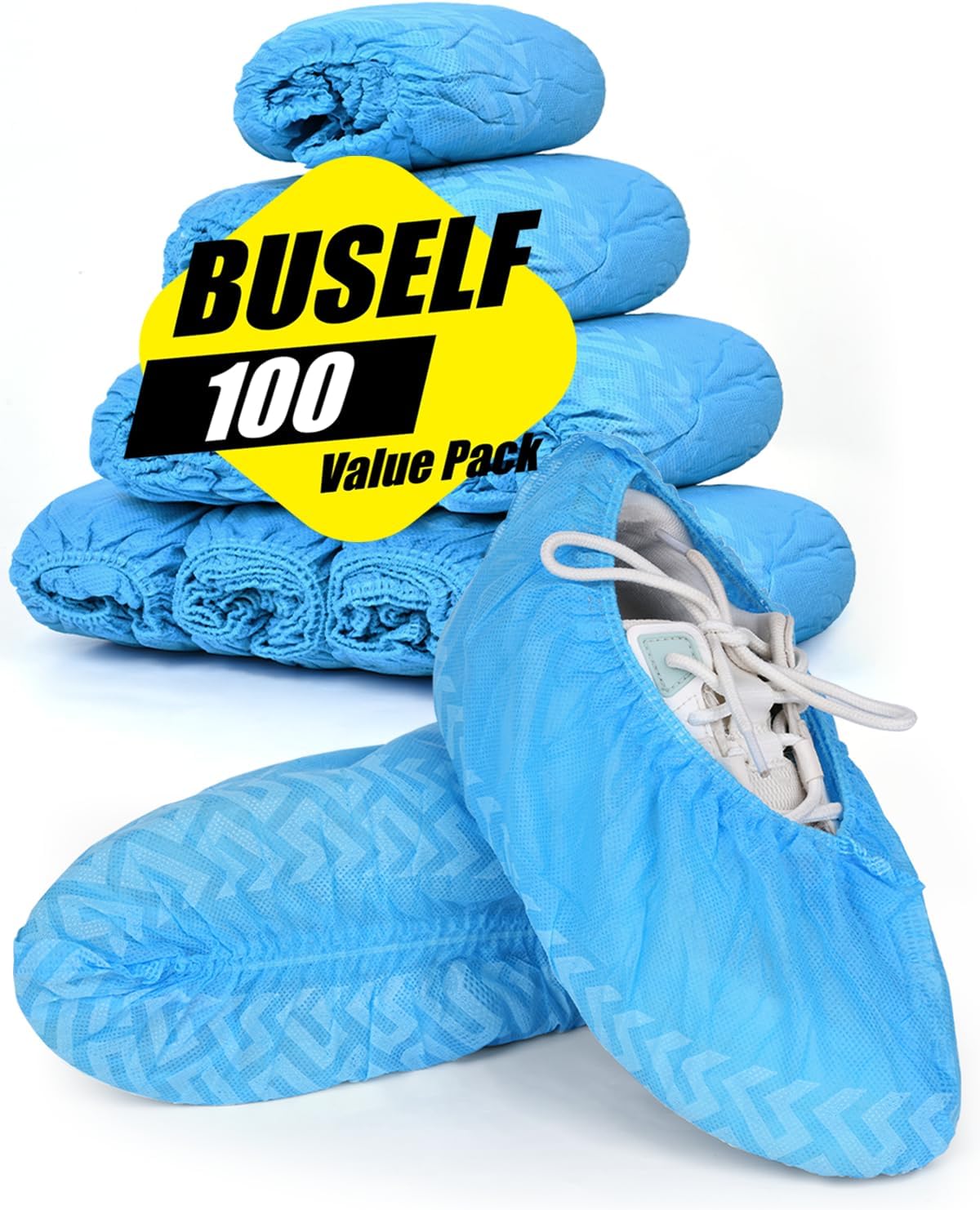
Price: $8.97 | Amazon rating: 4.4 / 5 (13,036 ratings) | Role: Non-slip disposable overshoes | Key spec: 100 covers (50 pairs), waterproof, fits up to size 13
This is the least glamorous entry and quietly the most useful. Disposable shoe covers exist for two moments in a deep clean: the hour after you have washed a floor and it is still drying, and any visit from a tradesperson, delivery driver or relative who is not going to take their boots off. Slipping a pair on lets you keep working — carrying boxes, moving furniture, finishing the skirting boards — without walking your outside dirt back over the surface you just cleaned.
The Buself covers are non-slip, which is the whole specification that matters. Plain polyethylene overshoes on a wet tile floor are genuinely dangerous; these have a textured, ribbed sole that grips. They are waterproof rather than merely water-resistant, so damp floors do not soak through to socks, and the elastic reaches up to a men’s size 13 without splitting. A hundred covers for $8.97 works out at under nine cents a pair.
They are disposable, and that is a legitimate objection. Buself markets them as recyclable, but in practice kerbside recycling for thin polyethylene film is limited on both sides of the Atlantic, so they are best treated as a consumable used sparingly rather than a default. If you deep clean once a month and use two pairs each time, a pack lasts four years. Used that way they are the cheapest of these deep cleaning tools by an order of magnitude.
Best for: Anyone with a large hard-floor area, people who host tradespeople, and anybody who has ever mopped a hallway and then remembered the bins need taking out.
Skip if: You are trying to eliminate single-use plastic from your home, or your household would realistically get through a pack in a month.
Read the full Buself shoe covers review →
Where to Buy — Buself shoe covers
7. NewPos Lead Test Kit — The Deep Cleaning Tool to Use Before You Start
Price: $12.99 | Amazon rating: 4.3 / 5 (252 ratings) | Role: 30-swab lead paint detector | Key spec: Results in 30 seconds, works on paint, ceramics and dishes
Every other tool here assumes it is safe to start. In a home built before 1978 in the US, or before the 1992 UK ban on lead in decorative paint, that assumption is worth ten dollars of testing. Aggressive deep cleaning of old paintwork — scrubbing skirting boards, power-washing window frames, sanding a sticky door before repainting — is one of the standard ways that lead dust gets released into a house, and it is invisible.
The NewPos kit is 30 swabs that develop a colour change in about 30 seconds. You crush the tube, work the tip on the surface, and read it: a red or pink reaction indicates lead. Thirty swabs is enough to test methodically rather than sampling one door and hoping — window sills, door frames, stair spindles and skirting boards in each older room, plus any imported or vintage ceramics you eat from, which is a genuine and underrated route of exposure.
Be clear about what a swab kit is and is not. It is a screening tool, not a laboratory result: it can miss lead under later layers of paint, and it cannot tell you concentration. The EPA’s position for anything beyond screening is a certified inspector or risk assessor. But as the first of your deep cleaning tools to come out of the cupboard in an older house, it converts a vague worry into a specific answer for the price of two coffees.
Best for: Anyone deep cleaning, sanding or renovating a home built before 1978 (US) or before the 1990s (UK), and anyone using vintage or imported glazed ceramics.
Skip if: Your home is new-build, or you need a legally defensible result for a sale, rental or renovation — that requires a certified inspection, not a swab.
Read the full NewPos lead test kit review →
Where to Buy — NewPos lead test kit
Deep Cleaning Tools — Buyer’s Guide: What to Look For
Buying by product category is how people end up with a cupboard of overlapping equipment. Buy by job instead, and by whether the tool can itself be cleaned, because a dirty cleaning tool is worse than no tool at all.
Start With the Job, Not the Gadget
Before comparing deep cleaning tools, write down the five jobs in your home you actually postpone. For most households the list is some combination of hard floors, shower and tub, oven or extractor hood, skirting boards and window frames, and bins. Then check which of those a candidate tool genuinely does. A floor washer is superb at one of the five and useless at the other four. A spin scrubber covers two or three. This is why a kit of complementary deep cleaning tools beats a single expensive machine, and why the cheapest items on this list often do the most work.
Can You Clean the Deep Cleaning Tools Themselves?
Anything that touches dirty water needs a path to being cleaned itself. For a floor washer, that means a removable dirty-water tank and a roller you can pull out; for a mop, machine-washable pads; for a bin, a liftable inner bucket. Tools that fail this test smell within a month and then get abandoned. It is the single most reliable predictor of whether deep cleaning tools are still in use a year later.
Cordless Runtime and Real Coverage
Manufacturer runtime figures are measured at the lowest power setting on a clean surface. Halve them for planning. A 30-minute floor washer is a one-or-two-room machine in practice, and a 60-minute scrubber is one bathroom plus a bit. If your hard-floor area is large, either accept a mid-session recharge or keep a manual mop for the overflow. Battery chemistry matters too: sealed lithium packs in most consumer deep cleaning tools are not user-replaceable, which effectively caps the product’s life at four to six years.
Abrasiveness: Where Powered Deep Cleaning Tools Do Damage
Powered scrubbing is only an advantage if the surface can take it. Glazed ceramic tile, enamel, sealed grout and toughened glass are fine. Natural stone, matte acrylic, painted timber and anything with a printed or lacquered finish can dull or burnish under a spinning brush. Test on a hidden patch first, use the lower speed setting, and let the chemical do the dissolving so the brush only has to do the lifting.
Prevention Beats Removal
Two of the seven picks here — the splatter screen and the shoe covers — remove no dirt whatsoever. They stop it arriving. Grease that never reaches a cabinet door does not need degreasing, and grit that never crosses the threshold does not scratch a floor. Prevention items are almost always the cheapest deep cleaning tools in a kit and almost always the ones with the best return, because the labour they save compounds every week rather than once.
US vs UK: What Changes When You Deep Clean on the Other Side of the Atlantic
A guide to deep cleaning tools written for one market and read in the other quietly misleads people, because four things genuinely differ: the electricity, the water, the regulations and the vocabulary. Anyone buying deep cleaning tools across the Atlantic needs all four.
Voltage Is the One That Breaks Deep Cleaning Tools
The US runs 120 V at 60 Hz on Type A and B plugs; the UK runs 230 V at 50 Hz on fused Type G plugs. A corded American appliance plugged into a UK socket through a simple adapter will be fed roughly double its design voltage. For the powered items here that matters less than you would expect, because both the Tineco floor washer and the Leebein scrubber charge over a low-voltage adapter — check the brick for 100–240 V, 50/60 Hz and it needs only a plug shape adapter. Corded 120 V motors are the danger, and they are not worth importing.
Water Hardness Changes Which Tool You Need Most
The USGS classifies water as soft below 60 mg/L calcium carbonate, moderately hard to 120 mg/L, hard to 180 mg/L and very hard above that, with hard water concentrated in the east-central and western United States. Much of southern and eastern England sits on chalk and limestone and runs well into the very hard band, while Scotland, Wales, Northern Ireland and north-west England are largely soft.
The practical consequence is that hardness should change which deep cleaning tools you prioritise. In a hard-water area the limescale on shower screens and taps is the dominant bathroom problem, which pushes a powered scrubber up the list and makes an acidic descaler more useful than a general-purpose spray. In soft-water regions soap scum, not scale, is the film you are fighting, and it responds better to alkaline cleaners.
The Rules Are Written by Different Bodies
In the US, the EPA registers antimicrobial products and runs the voluntary Safer Choice label, which screens every ingredient regardless of concentration and now covers around 2,000 products. In Great Britain, disinfectants are biocidal products regulated under the GB Biocidal Products Regulation, with the HSE as the competent authority. Lead paint is the sharpest divergence: the EPA’s Renovation, Repair and Painting rule applies to housing built before 1978 and requires certification for anyone paid to disturb painted surfaces, while the UK banned lead in consumer decorative paint in 1992, leaving a much wider band of older British housing stock with no equivalent certification regime for DIY work.
Units and Vocabulary
Capacities are gallons and fluid ounces in the US, litres and millilitres in the UK — the 13-gallon bin above is a 49 L bin in British terms, and a US “quart” of bleach solution is 0.95 L. Areas are square feet against square metres, so a floor washer rated for 800 sq ft is a 75 m² machine on a British listing.
Then the words themselves: Americans vacuum, Britons hoover; a trash can is a bin and a trash bag a bin bag; dish soap is washing-up liquid; a countertop is a worktop and a stovetop a hob; a faucet is a tap, a dish towel a tea towel, and spring cleaning is a spring clean. Search Amazon.co.uk for “hoover” or “worktop cleaner” and the results change completely — which is the practical reason British readers often cannot find the deep cleaning tools an American article recommends.
Deep Cleaning Tools — Which One Should You Buy?
Under $40 — The Starting Kit
If you buy nothing else, buy the Leebein electric spin scrubber at $37.98 and the Buself shoe covers at $8.97. That combination removes the single most physically unpleasant job in the house and protects the floor you clean afterwards. Add the NewPos lead test kit at $12.99 if your home predates 1978 in the US or the 1990s in the UK. Under sixty dollars covers the highest-return deep cleaning tools on this entire list.
Deep cleaning rarely stops at the tools themselves. If the job is a flat rather than a house, the two rooms that defeat most kits are the kitchen and whatever corner the washing happens in — our apartment kitchen essentials guide and apartment laundry essentials guide cover both, and the home maintenance essentials guide picks up the jobs that are maintenance rather than cleaning.
$40–$80 — The Complete Manual Setup
Add the JOYMOOP flat mop and bucket at $35.49 and the silicone splatter screen set at $21.99. You now have floors, bathroom, entry and kitchen prevention covered with nothing that can run out of battery mid-job. For most flats and smaller houses this tier is the honest recommendation — the machine in the next tier is faster, not better.
$80 and Up — The Powered Build
The Tineco iFLOOR 5 Breeze at $179.90 is the upgrade that changes weekly behaviour rather than annual behaviour, and the BestOffice touchless bin at $54.99 closes the hygiene loop at the end of every session. Buy this tier if you have a large hard-floor area and clean it often enough that a machine pays back in time rather than in novelty.
Cleaning Chemical Safety: What the EPA, CDC and HSE Actually Say
Deep cleaning tools do the mechanical half of the work, and only the mechanical half. The chemical half is where people get hurt, and the official guidance on both sides of the Atlantic is more specific — and more restrictive — than the label on most bottles suggests.
Never Mix, and Why
The CDC’s position on household bleach is absolute: never mix bleach, or any disinfectant, with any other cleaner or disinfectant, because the combination can release vapours that are dangerous to breathe. The UK’s Health and Safety Executive says the same thing in its guidance on cleaning substances, singling out bleach mixed with acidic toilet cleaners as a source of harmful gases. The two most common accidental combinations in a domestic deep clean are bleach with a limescale remover (acidic, releases chlorine gas) and bleach with a glass or floor cleaner containing ammonia (releases chloramine). Both happen most often when someone tries to “double up” on a stubborn shower tray.
Dilution, Dwell Time and Ventilation
The CDC’s household bleach dilution is 5 tablespoons (one-third of a cup) per gallon of room-temperature water, or 4 teaspoons per quart — and the surface must stay visibly wet for at least one minute for the disinfection to count. Diluted solutions lose effectiveness within about 24 hours, so mix fresh rather than keeping a spray bottle under the sink for a month. The HSE adds a detail worth knowing when you decant anything: always add concentrate to water, never water to concentrate, use a properly labelled container, and work with a window open or mechanical ventilation running. Almost every “cleaning product made me feel ill” story traces back to a closed bathroom.
Cleaning Is Not Disinfecting
These are two operations and the order matters. Cleaning removes soil and reduces the number of germs mechanically — that is what the mop, the scrubber and the floor washer are for. Disinfecting kills what remains, and disinfectants only work on a surface that has already been cleaned, because organic soil deactivates them. Running a disinfectant over a greasy worktop mostly wastes the disinfectant. Use the deep cleaning tools first, the chemistry second — in that order, every time.
Lead Dust: The Risk Deep Cleaning Actually Creates
Scrubbing, sanding and pressure-washing old paintwork can turn a stable surface into airborne dust. The EPA’s Renovation, Repair and Painting rule covers homes and child-occupied facilities built before 1978 and requires anyone paid to disturb painted surfaces to be certified in lead-safe practices; homeowners working on their own homes are generally exempt from the rule but the EPA still recommends lead-safe work practices and, where possible, hiring a certified contractor.
In the UK, lead was removed from consumer decorative paint in 1992, so the equivalent risk sits in any pre-1990s property — a far larger share of the housing stock than in most US cities. A swab kit is a screening step, not a substitute for a certified inspection, but it is the difference between knowing and guessing before you point any of your deep cleaning tools at a Victorian skirting board.
Choosing Safer Products
If you want to reduce the chemical load rather than manage it, the EPA’s Safer Choice label is the most useful shortcut in the US: it reviews every ingredient regardless of percentage for carcinogenicity, reproductive toxicity, aquatic toxicity and persistence, plus pH, VOC content and packaging. In Great Britain the comparable assurance is that a disinfectant is authorised under the GB Biocidal Products Regulation, administered by the HSE. Neither label makes a product harmless — but between good deep cleaning tools and a Safer Choice surfactant, most household jobs need nothing stronger.
Deep Cleaning Tools — Frequently Asked Questions
What are the most essential deep cleaning tools for a first-time buyer?
Of all the deep cleaning tools here, a powered scrubber and a flat mop cover the two jobs most people postpone: bathroom surfaces and hard floors. Add a lead test kit if the property is old. Those three cost under $90 together and remove more effort than a single $300 machine, because they address different jobs rather than doing one job faster.
Do I need a cordless floor washer if I already have a vacuum and a mop?
Not need — but of all the deep cleaning tools here it saves the most time per session. A floor washer collapses sweep, mop, rinse and dry into one pass, and it never puts dirty water back on the floor. If your hard-floor area is small or you clean it rarely, a mop is the better value. If you clean hard floors more than once a week, the machine repays the money in hours.
Will American deep cleaning tools work in the UK?
Battery-powered ones usually will. Check the charger for "100–240 V, 50/60 Hz" — if it says that, you only need a Type G plug adapter. Corded 120 V appliances will not work safely on the UK’s 230 V supply through a simple adapter and should not be imported. Voltage converters exist but are rarely worth it for cleaning equipment.
How often should a house actually be deep cleaned?
Twice a year for a whole-house pass with the full set of deep cleaning tools is realistic for most households, with kitchens and bathrooms on a monthly cycle because grease and scale build continuously. The point of good deep cleaning tools is to shrink each session enough that it happens on schedule rather than being pushed to the next holiday weekend.
Is a spin scrubber safe on natural stone or acrylic baths?
Use the low speed and a soft head, and test on a hidden area first. Glazed ceramic, enamel and toughened glass tolerate powered brushing well. Honed marble, travertine and matte acrylic can dull or burnish. Let an appropriate cleaner dissolve the deposit and use the brush only to lift it, rather than relying on abrasion.
Can I mix bleach with another cleaner to make it stronger?
No. The CDC’s guidance is never to mix bleach or any disinfectant with another cleaner, and the HSE specifically warns that bleach mixed with acidic toilet cleaners gives off harmful gases. Bleach plus limescale remover releases chlorine; bleach plus an ammonia-based cleaner releases chloramine. Both are genuinely dangerous in an unventilated bathroom.
What is the difference between cleaning and disinfecting?
Cleaning physically removes soil and most germs with detergent and mechanical action. Disinfecting kills the microorganisms left behind, and only works properly on an already-clean surface because organic soil deactivates disinfectants. In practice: use your deep cleaning tools first, then apply a disinfectant and leave it wet for the contact time on the label.
Are disposable shoe covers worth it, or just wasteful?
It depends entirely on frequency. Used a couple of pairs at a time around a wet floor or a tradesperson’s visit, a pack of 100 lasts years and costs under nine cents a pair. Used daily, they are a plastic-consumption problem with no real benefit — a washable pair of indoor shoes and a decent doormat does the same job.
Do I really need to test for lead before deep cleaning an old house?
If it was built before 1978 in the US or before the 1990s in the UK and you plan to scrub, sand or pressure-wash painted surfaces, yes. Aggressive cleaning is one of the standard ways lead dust becomes airborne. A swab kit is a screening tool only — the EPA points anyone needing certainty toward a certified inspector or risk assessor.
How do I stop my deep cleaning tools from smelling?
Empty and rinse dirty-water tanks immediately after use rather than the next morning, run the self-clean cycle if the machine has one, and store rollers and mop pads where air can reach them. Machine-wash microfiber pads at 60°C and skip fabric conditioner, which coats the fibres and destroys their absorbency.
Deep Cleaning Tools — Final Thoughts
The pattern that emerges from testing these seven deep cleaning tools is that the expensive item is not the important one. The Tineco is the most capable machine here and it will change how often you wash a kitchen floor, but the $37.98 scrubber removes more suffering per dollar, and the two cheapest items on the list — a splatter screen and a bag of shoe covers — do their work by making future cleaning smaller rather than faster. A good kit of deep cleaning tools is layered that way on purpose: prevention at the bottom, manual tools in the middle, one powered machine at the top for the job you do most.
Whichever combination you land on, the safety half matters as much as the equipment half. Test before you scrub old paintwork, never combine bleach with another product, give disinfectants their contact time on an already-clean surface, and open a window. Do that and the deep cleaning tools above will handle almost everything a house can throw at them — in gallons or litres, on a hob or a stovetop, in a hard-water county or a soft-water one.
Sources and Further Reading
- CDC — Cleaning and Disinfecting with Bleach (dilution ratios, one-minute wet contact time, never-mix guidance)
- HSE — Safe Use of Cleaning Substances (CAIS22) (bleach with acidic cleaners, decanting concentrate into water, ventilation and PPE)
- US EPA — Lead Renovation, Repair and Painting Program (pre-1978 housing, certification requirements)
- US EPA — Lead-Safe Renovations for DIYers
- US EPA — Learn About the Safer Choice Label
- HSE — Biocides Regulation, Supply and Use (GB BPR)
- USGS — Hardness of Water (soft/moderate/hard/very hard thresholds in mg/L)
Disclosure: Blue Rays Technologies is a participant in the Amazon Services LLC Associates Program. Product links in this article are affiliate links, and we may earn a commission on qualifying purchases at no additional cost to you. Prices and Amazon ratings were correct at the time of writing and may change. This article is general information, not professional advice — for lead assessment, chemical exposure or any health concern, consult a certified professional.