
The power goes off and, in the space of a second, most of what you own stops being useful. The fridge is a cupboard. The hob is a worktop. The boiler, if it needs mains power for its pump and ignition, is a heavy white box on the wall. What you have left is whatever in your house carries its own energy — and for most households, honestly assessed, that is a phone at 40% and a drawer of dead batteries.
This guide covers seven power outage essentials that work when nothing is plugged in: a torch you can stick to metal and work hands-free, solar lights that recharge themselves outdoors, a wearable blanket that heats the person instead of the house, a propane firebowl for outdoor heat and hot food, a large cooler that buys your freezer several extra days, a thermometer that answers the only question that matters afterwards, and a multitool that opens one-handed in the dark. They were chosen on one test: does it still work with the mains off?
We have deliberately not recommended a portable generator, a whole-home battery or candles, and the buyer’s guide explains why in detail — two of those three are how power cuts actually injure and kill people. Prices and links go to Amazon.com; UK readers can search the same models on Amazon.co.uk, and because this is a topic where British and American rules genuinely diverge, there is a full US versus UK section covering food-safety timings, compensation rights you may not know you have, and one legal trap that catches British buyers of multitools.
Power Outage Essentials — Quick Comparison
| # | Product | Role | Key spec | Best for | Price | Score |
|---|---|---|---|---|---|---|
| 1 | ZF8313 Magnetic EDC Flashlight | Light in your hand | 2,000 lumens, IPX6, magnetic base, USB-C rechargeable | Finding the fuse box in the dark | $23.99 | 8.4 |
| 2 | LIANGLOME Solar Fence Lights | Light that needs no grid | 8-pack, IP65, dusk-to-dawn, 3000/4000/6000K | Multi-day outages and dark garden paths | $27.05 | 8.0 |
| 3 | Berkshire Blanket Primalush Wearable Blanket | Warmth with no fuel at all | 58 x 64 in plush cape, pockets, machine washable | Winter outages and cold-weather sitting still | $29.99 | 8.5 |
| 4 | Outland Living Firebowl 893 Deluxe | Heat and cooking, outdoors only | 19 in, 58,000 BTU, propane, CSA-approved, cover and carry kit | Cooking and warmth when the hob is dead | $159.99 | 9.1 |
| 5 | Ninja FrostVault 45-Quart Cooler | Cold storage with no compressor | 45 qt / 68 cans, dry zone drawer, all-terrain wheels | Protecting a fridge full of food for days | $299.95 | 8.8 |
| 6 | Ninja ProChef Wireless Thermometer | Temperature you can actually read | Wireless probe, withstands 700 °F, Bluetooth, app-guided | Deciding what to keep and what to bin | $99.95 | 8.5 |
| 7 | Gerber Suspension NXT Multitool | Hands, pliers and a blade | 15 tools, needle-nose pliers, wire stripper, pocket clip | Opening, cutting and tightening in the dark | $41.18 | 8.7 |
- Power outage essentials — quick comparison
- The 7 best power outage essentials in 2026
- Power outage essentials — buyer’s guide
- US vs UK: what changes when the power goes out
- Power outage essentials — which one should you buy?
- Food safety, carbon monoxide and what actually hurts people
- Power outage essentials — frequently asked questions
- Power outage essentials — final thoughts
- Sources and further reading
The 7 Best Power Outage Essentials in 2026
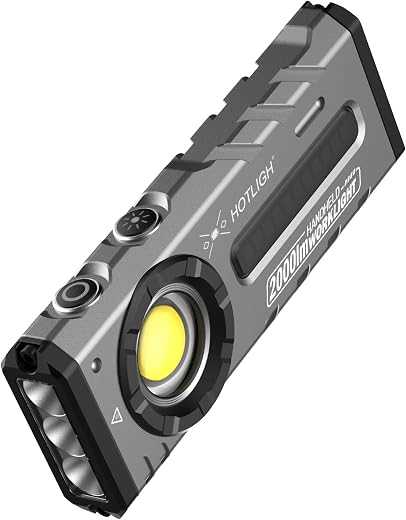
1. ZF8313 Magnetic EDC Flashlight — Best Light for the First Sixty Seconds
Price: $23.99 | Amazon rating: 4.6/5 (911 ratings) | Role: Light in your hand | Key spec: 2,000 lumens, IPX6, magnetic base, USB-C rechargeable
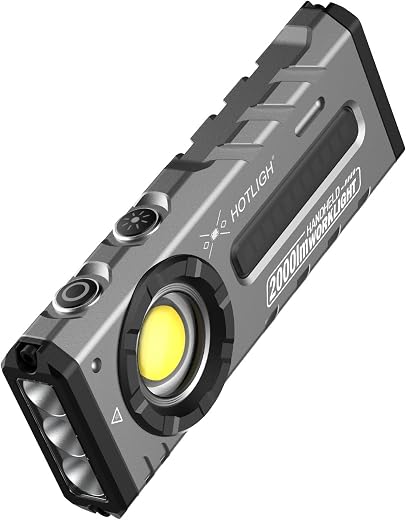
Every list of power outage essentials starts with a torch, and almost every list then fails to say what actually matters about one. It is not lumens. It is whether the thing is charged, whether you can find it, and whether you can put it down and still see. The ZF8313 answers all three better than a cheap plastic torch does: it charges over USB-C from the same cable as your phone, it has a magnetic base strong enough to stick to a consumer unit door or the underside of a metal shelf, and at 2,000 lumens it will light a whole room by bouncing off a white ceiling rather than blinding you.
The magnet is the feature that earns its place. In a real outage you are not walking around holding a light — you are trying to use both hands on a fuse box, a stopcock or a boiler, and a torch in your teeth is how people drop things. Sticking it to the metal enclosure and working in shadow-free light is a different job entirely. The IPX6 rating means rain is a non-issue if the problem is outside, which in a storm-driven cut it usually is.
The RGB and UV modes are the part of the listing that looks like padding, and mostly they are. The red is genuinely useful — it preserves night vision and is visible at distance if you need to flag someone down — but the UV is a party trick. What matters is that this is a rechargeable lithium torch, and that is also its one real weakness in a preparedness context, which is covered below. Buy it for the magnet and the USB-C, not the lumen count. Of all the power outage essentials in this guide, it is the one to buy first.
Best for: You want one torch that lives in a drawer, charges off your phone cable and sticks to metal so you can work with both hands free.
Skip if: You want a torch you can leave untouched for three years and still expect to work. A lithium cell self-discharges and degrades; for a truly set-and-forget backup, keep a cheap alkaline torch alongside it and rotate the batteries annually.
Read the full ZF8313 Magnetic EDC Flashlight review →
Where to Buy — ZF8313 Magnetic EDC Flashlight
2. LIANGLOME Solar Fence Lights — Best Power Outage Essentials Pick for Light That Refills Itself
Price: $27.05 | Amazon rating: 4.5/5 (667 ratings) | Role: Light that needs no grid | Key spec: 8-pack, IP65, dusk-to-dawn, 3000/4000/6000K
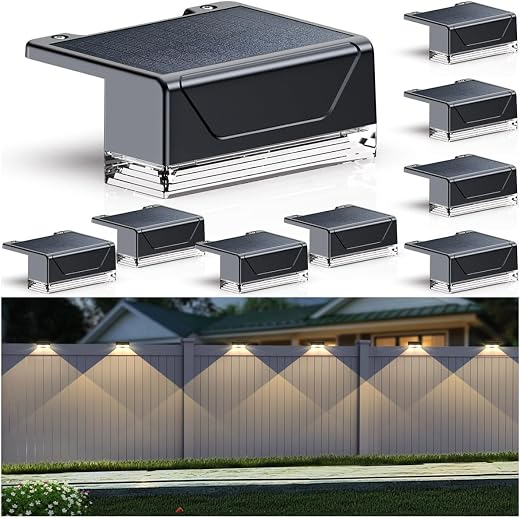
This is the entry that surprises people, and it is the reason the power outage essentials list here does not look like everyone else’s. Solar fence lights are sold as garden decoration. Treated as emergency lighting they are something else: eight sealed, self-charging light sources that owe nothing to your electricity supply, cost about three dollars each, and are already outdoors collecting energy on the day the power fails.
The trick is that they are not fixed installations. Each unit is a self-contained panel, cell and LED, so you can unclip one, bring it inside, and stand it on a worktop as a lantern — then put it back out in the morning to recharge. Eight of them means a light in every room that matters, with no batteries to find, no fuel and no flame. For a multi-day cut, which is where torch batteries actually run out, this is a better answer than a bigger torch.
Honesty about the specification: these are ambient lights, not task lights. IP65 means they shrug off rain. The three colour temperatures — 3000K, 4000K and 6000K — matter more than you would expect, because 3000K indoors at night is comfortable and 6000K is not. Dusk-to-dawn operation means they come on by themselves, which in a blackout is a small but real comfort when you walk into a dark hallway. Few power outage essentials cost this little per unit of usable light.
Best for: Multi-day outages, dark paths and steps, and anyone who wants light that never needs a battery, a cable or a match.
Skip if: You need to read, cook or do close work by them. These are room-glow, not task lighting, and a run of dull overcast days will leave them dim.
Read the full LIANGLOME Solar Fence Lights review →
Where to Buy — LIANGLOME Solar Fence Lights
3. Berkshire Blanket Primalush Wearable Blanket — Best Way to Heat the Person, Not the House
Price: $29.99 | Amazon rating: 4.6/5 (1,155 ratings) | Role: Warmth with no fuel at all | Key spec: 58 x 64 in plush cape, pockets, machine washable
The single most useful idea in home preparedness is that you do not heat a house in an outage — you heat a person. A house takes many kilowatt-hours and a working heating system. A person takes a layer of insulation and their own body. That is why a good wearable blanket belongs on any serious list of power outage essentials, and why it beats every battery-powered heated product at a fraction of the cost.
The Primalush cape is a genuinely well-judged version of the format. At 58 by 64 inches it is large enough to wrap fully while seated, and the cape cut with armholes and pockets means you can hold a torch, a mug or a phone without the whole thing sliding off — which is exactly where a plain throw fails. It is machine washable, which matters if it is going to live on the back of a sofa for years between emergencies. That longevity is what separates real power outage essentials from novelty preparedness gear.
There is no cleverness here and that is the point. It needs no fuel, no charge, no ignition and no ventilation. In a winter power cut, the failure mode that actually harms people is not darkness, it is cold — particularly for older residents and anyone with limited mobility who cannot simply move around to stay warm. A wrap that they can put on unaided, in the dark, is worth more than most of the gadgets sold for this purpose.
Best for: Winter outages, draughty houses and anyone who will be sitting still for hours. Buy one per person, not one per household.
Skip if: You are looking for active heating. This retains your own body heat; it does not generate any, so it will not rescue a house that has already gone properly cold overnight.
Read the full Berkshire Blanket Primalush Wearable Blanket review →
Where to Buy — Berkshire Blanket Primalush Wearable Blanket

4. Outland Living Firebowl 893 Deluxe — Best Outdoor Heat and Hot Food Without Mains Power
Price: $159.99 | Amazon rating: 4.8/5 (17,777 ratings) | Role: Heat and cooking, outdoors only | Key spec: 19 in, 58,000 BTU, propane, CSA-approved, cover and carry kit
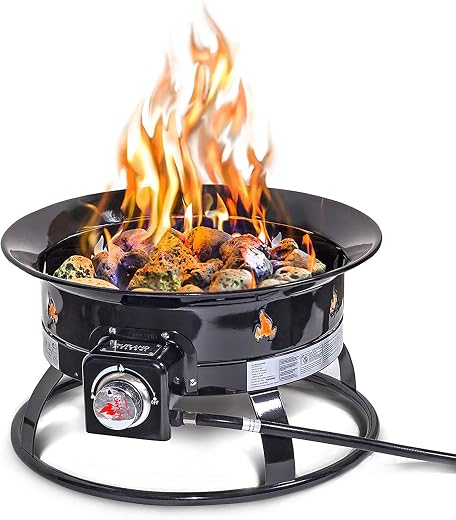
When the hob is electric or the gas boiler needs mains power for its ignition and pump, hot food and hot drinks stop being available — and morale drops faster than most people expect. The Firebowl 893 is a propane firebowl that runs from a standard 20 lb tank, lights on a control knob, and puts out 58,000 BTU without smoke, embers or anything to chop. Among power outage essentials it is the expensive entry, and it is the one that changes a bad evening most.
Its practical advantages over a wood fire are all about control. It lights instantly in wet weather, it goes out instantly, it produces no sparks, and because it is CSA-approved and smokeless it is permitted in a great many places where an open wood fire is not — including many campgrounds during fire bans. The cover and carry kit are not accessories in this context; they are what lets it live in a garage and come out ready. Power outage essentials buried under garden furniture are not essentials at all.
Cooking on it is possible with a grate or a kettle stand, and a full tank gives many hours of continuous burn. But this is emphatically an outdoor appliance and the safety section below is not decorative. Every year people die bringing outdoor combustion indoors during a power cut. This one is worth owning precisely because it is a good enough outdoor heat source that you are not tempted to improvise a bad indoor one.
Best for: Households with outdoor space who want reliable heat, light and hot food that owes nothing to the grid.
Skip if: You have no garden, balcony or safe outdoor area — or you would be tempted to use it under cover. Never operate it indoors, in a garage, in a tent or under an awning.
Read the full Outland Living Firebowl 893 Deluxe review →
Where to Buy — Outland Living Firebowl 893 Deluxe
5. Ninja FrostVault 45-Quart Cooler — Best Power Outage Essentials Buy for Saving the Fridge
Price: $299.95 | Amazon rating: 4.5/5 (693 ratings) | Role: Cold storage with no compressor | Key spec: 45 qt / 68 cans, dry zone drawer, all-terrain wheels
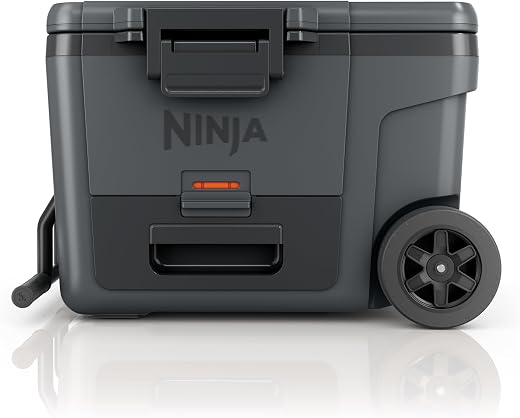
Official guidance is blunt: a closed fridge holds safe temperature for about four hours, and a full freezer for about 48. After that you are throwing away food. A large, genuinely well-insulated cooler is the cheapest insurance against that loss, and on a list of power outage essentials it is the item that most often pays for itself in a single event. A fridge-freezer’s contents are easily worth more than this cooler costs.
The FrostVault’s specific advantage is the sealed Dry Zone drawer beneath the main compartment. In an outage that is not a picnic feature — it is where cheese, butter, cold cuts and medication go, kept cold by the ice above without sitting in the meltwater. Everything else you would ordinarily rescue can go in the 45-quart main body, and the all-terrain wheels mean you can move it full, which a 45-quart cooler packed with ice absolutely requires.
The strategy that makes it work is preparation, not purchase. Freeze a few sealed bottles of water now; they live in the freezer taking up dead air space, which makes the freezer itself hold cold longer, and on the day they become the ice packs. That is the entire trick, it costs nothing, and it is the reason a cooler beats a generator for most households on a cost-per-outage basis. It is the least glamorous of these power outage essentials and probably the highest-returning.
Best for: Anyone with a full freezer, a rural supply, or a history of storm outages lasting more than a few hours.
Skip if: Your outages are brief and you have nowhere to store a large cooler. If space is the constraint, a smaller passive ice chest such as the Veradek outdoor cooler side table doubles as patio furniture the rest of the year.
Read the full Ninja FrostVault 45-Quart Cooler review →
Where to Buy — Ninja FrostVault 45-Quart Cooler
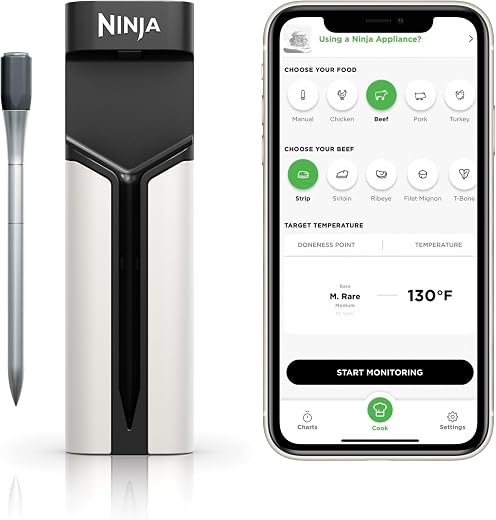
6. Ninja ProChef Wireless Thermometer — Best Way to Answer “Is This Still Safe to Eat?”
Price: $99.95 | Amazon rating: 4.4/5 (602 ratings) | Role: Temperature you can actually read | Key spec: Wireless probe, withstands 700 °F, Bluetooth, app-guided
This is the least obvious of the seven and the one that resolves the single most consequential decision of a long outage: what do you keep and what do you bin? The official rule is temperature-based, not appearance-based, and both American and British guidance say the same thing — you cannot judge it by look or smell, and you must never taste food to test it. That makes a thermometer the deciding instrument, which is why it belongs among power outage essentials at all.
The ProChef is a fully wireless probe rather than a corded unit, rated to 700 °F, pairing over Bluetooth to a phone app. Pushed into the centre of the densest thing in the freezer it will tell you what that food’s core temperature actually is, which is exactly the number the guidance turns on. Its second job arrives when the power returns or when you are cooking outdoors on the firebowl, where there is no oven thermostat and undercooked chicken is a real risk.
The honest caveat is that this is a cooking thermometer being used for a food-safety job, and there is a cheaper purpose-built answer. Federal guidance specifically recommends keeping inexpensive appliance thermometers permanently inside the fridge and freezer. Buy those too — they cost very little. Buy the ProChef because it does the far harder job of telling you the temperature inside the food, and because it earns its keep every other week of the year. That dual use is rare among power outage essentials, most of which sit idle for years.
Best for: Anyone who cooks, and anyone who has ever stood in front of an open freezer after an outage guessing.
Skip if: You only want outage insurance. A pair of cheap fridge and freezer appliance thermometers costs a fraction of this and covers that single job properly.
Read the full Ninja ProChef Wireless Thermometer review →
Where to Buy — Ninja ProChef Wireless Thermometer
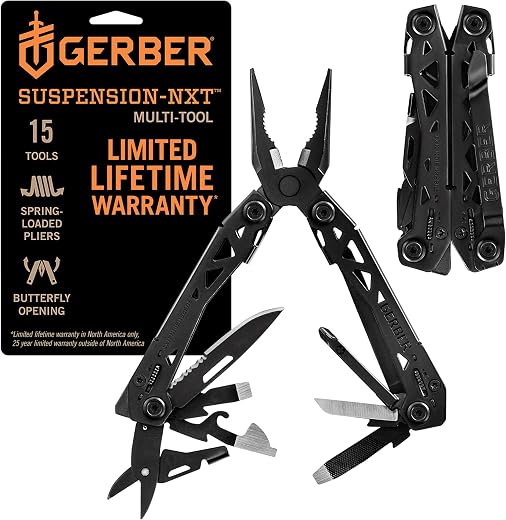
7. Gerber Suspension NXT Multitool — Best Power Outage Essentials Tool for Fixing Things Blind
Price: $41.18 | Amazon rating: 4.6/5 (23,768 ratings) | Role: Hands, pliers and a blade | Key spec: 15 tools, needle-nose pliers, wire stripper, pocket clip
A multitool is the most-recommended and least-examined item on every list of power outage essentials ever written. What it actually earns its place doing is narrow and real: pliers for a stiff stopcock or gas valve, a driver for the cover of a consumer unit or a battery compartment, wire strippers if you are dealing with a lamp or a low-voltage run, and a blade for packaging, cable ties and tape. Among power outage essentials it is the item people most often already own without thinking of it as one.
The Suspension NXT is the version to buy because of how it opens. It is a butterfly-style frame with spring-loaded needle-nose pliers, so one hand deploys it — which matters when the other hand is holding the torch. All 15 tools lock, which is the difference between a tool and an injury when you are working by torchlight, and the pocket clip means it can live on you rather than in a drawer you cannot find.
At roughly forty dollars it sits in the sensible middle of the market: better built than the supermarket tier, without the premium of a flagship. The rating volume is the tell — nearly 24,000 ratings at 4.6 is the kind of consensus you rarely see on preparedness gear. One caveat matters more in Britain than in America, and it is a legal one, covered in the US versus UK section below.
Best for: Anyone who wants one tool that lives in a pocket or a car and opens one-handed in the dark.
Skip if: You need real torque or a proper driver set. For assembling or dismantling anything substantial, a cordless driver such as the HOTO 12-in-1 electric screwdriver is the right tool and this is not.
Read the full Gerber Suspension NXT Multitool review →
Where to Buy — Gerber Suspension NXT Multitool
Power Outage Essentials — Buyer’s Guide: What to Look For
Power Outage Essentials Rule One: Everything Must Carry Its Own Energy
This is the whole discipline in one sentence, and it eliminates most of what is marketed to you. A product qualifies if it stores energy (a charged cell), collects it (solar), burns it (propane), or needs none at all (insulation, hand tools). Anything that assumes a socket is not a preparedness item, however good it is the other 364 days of the year.
Apply the test honestly and some surprising things pass. A wool blanket passes. A book passes. An e-reader like the Kindle Paperwhite passes easily, because it runs for weeks per charge and is genuinely the best answer to a long evening with no television. A mains-powered “emergency” radio does not pass. Neither does a smart doorbell, a cordless vacuum dock, or any electric heater at all. Run every candidate for your power outage essentials kit through that one question.
Why Power Outage Essentials Should Not Include a Portable Generator
Almost every competing guide leads with a generator or a large power station, usually because the site is sponsored by one. The safety record is the reason this one does not. The Consumer Product Safety Commission figures put it plainly: an average of nearly 100 people die in the United States each year from carbon monoxide poisoning caused by portable generators.
The guidance from both FEMA and the CPSC is to run a generator outdoors only and at least 20 feet from the building, away from windows, doors and vents. That is a real constraint that a great many homes — terraces, flats, small urban plots — simply cannot meet. If you cannot satisfy the 20-foot rule, the honest answer is that a generator is not for you, and the money is better spent across the rest of this list.
Large lithium power stations are genuinely safer, because they emit nothing. They are also expensive per usable watt-hour, heavy, and need to be kept charged to be worth anything. If you depend on mains-powered medical equipment they can be the right purchase; for keeping the lights on and the food cold, the items here do more per pound spent.
Candles Are the Worst of All Power Outage Essentials
Candles are the default improvisation and the most dangerous item in the house during a blackout. The National Fire Protection Association’s home candle fire research records an annual average of 9,300 home structure fires started by candles, causing 86 civilian deaths, 827 injuries and $374 million in direct property damage. Those figures come from the NFPA’s home candle fires fact sheet.
The mechanism is mundane: in 58% of those fires something that could burn was simply left too close to the flame, and 36% began in a bedroom. Now add the specific conditions of a power cut — unfamiliar light sources placed on unfamiliar surfaces, people carrying naked flames between rooms, and children and pets moving in the dark. A three-dollar solar light removes the entire risk category.
How Long Should Your Power Outage Essentials Last?
Match the kit to your actual exposure, which is a question about geography rather than temperament. If you are on an urban network and your outages are measured in minutes, a torch and a cooler is a complete answer. If you are rural, at the end of a long overhead line, or in a hurricane or storm corridor, plan for days and the firebowl and the solar lights start to look like necessities.
The useful planning number is 72 hours, which is what most official guidance is built around. Everything in this list clears that: the torch on a charge, the solar lights indefinitely, the cape forever, the firebowl for as long as the propane lasts, and the cooler for two to three days if you have pre-frozen bottles waiting in the freezer. Beyond 72 hours you are into planning rather than shopping, and no set of power outage essentials substitutes for that.
Power Outage Essentials for Medication, Medical Devices and Vulnerable Households
This is the part of preparedness that is not a shopping decision. If anyone in the house depends on powered medical equipment, refrigerated medication, or a stairlift, that needs a plan agreed with a clinician rather than a product from a list. FEMA’s guidance is explicit that you should talk to your doctor in advance about how you will run devices and store medicines.
British readers have a specific, free and badly under-used right here: the Priority Services Register. Registering with your network operator and your supplier flags your household for extra support during an interruption — advance notice of planned work, priority reconnection information, and welfare contact. It costs nothing and it is separate from your energy tariff. Eligibility covers pensionable age, disability, chronic illness, sight or hearing loss, young children and temporary circumstances such as recovering from a hospital stay.
The refrigerated-medication question has a neat overlap with the rest of this list. The FrostVault’s sealed dry drawer keeps insulin and similar cold without letting it sit in meltwater, which is the failure mode when people improvise with a picnic cooler. Check the storage range on the leaflet, and replace anything that has been out of range for more than a day.
US vs UK: What Changes When the Power Goes Out
Preparedness advice travels badly across the Atlantic, because the underlying risk is genuinely different by an order of magnitude, and because the consumer rights attached to a power cut exist in one country and not the other. If you are buying power outage essentials in Britain from an American list, or the reverse, these are the differences that matter.
How Often the Power Goes Out: 11 Hours vs 29 Minutes
This is the single most useful number in the article. The US Energy Information Administration reports that US electricity customers experienced an average of 11 hours of interruption in 2024 — nearly twice the average of the preceding decade — with major events including Hurricanes Beryl, Helene and Milton accounting for 80% of it. Customers in South Carolina averaged nearly 53 hours.
The British figure is not in the same units. UK Power Networks, which serves London, the South East and the East of England reported 29.0 customer minutes lost per connected customer in 2023/24, with an interruption once every 32 months on average — under half an hour a year. That is roughly a twenty-fold difference in expected annual downtime, and it is why an American preparedness kit is built around days and a British one around an evening.
The practical consequence for buying: in Britain the torch, the cape and the multitool are the high-value purchases and the firebowl is a luxury that happens to be useful. In much of the United States, the cooler and the firebowl move up the list, because a multi-day outage is a realistic annual event rather than a once-a-decade storm. Buy your power outage essentials for the network you are actually on.
Who to Call: 105 in Britain, Your Utility in America
Britain has something America does not: a single free national number for power cuts. Dialling 105 connects you from any landline or mobile to whichever distribution network operator covers your address — which is deliberately not your energy supplier, because your supplier only handles billing and cannot fix a line. Northern Ireland uses 03457 643643 instead.
There is no US equivalent. Reporting an outage means knowing your own utility and its number or app, which varies by state and often by county. The practical advice on both sides is the same and comes straight from the UK government’s Prepare campaign: keep the number written on paper. A number saved only in a phone that is now at 3% is not a plan.
Money Back: UK Compensation Rights Have No US Equivalent
Most British households have no idea this exists. Under Ofgem’s guaranteed standards, your network operator must pay you automatically if you are off supply long enough. In normal weather, a domestic customer is owed £95 after 12 hours without power where fewer than 5,000 premises are affected, or after 24 hours where more than 5,000 are, plus £45 for each further 12-hour period, capped at £390.
Severe weather has its own scale: £85 after 24 hours for a Category 1 storm, or after 48 hours for Category 2, then £45 per further six hours up to £2,165. And if your home is cut off more than four times in a year for at least three hours each time, you are owed an extra £95. Business customers get roughly double the domestic amounts.
Nothing comparable applies across most of the United States, where compensation for outages is a state-by-state and utility-by-utility matter, and in many places simply does not exist for weather-related interruptions. If you are British, note the date and time your supply went off — that record is what a claim is built on.
Power Outage Essentials and the Vocabulary Gap
The terms diverge more than usual on this topic, which matters if you are searching for products or reading advice. Americans have a power outage or a blackout; Britons have a power cut. Americans buy a flashlight, Britons a torch. The American cooler is a British cool box. A generator is the same word, but the American utility is a British supplier for billing and a network operator for the wires.
Further down the list: fuse box in Britain is properly a consumer unit and in America a breaker panel or service panel; American gas is petrol and British gas is what heats the house; a propane tank is a gas bottle; and an American trash can is a bin. Search for “power cut essentials” on Amazon.co.uk and you will find things that “power outage essentials” will not surface, and vice versa.
One Legal Trap: Carrying That Multitool in Britain
This one genuinely catches people out and it is worth stating plainly. In the United States, carrying a multitool is unremarkable in most jurisdictions. In Britain, the only knife you may carry in a public place without a specific good reason is a folding pocketknife with a non-locking blade under three inches. Nearly every multitool blade locks, including the Suspension NXT’s.
That does not make it illegal to own, buy or use. It means keeping it at home, in the car boot for a stated purpose, or in a toolbox — not habitually in a pocket in town. “It is part of my emergency kit” is not, by itself, the good reason the law is looking for. American readers can disregard this entirely; British readers should treat the multitool as household equipment rather than everyday carry.
Alerts: How You Find Out What Is Happening
Britain now has a nationwide cell-broadcast system. The government tested UK Emergency Alerts nationally on Sunday 7 September 2025 at 3pm, sending a siren and message to essentially every compatible mobile phone in the country. The test was publicised through the government’s Prepare campaign. It is used for imminent threat to life — severe flooding, storms — rather than for routine power cuts, but it is the mechanism by which a major event reaches you.
The American equivalents are Wireless Emergency Alerts and the Emergency Alert System, delivered through FEMA’s IPAWS and generally issued at state or county level. In both countries the same limitation applies: a cell broadcast needs a working mast and a charged phone. That is precisely why the Prepare campaign still recommends a battery or wind-up radio as a core item, and why it is worth owning one alongside everything on this list.
Power Outage Essentials — Which One Should You Buy?
Very few people should buy all seven at once. The right kit depends almost entirely on how long your outages actually last, which is the geography question from the section above. Here are three coherent kits at three budgets. Each tier is a complete set of power outage essentials rather than a shopping list to work through in order.
Under $60: The Minimum Viable Power Outage Essentials Kit
Buy the ZF8313 magnetic flashlight at $23.99 and the LIANGLOME solar fence lights at $27.05. That is roughly $51 and it solves the entire lighting problem — a task light you can stick to metal and work hands-free, plus eight ambient lights that recharge themselves and never need a battery.
If your outages are British-typical, measured in tens of minutes, this genuinely is the whole answer and you can stop here. Add a Berkshire Blanket wearable cape at $29.99 if anyone in the house feels the cold, and you are at about $81 with lighting and warmth covered.
Under $200: The Power Outage Essentials Kit That Covers a Weekend
Add the Gerber Suspension NXT multitool at $41.18 and the Outland Living Firebowl 893 at $159.99 to the lighting pair. The firebowl is the step change: outdoor heat, light and a way to make hot food and drinks for as long as the propane holds out, with no smoke and no wood to keep dry.
This is the kit for anyone with outdoor space who has experienced an outage lasting more than a few hours. If you would rather spend the money on tools than on heat, the HOTO 12-in-1 electric screwdriver at $49.99 is a more capable driver than any multitool and holds its charge well in a drawer.
Over $200: Full Power Outage Essentials for Long Rural Outages
Add the Ninja FrostVault 45-quart cooler at $299.95 and the Ninja ProChef wireless thermometer at $99.95. Together these address food, which in a multi-day outage is where the real money is lost — a full fridge-freezer’s contents comfortably exceed the price of the cooler.
This is the kit for rural properties, long overhead supply lines, and anywhere in a storm or hurricane corridor. If you want the cold storage without the size and cost, the Veradek outdoor cooler side table is a passive ice chest that lives on the patio as furniture and is already in place on the day you need it.
Food Safety, Carbon Monoxide and the Two Things That Actually Hurt People
Almost everything written about power cuts is about inconvenience. The genuine harm falls into two categories, and both are well documented by government bodies on both sides of the Atlantic. One costs you money and occasionally makes you ill; the other kills roughly a hundred Americans a year. Neither is complicated to avoid, and between them they justify most of the choices in this list of power outage essentials.
The Four-Hour and 48-Hour Rules
According to FoodSafety.gov, the US federal food-safety portal, the timings are precise. A refrigerator will keep food safe for up to 4 hours if you keep the door closed. A full freezer holds a safe temperature for approximately 48 hours — but only 24 hours if it is half full, and only if the door stays shut.
That half-full detail is the actionable one, and it is why the pre-frozen water bottle trick matters so much. Bottles filling the dead air in your freezer convert a 24-hour freezer into something much closer to a 48-hour one for the price of the water, and on the day they become the ice for your cooler. It is the single highest-return preparedness action in this entire article and it costs nothing.
The discard threshold is temperature and time together: food held at 40 °F (4 °C) or above for more than 2 hours should be thrown out. Refreezing is permitted — “food may be safely refrozen if it still contains ice crystals or is at 40 °F (4 °C) or below” — though the guidance is candid that quality will suffer.
Never Judge Food by Look or Smell
The instruction that appears twice in the American guidance is the one people ignore: never taste food to determine its safety. The organisms that cause foodborne illness frequently produce no change in appearance, odour or texture at all, so a chicken breast that looks and smells perfectly normal after twelve hours at room temperature is not evidence of anything.
This is precisely why a thermometer rather than a nose is the deciding instrument, and why the wireless probe is on this list. Push it into the centre of the densest item — the middle of a joint or a full container, not the surface — because that reading is the one the rule refers to. Federal guidance separately recommends keeping cheap appliance thermometers permanently inside the fridge and freezer, which tells you the ambient temperature; buy both, they answer different questions. No other item among these power outage essentials replaces that reading.
Carbon Monoxide: How Power Cuts Actually Kill People
A January 2026 CPSC warning put the figure at an average of nearly 100 deaths a year in the United States from carbon monoxide poisoning caused by portable generators. The pattern is almost always the same: an outage, cold or dark, and combustion equipment brought somewhere it should not be — a garage, a porch, a doorway, a tent.
The rules are short and absolute. Generators run outdoors only, at least 20 feet from the building and away from windows, doors and vents. Never burn charcoal indoors: as the CPSC puts it, “burning charcoal in an enclosed space can produce lethal levels of CO,” and a garage with the door open still counts as enclosed. The same applies to camping stoves and to every propane appliance, including the firebowl in this guide.
This is worth being blunt about, because it is the one place where a recommendation in a shopping article can genuinely do harm. The Outland firebowl is an outdoor appliance. Not in a garage, not in a shed, not under a gazebo or awning, not in a tent, and not just inside an open door. Carbon monoxide is odourless and the early symptoms — headache, dizziness, nausea — are exactly what a cold, stressful evening feels like anyway.
Carbon Monoxide Alarms: The Law Is Different in Each Country
England has a specific legal requirement that surprises people. Since 1 October 2022, England’s smoke and carbon monoxide alarm regulations require that landlords must ensure a carbon monoxide alarm is fitted in any room used as living accommodation which contains a fixed combustion appliance — a gas or oil boiler, or a log burner. Gas cookers are explicitly excluded. Smoke alarms are required on every storey used as living accommodation.
The regulations bind landlords rather than owner-occupiers, so if you own your home nobody is checking — which is an argument for fitting one anyway rather than against it. American requirements are set state by state, with most states now mandating CO alarms in dwellings with fuel-burning appliances or attached garages, and the detail varies considerably. In both countries a battery CO alarm is a low-cost item that keeps working when the power does not. It belongs in any list of power outage essentials that takes the risk seriously.
Candle Fires by the Numbers
The candle statistics from the buyer’s guide bear repeating here because they are the clearest case of a traditional solution being worse than the modern one. An annual average of 9,300 home structure fires, 86 deaths, 827 injuries and $374 million in property damage, with 58% starting because something flammable was too close and 36% beginning in a bedroom.
Set that against a rechargeable torch and eight solar lights costing about $51 together, which produce no flame, no heat and no risk of being knocked over by a cat. There is no scenario in a modern home where a candle is the correct light source during a power cut, and the fact that it is the traditional one is not an argument.
Power Outage Essentials — Frequently Asked Questions
What are the most important power outage essentials to buy first?
Light, then warmth, then food. A rechargeable torch and a set of solar lights cost about $51 together and solve the problem that makes everything else harder — you cannot deal with anything in the dark. Warmth comes next if you are anywhere cold, and food storage after that. Treat those three as the core power outage essentials and add the rest according to your exposure.
How long will food last in the fridge and freezer during a power cut?
About 4 hours in a closed refrigerator, approximately 48 hours in a full freezer, and only 24 hours in a half-full one. Those are the federal US figures and they assume the door stays shut, which is the part people get wrong. Every time you open the fridge to check, you spend some of the four hours.
Can I refreeze food after the power comes back on?
Yes, if it still contains ice crystals or is at 40 °F (4 °C) or below. Quality will suffer, particularly with anything that has a delicate texture, but it is safe. Anything held above 40 °F for more than two hours should be discarded — and never taste it to decide.
Should power outage essentials include a portable generator?
For most households, no. An average of nearly 100 Americans die each year from carbon monoxide poisoning caused by portable generators, and safe operation requires running it outdoors at least 20 feet from the building. If your property cannot accommodate that, the money is better spent across the rest of this list. Households running mains-powered medical equipment are the real exception, and should plan that with a clinician.
Are candles safe to use in a power cut?
They are the least safe option available to you. Candles cause an annual average of 9,300 home fires, 86 deaths and $374 million in damage in the US alone, with most starting because something flammable was too close. Solar lights and a torch do the same job for about the same money with none of the risk.
What is the difference between “power outage essentials” and “power cut essentials”?
Nothing except geography — “power outage” is American and “power cut” is British, and they describe the same event. The kit differs mainly in scale: the US averaged 11 hours of interruption per customer in 2024, while UK Power Networks reported 29 minutes per customer in 2023/24, so American kits sensibly plan for days and British ones for an evening.
Who do I call when the power goes off?
In England, Scotland and Wales, dial 105 free from any phone; it routes you to your local network operator, which is not the same company as your billing supplier. Northern Ireland uses 03457 643643. In the United States there is no national number — you need your own utility’s number or app. Write it on paper, because a dead phone cannot look it up.
Can I claim compensation for a power cut?
In Britain, often yes and automatically. Ofgem’s guaranteed standards give a domestic customer £95 after 12 hours off supply in normal weather where fewer than 5,000 premises are affected, plus £45 for each further 12 hours up to £390, with separate scales for storms. In the United States it varies by state and utility and frequently does not exist for weather events.
Is it legal to carry a multitool in the UK?
Owning and using one is fine. Carrying one habitually in public is the problem: British law permits a non-locking folding blade under three inches without a specific good reason, and most multitool blades lock. Keep it at home, in a toolbox or in the car for a stated purpose rather than in a pocket in town. This does not apply in most of the United States.
How much should I spend on power outage essentials?
Match it to your actual exposure rather than to worst-case imagination. If you live on an urban network with brief, rare interruptions, about $51 of lighting is a complete and sensible kit. If you are rural, at the end of a long overhead line, or in a storm corridor where multi-day outages happen, the cooler and the firebowl are the purchases that change the experience, and the full set is defensible. Spend on power outage essentials in proportion to the hours you actually lose.
Power Outage Essentials — Final Thoughts
The useful insight about power outage essentials is that the good answers are mostly cheap and slightly boring, while the expensive and exciting ones are frequently worse. A three-dollar solar light beats a candle. A wearable blanket beats an electric heater you cannot power. A cooler with pre-frozen bottles in it beats a generator for nearly every household, at a fraction of the cost and with none of the carbon monoxide risk. The one genuinely expensive recommendation here, the firebowl, earns its place partly because owning a good outdoor heat source is what stops people improvising a dangerous indoor one. That is the through-line of these power outage essentials: the safe option is usually also the cheap one.
If you buy nothing else, buy the torch and the solar lights, put the torch somewhere you will find it in the dark, and freeze four bottles of water tonight. That is about $51 and ten minutes, and it covers the large majority of what a power cut will actually do to you. Everything else on this list is a sensible upgrade for people whose outages last longer — and if you are in Britain, spend five minutes checking whether anyone in your household qualifies for the Priority Services Register, because it is free and it is the single most valuable thing on this page that you cannot buy.
Sources and Further Reading
- U.S. Energy Information Administration — Hurricanes in 2024 led to the most hours without power in the United States in 10 years
- UK Power Networks Annual Review 2023/24 — Network reliability (customer minutes lost)
- Ofgem — Compensation for energy supply issues and power cuts
- FoodSafety.gov — Food Safety During a Power Outage
- FEMA / Ready.gov — Be Prepared for a Power Outage (hazard information sheet)
- U.S. Consumer Product Safety Commission — CPSC warns of carbon monoxide risks and fires during power outages (January 2026)
- GOV.UK Prepare campaign — Get prepared for emergencies (household emergency kit list)
- GOV.UK Prepare campaign — UK Emergency Alerts national test, 7 September 2025
- GOV.UK — The Smoke and Carbon Monoxide Alarm (England) Regulations 2015, as amended 2022
- UK Power Networks — What is 105? The national power cut number
- NFPA home candle fires fact sheet (Illinois State Fire Marshal mirror)
Disclosure: SoftPickr is reader-supported. This article contains affiliate links, and we may earn a commission on qualifying purchases made through them at no extra cost to you. Product prices and availability are accurate at the time of publication and are subject to change. Links go to Amazon.com; UK readers can search the same models on Amazon.co.uk. Nothing here is professional safety, medical or legal advice — follow the official guidance linked above.