
A home is only ever completely empty twice as far as you are concerned: the hour before your things arrive, and the hour after the last of them leaves. Every job that needs an empty room — reaching the whole floor, testing a window sill, reading a meter, photographing a wall — has to happen inside that window, and the window closes the moment somebody opens the van door. Almost every list of moving day essentials you will find online is a list of snacks, bin bags and a box cutter. That is a survival kit for the afternoon. It is not a list of the things that are only possible on that one day.
This roundup takes the other approach. The seven products below are ordered the way the day itself runs — labelling before the van, floor protection during it, then the meters, the walls, the floor, the air, and finally the first night in a house with no broadband. Two of them cost under $30. One of them you may already own. None of them is furniture, a mattress, a set of removal boxes or a van, because those are decisions rather than purchases, and a roundup that pretends otherwise is selling you a house. We have scored each of these moving day essentials on how well it does its own job, not on how essential it sounds.
Every product here has been reviewed individually on this site and every entry links back to that full review. Prices and ratings were read on the morning of publication. Links go to Amazon.com, because that is where our affiliate account sits; readers in Britain can search the same model numbers on Amazon.co.uk, and the article flags where the American and British versions genuinely differ — voltage, plug, paper size and the law.
That last point matters more than usual for moving day essentials, because moving house is one of the few consumer situations where the two countries have written substantially different rules about lifting, lead paint, asbestos and deposits, and those differences are covered in full further down.
Moving Day Essentials — Quick Comparison
The seven picks at a glance, in the order you will meet them on the day rather than in rank order. Prices were checked on the morning of publication and move frequently.
| # | Product | Role | Key spec | Best for | Price | Score |
|---|---|---|---|---|---|---|
| 1 | DYMO LetraTag 100H | The labelling | Handheld thermal, 3 tapes included | Moves bigger than a car-load | $44.99 | 8.5 |
| 2 | Buself Shoe Covers (50 pairs) | The floors | Non-slip sole, waterproof, to size 13 | Wet weather and hard floors | ≈$15 | 8.4 |
| 3 | ZF8313 Magnetic EDC Flashlight | The meters | 2,000 lumens, magnetic base, IPX6 | Dark cupboards and meter boxes | $23.99 | 8.4 |
| 4 | NewPos Lead Test Kit (30 swabs) | The walls | Colour change in about 30 seconds | Pre-1978 US / pre-1992 UK homes | $9.99 | 8.0 |
| 5 | JOYMOOP Flat Mop and Bucket | The empty floor | 50-inch handle, hands-free wring | Move-out and move-in cleans | $29.98 | 7.9 |
| 6 | Levoit Core Mini-P | The air | Three-stage filter, true HEPA layer | Freshly painted or dusty bedrooms | $44.49 | 8.6 |
| 7 | Kindle Paperwhite (2024) | The first night | 7-inch glare-free, 16 GB, USB-C | Two weeks with no broadband | $124.99 | 9.1 |
- Moving Day Essentials — Quick Comparison
- The 7 Best Moving Day Essentials in 2026
- Moving Day Essentials — Buyer’s Guide: What to Look For
- US vs UK: What Changes When You Move House
- Moving Day Essentials — Which One Should You Buy?
- Lifting, Lead and Asbestos: What the Rules Actually Say
- Moving Day Essentials — Frequently Asked Questions
- Moving Day Essentials — Final Thoughts
- Sources and Further Reading
The 7 Best Moving Day Essentials in 2026
Seven roles, one product each, in chronological order. Where a cheaper or free alternative genuinely does the job, the entry says so.
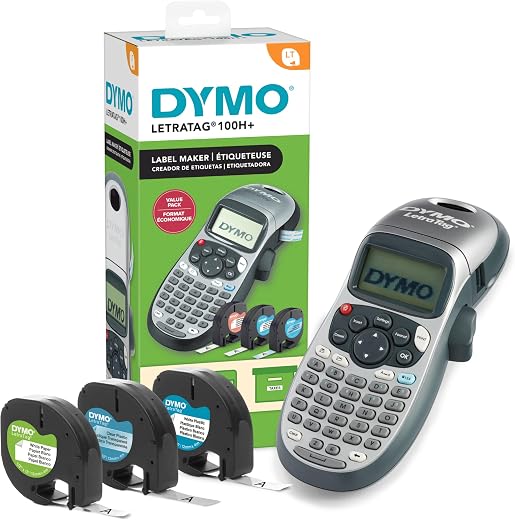
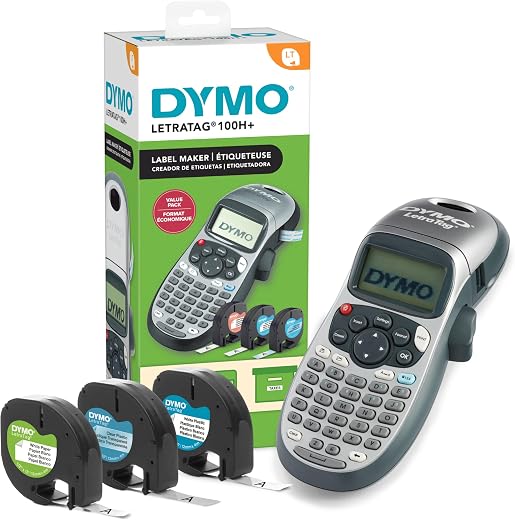
1. DYMO LetraTag 100H — Best Moving Day Essentials Pick for Labelling Boxes
Price: $44.99 (bundle with 3 tapes) | Amazon rating: 4.6 from 31,258 ratings | Role: The labelling — before the van arrives | Key spec: Handheld thermal printer, 13-character LCD, prints on 12 mm LT tape
Every moving guide tells you to label your boxes and almost nobody does it properly, because a marker pen on brown cardboard is illegible by box forty and invisible once the box is stacked face-in. That is the specific failure the LetraTag fixes. A printed adhesive strip is readable from across a room, it survives being scuffed against a doorframe, and — the part that matters on the day — it can be stuck to the side of a box rather than the top, which is the only face you can still see once the load is stacked three high in a van.
The 100H is a handheld thermal printer with a 13-character display and a QWERTY-ish keypad, and the bundle ships with three LT tape cassettes rather than the single starter cassette DYMO usually includes. That matters more than it sounds. A house move eats tape at a rate no office ever does; running out on a Saturday afternoon with forty boxes still open is the realistic failure mode. Three cassettes is roughly enough for a three-bedroom house with room to spare for the cupboards you will relabel afterwards.
The discipline that makes it worth the money is not writing what is in the box. It is writing where the box is going, in the new house, in the vocabulary the people carrying it will use. “BACK BEDROOM — FRAGILE” beats “kitchen misc” every time, because the person holding the box has never seen your floor plan and will otherwise put it wherever the pile ends. Of all the moving day essentials here this is the one that most rewards preparation: print a run of destination labels the night before, and the unloading takes care of itself while you stand by the door doing nothing more complicated than pointing.
Best for: You are moving more than a car-load, you are using help who have never been in the new house, or you want the labels to still be legible when you open the last box six weeks later.
Skip if: You are moving a studio flat in two trips, or you already own a label printer — this is a convenience, not a revelation, and a roll of masking tape and a fat marker is a legitimate free alternative for a small move.
Read the full DYMO LetraTag 100H review →
Where to Buy — DYMO LetraTag 100H
2. Buself Disposable Shoe Covers — Best Moving Day Essentials Buy for Protecting Floors
Price: around $15 for 50 pairs | Role: The floors — on the day itself, in both houses | Key spec: Non-slip textured sole, waterproof, stretch cuff, fits up to a US men’s 13
This is the cheapest item on the list and the one with the clearest financial case, because on moving day you have a legal or contractual interest in the condition of two floors at once — the one you are leaving, which someone will inspect, and the one you are arriving at, which you have just paid for. Removal crews walk in and out of both, in work boots, in whatever weather the day gives you, for six to ten hours.
A pack of fifty pairs is enough for a crew of four to change covers several times over a full day, which is the usage pattern that actually works. The failure mode of shoe covers is not that they tear; it is that people put one pair on in the morning, walk through a muddy garden at lunchtime, and then carry the mud inside anyway. Treat them as consumable moving day essentials and change them at every transition between outside and inside.
The non-slip sole is the specification that decides whether these are useful or dangerous. Smooth polythene overshoes on a laminate floor while carrying a wardrobe is a genuinely bad idea, and it is why plain elasticated bags sold for hospital visitors should not be used for this job. The textured underside here is the reason these are worth naming specifically rather than buying whatever is cheapest. Test one pair on your own hard floor before the crew arrives, and if they slide at all, do not use them on the stairs.
Best for: Wood, laminate, tile or light carpet in either property; wet weather; a deposit or a completion condition riding on the state of the floor when you hand the keys over.
Skip if: You are moving in dry weather across two concrete floors that are being replaced anyway, or you have small children who will treat a box of fifty as fifty toys.
Read the full Buself Disposable Shoe Covers review →
Where to Buy — Buself Disposable Shoe Covers

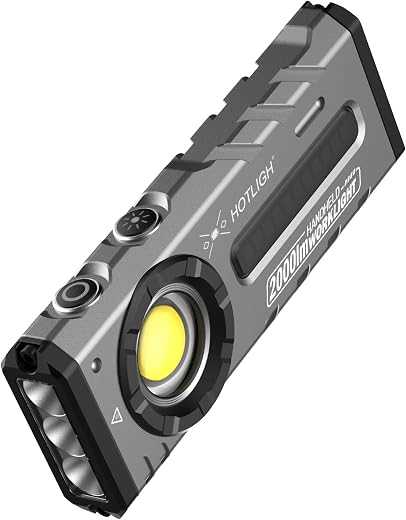
3. ZF8313 Magnetic EDC Flashlight — Best Moving Day Essentials Tool for a Dark, Unfamiliar House
Price: $23.99 (down from $42.99) | Amazon rating: 4.6 from about 1,000 ratings | Role: The meters — arrival, before anything is switched on | Key spec: 2,000 lumens, magnetic base, IPX6, rechargeable, with RGB and UV modes
The first hour in a house you have just been handed is spent looking for four things, and all four of them live somewhere dark: the electricity meter, the gas meter, the stopcock, and the consumer unit. Depending on the property that means a cupboard under the stairs with no bulb in it, an external meter box on a north wall at dusk, a cellar head, or the back of a kitchen unit. Your phone torch will do it badly while your phone is also the thing you need to photograph the readings with.
The magnetic base is the feature that earns this a place rather than any other cheap torch. A meter box, a consumer unit and a boiler casing are all steel, and being able to stick a 2,000-lumen light to the surface you are reading frees both hands for a phone camera and a notepad. That is the whole argument for putting a magnetic light among your moving day essentials: on the day you are almost never in a position to hold a torch and do the job at the same time.
Take a photograph of every meter reading with the serial number visible on the same frame, on the day, before you do anything else — it is the single cheapest piece of admin insurance in a move, and it is the evidence that settles a disputed opening bill. The UV mode is a novelty for most buyers, but it has one genuine use here: it shows up pet urine on carpet that a viewing at 2pm in September will not, which is worth knowing before you decide whether the carpet stays.
Best for: Any move into a property you have viewed twice and never lived in, especially in winter, and anyone who wants both hands free while reading a meter or a stopcock.
Skip if: You want a pocket EDC light for daily carry and nothing else — this is chunkier than a keychain light — or you object to paying for RGB and UV modes you will use once.
Read the full ZF8313 Magnetic EDC Flashlight review →
Where to Buy — ZF8313 Magnetic EDC Flashlight
4. NewPos Lead Test Kit — Best Moving Day Essentials Check Before You Drill or Sand
Price: $9.99 | Amazon rating: 4.3 from 277 ratings | Role: The walls — before you disturb a single surface | Key spec: 30 swabs, rhodizonate-type colour change, result in about 30 seconds
The most common mistake in the first fortnight of a move is enthusiasm. The boxes are still stacked, the room looks wrong, and somebody decides to sand a window sill or take a door back to bare wood before the curtains are even up. In a property built before the late 1970s in America, or before 1992 in Britain, that sanding can put lead dust into a room you are about to sleep in — and unlike almost every other hazard in a house, it is invisible, odourless, and worst for the youngest person present.
A thirty-swab kit costs less than a tin of paint and covers every surface you might plausibly disturb: window sills and staff beads, skirting, door edges, stair spindles, radiator casings, and the metal-framed windows in a 1930s semi. Crush, wipe, wait thirty seconds, read the colour. Test the layers, not just the top coat — a modern emulsion over 1960s gloss reads clean on the surface and is irrelevant, so cut through to the substrate at an inconspicuous spot first.
Be honest about what a swab kit is: a screening tool, not a laboratory result. A positive is a reason to stop and get advice rather than proof of a hazard, and a negative on one sill is not a clearance certificate for the house. What a swab kit is very good at, and why it belongs among your moving day essentials, is turning an abstract worry into a decision you can make in a lunch break, which is exactly what you need in the window between getting the keys and starting work.
Best for: Any property built before 1978 in the US or before the 1992 UK consumer ban, and anyone planning to sand, scrape, strip or drill in the first month.
Skip if: You are moving into new-build or recently gutted housing, or you need a legally defensible result — in that case pay for an inspection or risk assessment instead.
Read the full NewPos Lead Test Kit review →
Where to Buy — NewPos Lead Test Kit

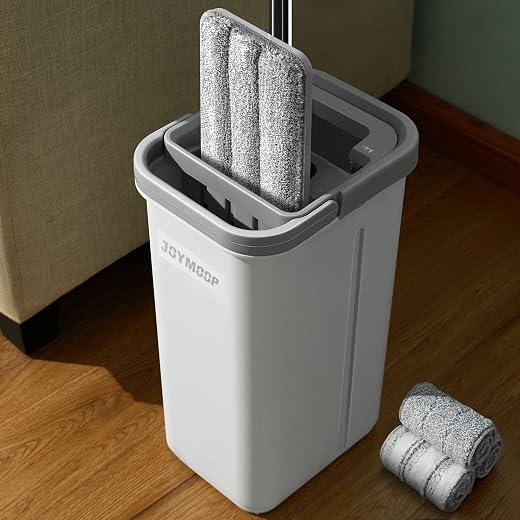
5. JOYMOOP Flat Mop and Bucket Set — Best Moving Day Essentials Choice for an Empty Floor
Price: $29.98 | Amazon rating: 4.3 from 18,817 ratings | Role: The empty floor — the only time you can reach all of it | Key spec: 50-inch handle, hands-free wring, three washable microfibre pads, wet and dry use
A floor is only ever completely accessible twice: the hour before your furniture arrives and the hour after the last of it leaves. Every other day of your occupancy there is a sofa on part of it. That is the entire reason a mop belongs on a moving list at all — not because floors need cleaning, which you knew, but because this is the only moment the whole floor is reachable, and the moment closes when the van door opens.
The flat-mop-and-bucket format is the right shape for the job because the pad is dry-swept first and then wet-mopped without you ever touching it, and because the bucket separates dirty and clean water. On a move-out clean that matters: you are lifting building dust, hair and the grit that lives under a wardrobe, and a traditional string mop turns that into grey water you then spread around. Three pads means you can throw a filthy one in a bag and carry on rather than stopping to rinse.
The 50-inch handle is the specification that decides whether you can use it under the kitchen units and behind a radiator, which are precisely the places an inspection will look and the places you have never cleaned. Do the move-out clean in the order the inspector will: floors last, from the far corner back to the door, so you are not walking over what you have just done. The same tool then does the arrival clean at the other end before a single box comes in, which is why it is among the few things here that earn their keep twice.
Best for: Hard floors at either end, a deposit or completion clean to pass, and anyone who wants one tool that handles both the empty house you are leaving and the empty house you are arriving at.
Skip if: Your new home is wall-to-wall carpet throughout, or you have already booked and paid for a professional end-of-tenancy clean — in which case do not duplicate the job.
Read the full JOYMOOP Flat Mop review →
Where to Buy — JOYMOOP Flat Mop
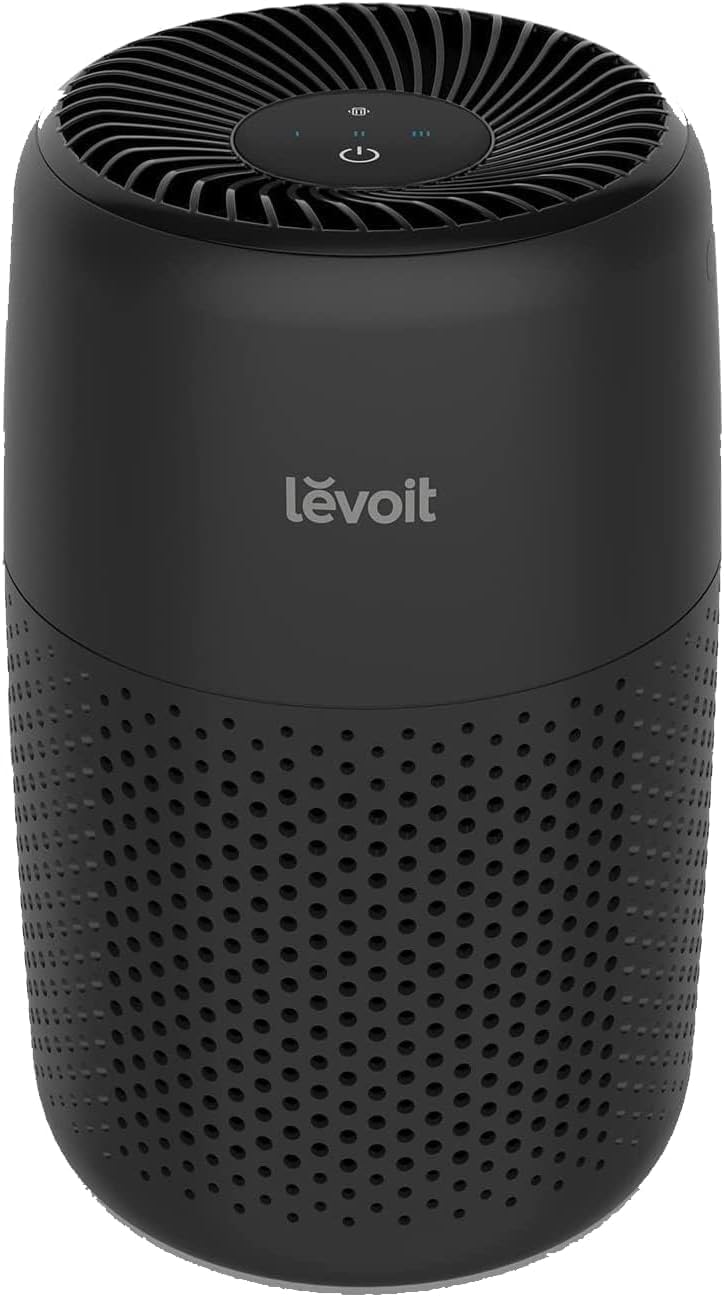
6. Levoit Core Mini-P — Best Moving Day Essentials Pick for the Air in a Just-Emptied House
Price: $44.49 | Amazon rating: 4.6 from 45,237 ratings | Role: The air — the first week, while the dust and the paint settle | Key spec: Three-stage filter with a true HEPA layer, small-room coverage, low-noise sleep mode
A house is dirtier in the week after a move than at any other point in its life, and almost none of that is visible. Lifting furniture that has stood still for years releases years of settled dust in minutes. Cardboard sheds fibre. Carpets that have just been walked over by eight boots in a day give up everything they were holding. And if anyone has painted, filled or varnished ahead of your arrival, the room you are about to sleep in is at its highest concentration of solvent vapour it will ever reach.
A small purifier is not a fix for any of that — ventilation is — but it is a useful supplement in the one room where you cannot leave a window open all night, which is the bedroom you are sleeping in on night one. Of the moving day essentials on this page it is the one with the narrowest case: run it on high for the first evening with the door shut and the room otherwise empty, then drop it to sleep mode. The physical filter earns its keep against dust and fibre; do not expect much of it against solvent smell, which needs air changes rather than filtration.
The Mini-P is the right size for this job specifically because it is small and cheap enough to move from room to room as you unpack, which is what you will actually do, rather than a large unit that gets installed in a lounge and forgotten. Keep the receipt and the filter model number somewhere you can find it, because the running cost is the filter, and the number of these that end up running on a clogged filter for two years is the reason they get a bad reputation.
Best for: Sleeping in a freshly emptied, freshly painted or freshly carpeted room in the first week, and anyone in the household with asthma or a dust allergy.
Skip if: You expect it to deal with paint fumes on its own — open the windows instead — or you are unwilling to buy replacement filters, in which case it becomes an expensive fan.
Read the full Levoit Core Mini-P review →
Where to Buy — Levoit Core Mini-P
7. Kindle Paperwhite (2024) — Best Moving Day Essentials Buy for the First Night
Price: $124.99 (list $159.99) | Role: The first night — no broadband, no TV, nothing unpacked | Key spec: 7-inch glare-free display, 16 GB, weeks of battery, USB-C
This is the entry that looks like padding and is not. The gap between getting the keys and having working broadband is real, it is frequently a fortnight or more, and it lands on precisely the nights when you are too tired to unpack anything and there is no television because the television is in a box behind three other boxes. A device that holds its whole library offline and runs for weeks on a charge is the correct answer to that specific evening.
The practical argument is battery and storage rather than reading experience. Everything else you own that could entertain you on night one — phone, tablet, laptop — is either streaming, and therefore useless without a connection, or flat by 9pm because you have spent the day using it as a torch, a camera and a satnav. Load the Paperwhite before you move, not after — it is one of the few moving day essentials that has to be prepared in the old house — and it needs nothing from the new one except a flat surface.
It is also the item on this list that most clearly does not need to be bought for the move. If you already own one, charge it and pack it in the bag that travels with you rather than the van; if you do not, this is a genuine purchase decision that happens to be well timed rather than an expense the move creates. We have scored it on the device, which is excellent, not on the urgency, which is low.
Best for: Anyone facing a two-week wait for broadband, long evenings in a half-unpacked house, or a move with children who need something familiar that does not depend on wi-fi.
Skip if: You already own any e-reader, you read exclusively on paper, or your new home has working internet from day one — in which case this is simply a nice device you did not need to buy this week.
Read the full Kindle Paperwhite (2024) review →
Where to Buy — Kindle Paperwhite (2024)

Moving Day Essentials — Buyer’s Guide: What to Look For
Four questions decide whether a purchase belongs on a moving list at all. Ask them of every candidate before you add anything to a basket, because the single most expensive mistake in a move is buying for the house you are imagining rather than the day you are about to have.
Does it only work inside the empty-house window?
This is the test that separates real moving day essentials from ordinary household shopping. A mop is a normal purchase you could make any weekend; a mop bought specifically because the floor will never again be this reachable is a moving purchase. The same logic puts a lead test kit on the list and keeps a toaster off it. Anything you could equally well buy in three weeks’ time should be bought in three weeks’ time, when you know where it goes and whether the old one survived the van.
Do your moving day essentials work with no power, no water and no internet?
Assume the new house has none of the three for the first few hours and possibly the first few weeks. Electricity is usually on at completion but the bulbs frequently are not; water is on but the stopcock is somewhere you have not found; broadband is very often two weeks away. That constraint quietly disqualifies a large part of the usual moving day essentials list and promotes the unglamorous half — a rechargeable torch you charged yesterday, a mop that needs a bucket rather than a socket, an e-reader with its library already downloaded.
Moving day essentials that are consumables: have you bought enough?
Shoe covers, label tape and test swabs are consumables, and every one of them fails the same way: you buy the small pack, run out at 2pm on the day, and abandon the system entirely. Fifty pairs of covers, three tape cassettes and thirty swabs are not generous quantities for a house move — they are roughly the right ones. Buy the larger pack of anything that gets used up, accept that some will be left over, and treat the leftovers as the start of the next move.
Which moving day essentials travel with you rather than in the van?
Divide your moving day essentials into two bags before anything is loaded. The things you need on arrival — torch, phone charger, meter notebook, test swabs, kettle, toilet roll, the e-reader — travel in the car with you, not in the van. Everything else can go in the load. The most reliable way to ruin an otherwise well-planned day is to pack the torch in a box and then need it to find the meter cupboard.
Does it protect something you are contractually responsible for?
Floor protection and cleaning kit look like discretionary spending until you notice that in a rented property the state of the floor is directly attached to a sum of money you have already handed over. In Britain that money sits in a government-approved deposit scheme and cleaning is consistently among the most-disputed deductions; in America it sits in a security deposit governed by state law. Either way, roughly $45 of moving day essentials against a four-figure deposit is not a close call.
US vs UK: What Changes When You Move House
Moving is one of the few consumer events where American and British practice diverge on almost every axis at once — the vocabulary, the paperwork, the utilities and, most usefully for this article, the law about what you may lift and what you must be told about the building. If you are reading this from Britain, the picture below is what changes about your moving day essentials.
The vocabulary: moving day essentials on both sides of the Atlantic
Americans move, or have a moving day; the British move house, which is why the two phrases sit side by side in this article and why a British reader searching for moving house essentials and an American searching for moving day essentials are looking for the same list.
Beyond that: realtor is estate agent, closing is completion, escrow has no clean equivalent, movers are removals or a removal firm, an apartment is a flat, the yard is the garden, a faucet is a tap, a closet is a wardrobe, the trash is the rubbish, utilities are usually just bills, and a zip code is a postcode. The American first floor is the British ground floor, which matters when a removal quote is priced by the flight of stairs.
Sockets and plugs: the moving day essentials that cannot cross the Atlantic
British mains is nominally 230 V at 50 Hz and American 120 V at 60 Hz, so a US-bought lamp, kettle or vacuum is not a candidate for a transatlantic move regardless of what an adaptor claims. Anything with a 100–240 V switched-mode charger — phones, laptops, the torch and the e-reader on this list — travels fine with a plug adaptor.
Anything with a heating element or a mains motor does not, which rules out a surprising share of the usual packing list. The British BS 1363 plug also carries its own fuse, which is why a British extension lead is a different object from an American power strip and why replacing a fuse is a normal domestic act in Britain and an unknown one in America.
Paper, boxes and the label that does not fit
American Letter is 8.5 × 11 inches; British and European A4 is 210 × 297 mm, slightly narrower and slightly taller. It sounds trivial until you print an inventory sheet, a change-of-address list or a floor plan and find it clipped at the margin. Removal box sizes differ on the same principle — the standard British archive box and the American banker’s box are close but not identical — so a set of shelves that fits one will not necessarily take the other. Label tape is the one item among these moving day essentials that is genuinely universal: 12 mm LT cassettes are the same object in both markets.
Utilities, meters and switching: the admin half of your moving day essentials
Both countries want a meter reading on the day; only one of them has centralised the process of moving your services. Britain’s broadband and landline switching has run on One Touch Switch since 2024, under which, as Ofcom puts it, “landline and broadband customers only need to contact their new provider to make the change” — and providers “must compensate customers if things go wrong with the switch or they are left without a service for more than one working day”, with no notice-period charges beyond the switch date.
America has no single equivalent; you contact each provider separately, and the gap between accounts is your problem. In both countries, photograph the meter with its serial number on the day — it is the cheapest step in the entire move, because it costs nothing.
Deposits: a statutory scheme versus fifty different answers
If you are renting, this is the sharpest divergence of the lot. In England and Wales a landlord “must put your deposit in the scheme within 30 days of getting it”, in one of three government-approved schemes — the Deposit Protection Service, MyDeposits or the Tenancy Deposit Scheme — and at the end of the tenancy “must return your deposit within 10 days of you both agreeing how much you’ll get back”, with the money held by the scheme while any dispute is resolved.
There is no federal American equivalent at all: security deposits are governed state by state, with wildly different caps, deadlines and interest rules. The practical consequence for your moving day essentials budget is the same in both countries, though — the cleaning and floor protection is cheap relative to the deposit, and the evidence you gather on the day is what settles the argument.
Moving Day Essentials — Which One Should You Buy?
Three budgets, three honest answers. Nobody needs all seven of these moving day essentials, and the order below reflects what we would actually buy first.
Moving day ends somewhere, and where it ends changes the list. If the destination is a house share our shared house essentials guide picks up from here, and if it is a hall of residence the student room essentials guide is the closer fit.
Under $40: the moving day essentials nobody should skip
Buy the NewPos Lead Test Kit at $9.99 and the Buself Disposable Shoe Covers at around $15, and you have spent under $25 covering the two things that are genuinely irreversible: dust you cannot un-breathe and a floor you cannot un-scratch. If you can stretch to $40, add the ZF8313 Magnetic EDC Flashlight — at $23.99 it is the item most likely to be used on the day itself, and it does not stop being useful afterwards.
Under $100: the working moving day essentials kit
Add the JOYMOOP Flat Mop and Bucket Set at $29.98, which is the one purchase here that does a job at both ends of the move — the clean you owe the property you are leaving and the clean you want before the boxes land in the new one. That takes a sensible three-item kit to roughly $65 with the torch, or just under $95 with all four. This is the moving day essentials tier we would recommend to most renters, because it maps almost exactly onto the deductions a deposit dispute is likely to turn on.
Over $100: the full moving day essentials set
The DYMO LetraTag 100H at $44.99 earns its place on any move bigger than a car-load, and the Levoit Core Mini-P at $44.49 earns its place if anyone in the household has asthma or if the property has just been painted. The Kindle Paperwhite at $124.99 is the one item we would call optional without hesitation: it is an excellent device and a well-timed purchase, not something the move creates a need for. Buy the first six, and buy the seventh only if you were going to anyway.
Lifting, Lead and Asbestos: What the Rules Actually Say
This is the part of a move that no product on this page can solve, and it is the part most worth reading. No item on this list changes any of it. Three of the four genuine hazards of moving house — the lifting itself, the paint on the walls and the material behind them — are covered by published guidance in both countries, and the two countries have taken noticeably different approaches to all three.
How much you may lift: Britain publishes numbers, America publishes none
Britain’s Health and Safety Executive publishes a set of guideline weights arranged by how high off the ground the load is and how far it is from your body. For men, the figures are 25 kg at knuckle height held close to the body, falling to 15 kg at arm’s length; 20 kg at elbow height and 10 kg at arm’s length; and 10 kg at shoulder height, dropping to 5 kg with arms extended. For women the same zones read 16 kg and 10 kg at knuckle height, 13 kg and 7 kg at elbow height, and 7 kg and 3 kg at shoulder height.
The crucial caveat is printed in the same leaflet: “The Manual Handling Regulations do not set specific weight limits, so the guidelines are not ‘safe limits’ for lifting and carrying.” They describe conditions under which “the risk of injury is considered to be low”, not a legal ceiling. Read them as a sanity check on the box you are about to pick up, alongside whatever else you are carrying that day, and note how fast the number falls as the load moves away from your body — that, not the raw weight, is the thing most people get wrong.
The American position, and the number that turns out to be almost identical
OSHA’s own answer is unambiguous: “OSHA does not have a standard which sets limits on how much a person may lift or carry.” Heavy lifting hazards are pursued, if at all, under the General Duty Clause, section 5(a)(1) of the OSH Act.
What America has instead is the NIOSH lifting equation, a voluntary calculation that starts from a baseline load of 51 pounds under ideal conditions and then reduces it for frequency, twisting, the height of the lift, the distance of the load from the body and the quality of the grip — producing a Recommended Weight Limit, defined by NIOSH as “the amount that most workers can lift during a work shift without the risk of a WMSD”.
Here is the finding worth carrying away: 51 pounds is 23.1 kg, and the British knuckle-height guideline for men is 25 kg. Two regulators that took entirely different routes — one publishing a diagram of guideline zones, the other publishing an equation and no legal limit at all — arrived at very nearly the same number for the same lift.
When both sides of the Atlantic independently land within two kilograms of each other, that is about as strong a signal as consumer safety guidance ever gives you. No amount of clever packing changes the arithmetic: treat roughly 23–25 kg as the honest upper bound for a box you carry close to your body, and get a second pair of hands above it.
Lead paint: America makes the seller tell you, Britain does not
This is the divergence most likely to surprise a British reader. In the United States, under the Lead-Based Paint Disclosure Rule, sellers and landlords of “most pre-1978 private housing, public housing, federally owned housing, and housing receiving federal assistance” must give buyers and renters a copy of the EPA’s Protect Your Family From Lead In Your Home pamphlet, must “disclose any known information about the presence of lead-based paint and lead-based paint hazards”, must “provide all available records and reports”, and must keep a signed copy of the disclosure for three years.
Sellers must additionally “provide homebuyers a 10-day period to conduct a paint inspection or risk assessment for lead-based paint”, though the parties may agree in writing to lengthen or shorten it.
Britain has nothing equivalent. Lead in consumer paint was banned for sale to the public in 1992, so British housing stock has a later cut-off than America’s 1978, but there is no statutory duty on a British seller or landlord to tell you what is under the gloss, and no ten-day testing window written into the transaction. That asymmetry is the entire argument for a $10 swab kit as one of your moving day essentials on the British side of the Atlantic: the American buyer is handed a pamphlet and a legal opportunity to test, and the British buyer has to put it on their own list of moving day essentials.
Asbestos: banned in Britain in 1999, never fully banned in America
HSE’s position is that asbestos “was a widely used material within commercial buildings, homes and machinery until 1999, when it was banned”, and that it “may be part of any commercial or domestic building which was built or refurbished before the year 2000”.
The advice for anyone who has just moved into such a building is emphatically not to go looking with a scraper: “It is often best to leave them where they are — especially if they are in good condition and unlikely to get damaged”, and “Do not try to repair or remove any asbestos materials yourself if you have not had any training.” HSE is also clear about why: “The presence of asbestos alone should not be a cause for concern. Asbestos only becomes a risk to human health when it is released into the air and breathed in.”
The United States never achieved a comparable comprehensive ban, which is why the American conversation is about specific products and specific rules rather than a single date. The practical instruction is identical in both countries and worth repeating: in any home built or refurbished before 2000, artex, textured coatings, floor tiles, pipe lagging, soffits and garage roofs are all candidates, and the correct response to a suspicion is to stop and ask rather than to sand, and no product on this page substitutes for that.
HSE also asks homeowners to “inform them of any asbestos materials in your home before they start work” when hiring contractors, which is a duty most people moving into an older house have never heard of.
Air quality, and the moving day essentials that cannot fix it
The last hazard is the one you can smell. EPA’s guidance on volatile organic compounds notes that “concentrations of many VOCs are consistently higher indoors (up to ten times higher) than outdoors”, and that during activities such as paint stripping levels can reach “1,000 times background outdoor levels”. Paints, paint strippers, solvents, cleansers, disinfectants, aerosol sprays and wood preservatives are all named sources, and the short-term effects — eye and respiratory irritation, headaches, dizziness — describe the first evening in a great many newly decorated houses rather well.
EPA’s recommendation is ventilation before anything else: “increase ventilation when using products that emit VOCs”, and when using paint or strippers, “go outdoors or in areas equipped with an exhaust fan”, or “open up windows to provide the maximum amount of outdoor air possible”. No filter on this list changes that. A purifier is a supplement for the one room you cannot leave open overnight; among all the moving day essentials on this page, the windows are the fix, and the honest version of this article says so rather than selling you a machine.
How many households need moving day essentials every year
Moving is not a rare event. The US Census Bureau’s mobility data put the American mover rate at about 14% of the population in 2019 and roughly 13% in 2021 — with same-county moves alone accounting for something in the order of 22 to 25 million people a year. That is a very large number of households doing, once every few years, a job that is physically demanding, legally consequential and almost entirely unrehearsed. It is a reasonable argument for spending an hour thinking about your moving day essentials rather than none, and for treating the list as a sequence rather than a shopping trolley.
Moving Day Essentials — Frequently Asked Questions
What are the moving day essentials I should keep out of the van?
A torch, phone chargers, a notebook and pen for meter readings, the lead test swabs, toilet roll, hand soap, a kettle and mugs, any medication, and something to read in the evening. These moving day essentials travel in the car with you. The single most common planning failure in a move is packing the torch in a box and then needing it to find the meter cupboard in an unlit under-stairs space at five o’clock in November.
Do moving day essentials have to include shoe covers, or is a dust sheet enough?
Dust sheets are better on a defined route and worse everywhere else, because they slide, they bunch at doorways and nobody re-lays them after the third trip. Covers move with the person. In practice the two work best together: sheets or self-adhesive floor film on the main run from the door, covers on everyone who steps off it. If you only buy one of these two moving day essentials, buy the covers, and check the sole grips your floor before anyone carries anything up the stairs.
How heavy should a moving box actually be?
Aim well below the guideline figures rather than at them. Britain’s HSE puts 25 kg at knuckle height close to the body as the point at which risk is considered low for men and 16 kg for women, and the American NIOSH equation starts from 51 lb (23.1 kg) under ideal conditions before reducing it for twisting, height and grip. Neither is a limit. A practical rule that survives contact with a staircase: books go in small boxes, and if you cannot comfortably carry it the length of the hallway, it is too heavy for the stairs.
Are cheap lead test swabs actually reliable?
They are a screening tool. A colour change is a reason to stop, not a laboratory result, and a clean swab on one sill says nothing about the rest of the house. Two errors are common: testing only the top coat when the lead is in a layer underneath, and testing a repainted surface and concluding the building is clear. If a positive would change what you do — sanding, stripping, heat-gunning — then the swabs are a first step among your moving day essentials, not the last one: pay for an inspection or risk assessment instead of relying on the swab.
What are the best moving day essentials for a rented property specifically?
Floor protection, a mop and a camera. In England and Wales the deposit sits in one of three government-approved schemes and must be protected within 30 days of the landlord receiving it; disputes at the end of a tenancy turn very heavily on cleaning and on damage nobody can date. Photograph every room before you move a single item in and again when it is empty at the end, with timestamps, and the argument is over before it starts. American practice varies by state, but the evidence works the same way.
Where do meter readings fit into a list of moving day essentials?
Twice, on the day: a final reading at the property you are leaving and an opening reading at the one you are arriving at, both photographed with the meter serial number visible in the same frame. Do the arrival reading before anything else, while the house is still empty and you can get to the cupboard. If you are switching broadband in Britain, the One Touch Switch process means you contact only your new provider, and you should not be paying notice-period charges beyond the switch date.
Is an air purifier one of the moving day essentials worth buying for a move?
Only for a specific case: someone in the household with asthma or a dust allergy, or a bedroom that has been painted or recarpeted in the fortnight before you arrive. Otherwise the honest advice is that ventilation does the work — EPA’s guidance is to open windows and increase air changes, not to filter. A small purifier is a reasonable supplement in the one room you will sleep in with the door and window shut, and a poor substitute for airing the house.
What are the moving day essentials for the first night, before the boxes are unpacked?
Bedding, towels, a phone charger, the kettle and something to eat off, plus a light and something to do that does not need the internet. Broadband is frequently two weeks behind you, and the television is behind three other boxes. This is the one evening where a fully charged e-reader with its library already downloaded is worth more than any device that needs a connection.
Should I use my moving day essentials to clean before or after the furniture arrives?
Before, without exception, and this is the reasoning behind half this list. The floor, the tops of the kitchen units, the inside of the cupboards and the space behind the doors are only reachable while the rooms are empty. Once the van is unloaded you will not see most of those surfaces again until you move out. Use your moving day essentials in that gap between getting the keys and the van arriving, even if the gap is only an hour.
Which moving day essentials can I skip if I am on a tight budget?
The label maker and the e-reader, in that order. Masking tape and a thick marker do the labelling job less well but adequately, and any book you already own does the first-night job perfectly. What we would not skip at any budget is the floor protection and the test kit, because between them they cost about $25 and they cover the two things in a move that cannot be undone afterwards.
Moving Day Essentials — Final Thoughts
The reason most moving lists are unhelpful is that they are written about the box-carrying, which is the part you cannot avoid and do not need advice about. The useful list is much shorter and much stranger: it is the set of jobs that are only possible while the rooms are empty, plus the small number of things that make the day itself less likely to go wrong. Reach the whole floor. Read the meters and photograph them. Find out what is under the paint before you take a sander to it. Keep the boots off the boards. Then sleep somewhere with clean air and something to read.
If you buy nothing else from this page, buy the $10 test kit and the $15 box of covers, and spend the hour before the van arrives with a mop and a camera instead of a cup of tea. The best moving day essentials are not the expensive ones — five of these seven cost under $45, and the most expensive item on the list is the one we have told you twice not to buy unless you wanted it anyway. What makes them essential is timing, not price: they are the things that stop being possible the moment the van door opens.
Sources and Further Reading
- Health and Safety Executive, Manual handling at work: A brief guide (INDG143) — the lifting and lowering guideline zones, and the statement that they are not safe limits.
- Health and Safety Executive, Asbestos — frequently asked questions — the 1999 ban, pre-2000 buildings, and advice not to disturb intact material.
- Occupational Safety and Health Administration, Standard interpretation: procedures for safe weight limits when manually lifting — OSHA has no lifting standard; the NIOSH 51 lb baseline.
- CDC / NIOSH, Revised NIOSH Lifting Equation — the Recommended Weight Limit and Lifting Index.
- US Environmental Protection Agency, Real Estate Disclosures About Potential Lead Hazards — the pre-1978 disclosure duty and the 10-day inspection opportunity.
- US Environmental Protection Agency, Protect Your Family From Lead in Your Home (PDF) — the pamphlet American sellers and landlords must hand over.
- US Environmental Protection Agency, Volatile Organic Compounds’ Impact on Indoor Air Quality — indoor VOC concentrations and the ventilation advice.
- GOV.UK, Tenancy deposit protection — the 30-day deadline, the three approved schemes and the 10-day return.
- Ofcom, Simpler and quicker broadband switching is here — One Touch Switch and the compensation rules.
- US Census Bureau, Share of Americans Who Said They Moved Declined Between 2019 and 2021 — the American mover rate.
- US Census Bureau, Migration / Geographic Mobility — the underlying mobility series.
- Health and Safety Executive, Manual handling publications index — the wider HSE guidance set.
- US Environmental Protection Agency, Lead-Based Paint Disclosure Rule (Section 1018 of Title X) — the statutory basis for the American disclosure duty.
Affiliate disclosure: this article contains affiliate links. If you buy through them we may earn a commission at no extra cost to you, and it does not change what we recommend or the scores we give. Prices and Amazon ratings were read on the morning of publication and change frequently — check the current figure before you buy. Links go to Amazon.com; readers in the UK can search the same model numbers on Amazon.co.uk, but note that mains-powered items bought in the US will not work on British 230 V supply, and that the legal position on lead disclosure, deposits and broadband switching described above differs between the two countries.