
A commercial gym is a building designed for what you are about to do in it. The floor is a
concrete slab, the walls are shared with a corridor rather than a bedroom, and if you drop
ninety pounds of iron the only consequence is a disapproving look. A home gym has none of
that. The room you train in is a room you also sleep in, sit in, or share a ceiling with — and
that single fact, not your budget and not your programme, decides which home gym
essentials are worth owning.
This guide covers seven home gym essentials that pass three tests: they store somewhere you already
have, they do not need a floor built for them, and they do not make a noise that travels
through a party wall. Between them they cover load, grip, timing, effort, audio, the outdoor
half of a programme and recovery. They run from $7.99 to $409, and the whole set is about the
price of eight months of a mid-range gym membership. Nothing here needs a garage, a basement or
a spare room you do not have.
We have also refused a few things on purpose. There is no treadmill, no squat rack, no
bench and no interactive mirror in this list of home gym essentials, and the
buyer’s guide explains exactly why in terms of floor loading, noise law and — in the case of
treadmills — a safety warning from the US Consumer Product Safety Commission that most people
have never read. Prices and links go to Amazon.com; UK readers can search the
same models on Amazon.co.uk, where several are sold under the same names at
sterling prices. Both markets are covered throughout, because the differences turn out to be
bigger than the vocabulary.
Home Gym Essentials — Quick Comparison
Seven products, seven jobs. Scores are our own out of ten, prices are Amazon.com at the time of writing, and the roles are deliberately different — this is a kit, not a ranked list of the same object seven times. Tap a name to jump to the full entry.
| # | Product | Role | Key spec | Best for | Price | Score |
|---|---|---|---|---|---|---|
| 1 | FEIERDUN DS2 Adjustable Dumbbells | The load | 20–90 lb (9–41 kg) in one set; converts to barbell, kettlebell and push-up stands | anyone whose entire training space is a rectangle of carpet between the sofa and the radiator. One box replace | $89.99 | 8.4 |
| 2 | NiuMid Anti-Slip Workout Grips | The hands | Moulded rubber palm pads, one size, no wrist strap | the person whose grip gives out before the muscle being trained does, and anyone who dislikes the sweaty-glove | $7.99 | 7.4 |
| 3 | KADAMS Pomodoro Cube Timer | The clock | Flip-to-start cube, 5 / 10 / 25 / 50 minute faces, silent countdown with an alarm | anyone who picks up their phone to time a rest period and puts it down four minutes later having read the news | $14.44 | 8.1 |
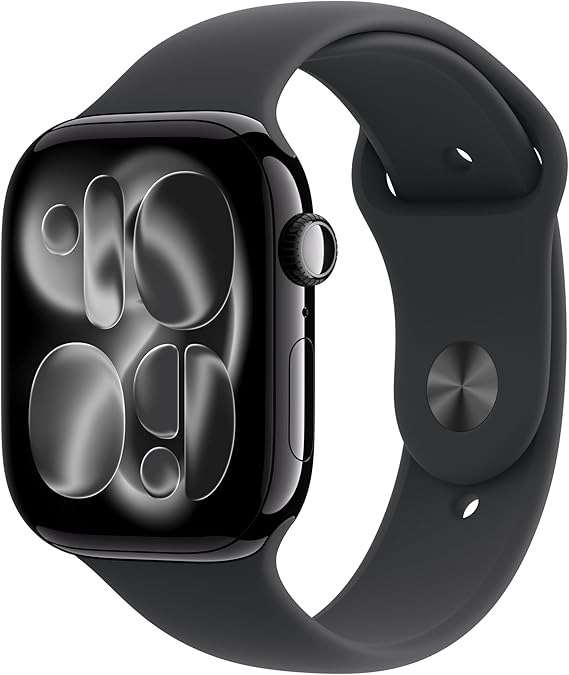
| 4 | Apple Watch Series 11 | The measurement | Wrist heart rate, workout tracking, on-wrist interval timers, sleep and recovery data | people who train alone and therefore have nobody to tell them they are coasting. Heart rate turns “that felt h | $329 | 9.0 |
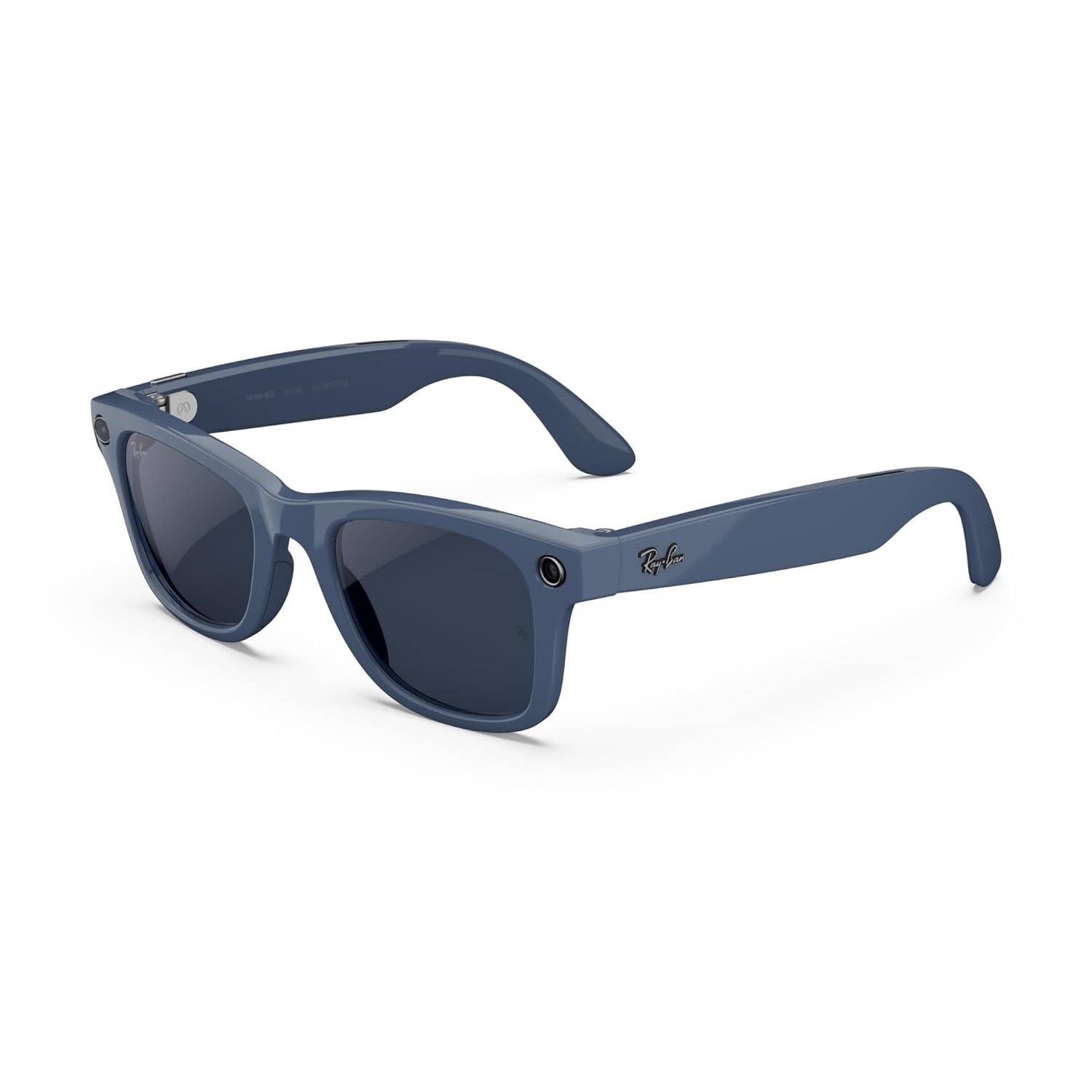
| 5 | Ray-Ban Meta (Gen 2) Wayfarer | The audio | Open-ear speakers in the arms, voice control, on-board camera with capture LED | people who train in a house with other people in it, or who run outdoors on roads. Open-ear audio leaves your | $409 | 8.7 |
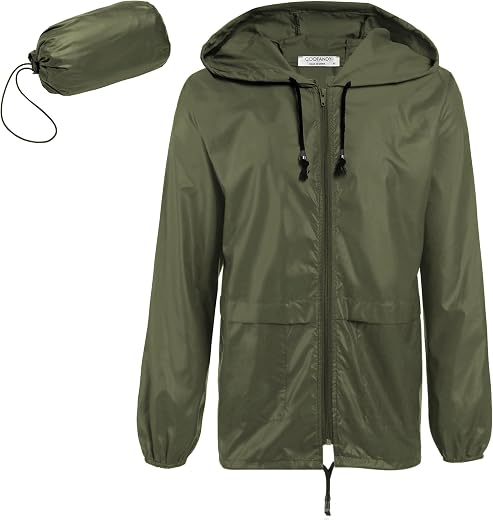
| 6 | COOFANDY Packable Rain Jacket | The weather | Lightweight waterproof shell with hood; packs into its own pocket | the conditioning half of a home programme. Walking, running, hill sprints and loaded carries all happen outsid | $19.99 | 8.2 |
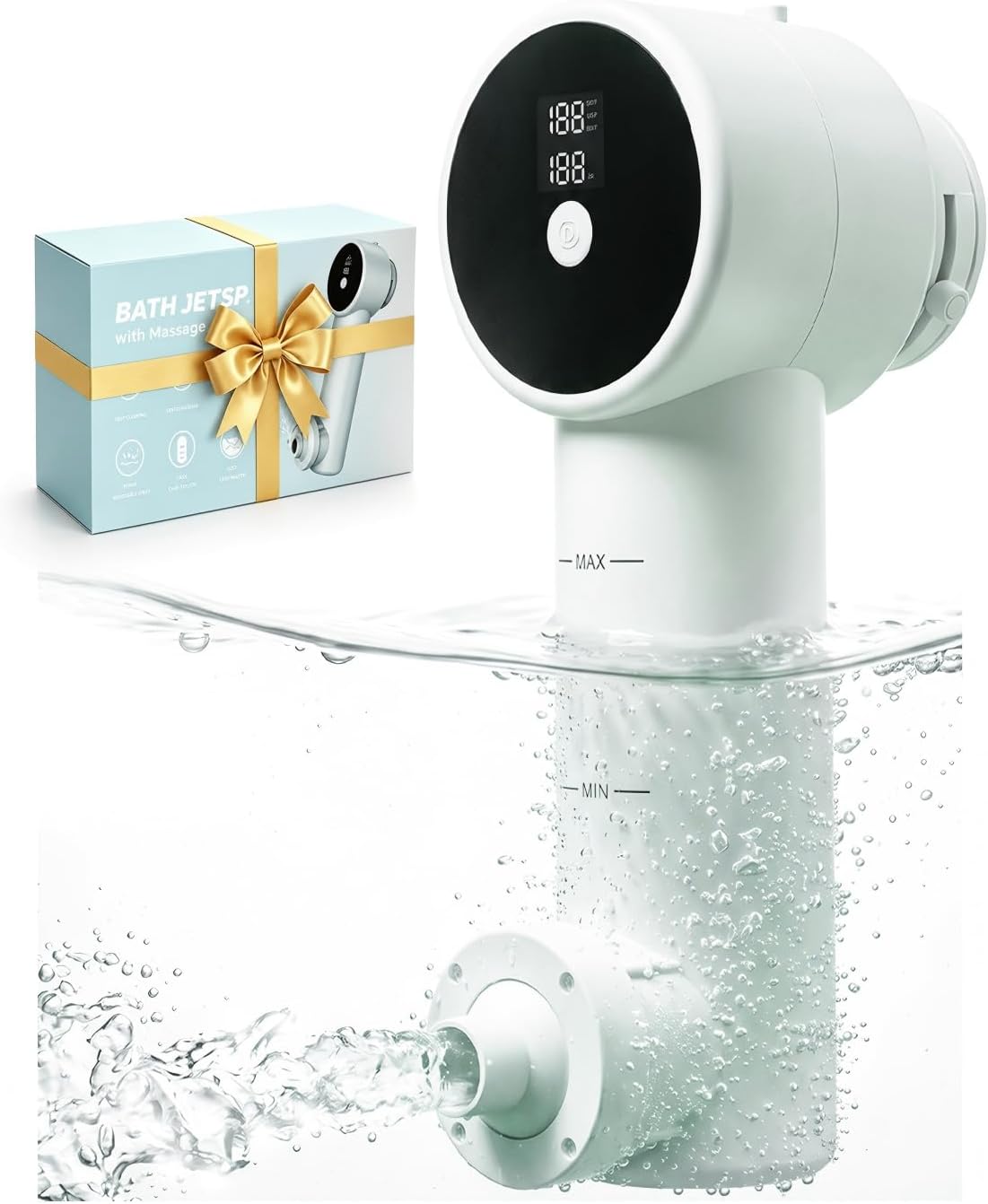
| 7 | COEPUSKE Portable Bath Jets | The recovery | Rechargeable submersible jet unit; turns an ordinary bath into a warm-water massage | the day after a hard lower-body session, and for anyone who trains in the evening and struggles to switch off | $48.99 | 8.7 |
- Home Gym Essentials — Quick Comparison
- The 7 Best Home Gym Essentials in 2026
- 1. FEIERDUN DS2 Adjustable Dumbbells
- 2. NiuMid Anti-Slip Workout Grips
- 3. KADAMS Pomodoro Cube Timer
- 4. Apple Watch Series 11
- 5. Ray-Ban Meta (Gen 2) Wayfarer
- 6. COOFANDY Packable Rain Jacket
- 7. COEPUSKE Portable Bath Jets
- Home Gym Essentials — Buyer’s Guide
- US vs UK: What Changes When You Buy Home Gym Essentials
- Home Gym Essentials — Which One Should You Buy?
- How Much Strength Training You Actually Need
- Home Gym Essentials — Frequently Asked Questions
- Home Gym Essentials — Final Thoughts
- Sources and Further Reading
The 7 Best Home Gym Essentials in 2026
The order below is the order you meet them in a session: the load first, then the hands, the clock, the measurement, the audio, the outdoor layer and finally the recovery. Each entry says plainly who should skip it.
1. FEIERDUN DS2 Adjustable Dumbbells — Best Home Gym Essentials Pick for Strength
Price: $89.99 | Amazon rating: 4.4/5 (5,009 ratings) | Role: The load | Key spec: 20–90 lb (9–41 kg) in one set; converts to barbell, kettlebell and push-up stands
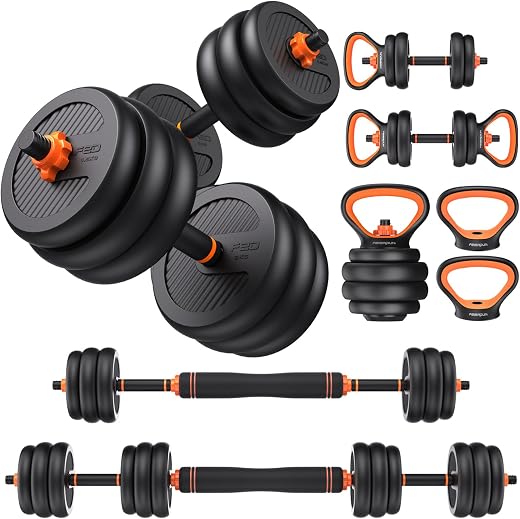
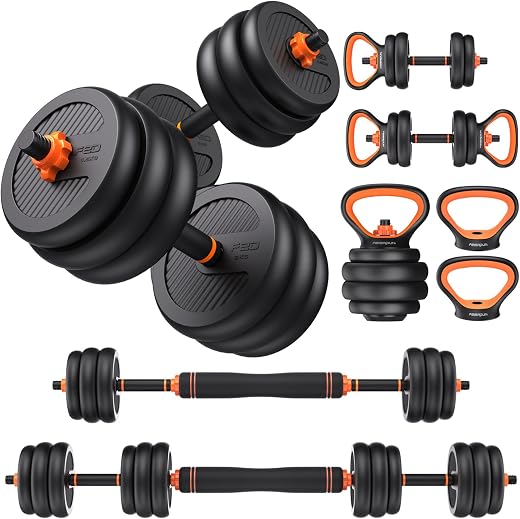
Every list of home gym essentials has to answer one question before it answers any other: where does the weight live when you are not using it? A rack of fixed dumbbells from 5 lb to 50 lb is fifteen objects and about four feet of wall. The DS2 is one object and about the footprint of a large toaster. It ships as a pair that adjusts across 20, 30, 40, 45, 70 and 90 lb depending on how you load and pair the plates, and the connector bar in the box turns the two handles into a short barbell.
That barbell mode is what earns it the top slot rather than the novelty it looks like. A pair of dumbbells alone cannot load a squat or a hip hinge heavily enough for most people past their first few months. Joined into a bar, the same plates give you a floor press, a bent-over row, a front-loaded squat and a Romanian deadlift. Add the push-up stand configuration and the kettlebell handle and one purchase covers the four movement patterns that a sensible beginner programme is built from — push, pull, hinge, squat — which is the whole argument for adjustable weights over anything else in a small room.
The compromises are honest ones. Plate-loaded adjustables are slower to change than the dial-operated sets that cost three times as much, the knurling is smooth rather than aggressive, and the plates are cast iron with a painted finish that will chip if you drop them on a hard floor. But at this price you are buying the ability to add load for two years, which is the only property that actually matters. Amazon buyers have it at 4.4 out of 5 across more than 5,000 ratings, and the complaints cluster on the collars rather than the weight itself.
Best for: anyone whose entire training space is a rectangle of carpet between the sofa and the radiator. One box replaces a dumbbell rack, a kettlebell, a short barbell and a pair of push-up handles, and the whole thing stows in a cupboard.
Skip if: you already own fixed dumbbells you are happy with, or you are strong enough that 90 lb across a pair is a warm-up. Plate-loaded adjustables are also slow to change between supersets — if your programme swaps weight every forty seconds, you will hate this.
Read the full FEIERDUN DS2 adjustable dumbbells review →
Where to Buy — FEIERDUN DS2 Adjustable Dumbbells
2. NiuMid Anti-Slip Workout Grips — Best Cheap Pick in Any Home Gym Essentials List
Price: $7.99 | Amazon rating: 4.2/5 (857 ratings) | Role: The hands | Key spec: Moulded rubber palm pads, one size, no wrist strap
This is the cheapest item on the list by a distance and it solves a problem that stops more home training sessions than any equipment failure. At a gym you chalk up. At home you do not, because chalk on a carpet is a domestic incident. So your hands sweat, the handle turns, and you stop the set two reps early — not because the muscle failed but because the grip did.
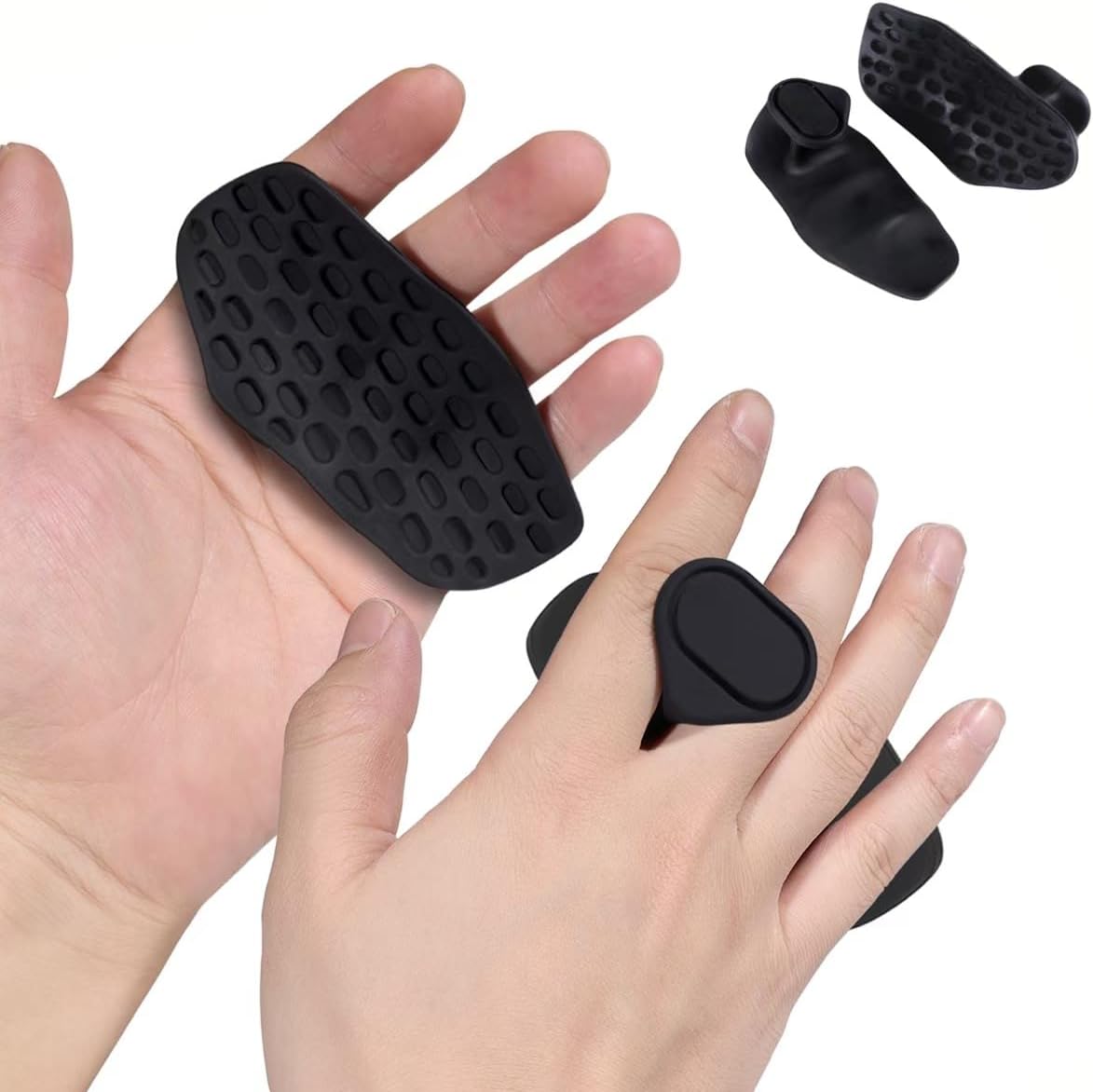
The NiuMid grips are two moulded rubber pads that sit between your palm and the handle. There is no fabric to soak, no fingers to bunch up, and nothing to wash on a cycle. They cover the part of the hand that blisters on pull-ups and the part that slips on a dumbbell row, and they do it for less than the price of a coffee and a pastry. When people ask which of their home gym essentials they were most surprised by, it is almost always the cheapest one.
They are not perfect. One size genuinely does not fit all hands, they reduce tactile feedback on a thin bar, and they will not help with a wrist that folds under a heavy press. Our own testing put them at 7.4 out of 10 — the lowest score in this roundup — and that is fair. But the score measures ambition, not value, and on value nothing here comes close.
Best for: the person whose grip gives out before the muscle being trained does, and anyone who dislikes the sweaty-glove problem. They rinse under a tap and dry in minutes.
Skip if: you want wrist support — these are palm protection only and offer none. If your problem is a weak wrist rather than a slipping bar, buy wraps instead.
Read the full NiuMid workout grips review →
Where to Buy — NiuMid Anti-Slip Workout Grips
3. KADAMS Pomodoro Cube Timer — Best Home Gym Essentials Pick for Rest Intervals
Price: $14.44 | Amazon rating: 4.7/5 (571 ratings) | Role: The clock | Key spec: Flip-to-start cube, 5 / 10 / 25 / 50 minute faces, silent countdown with an alarm
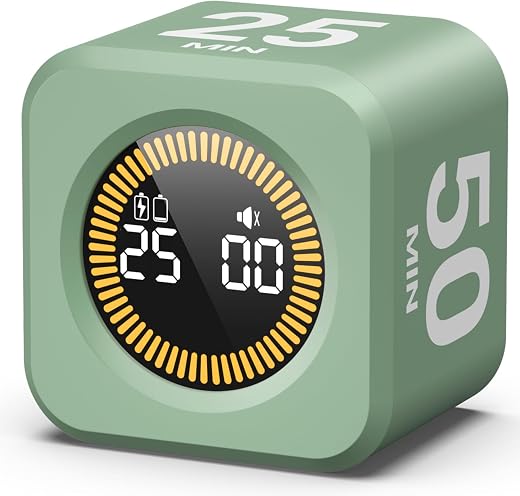
This one was bought as a desk product and turned out to be better in a spare room than at a desk. The cube has four faces marked 5, 10, 25 and 50 minutes. You turn the face you want to the top, it starts, and it beeps when it is done. There is no screen, no app, no pairing and no notification.
In a home gym that matters more than it sounds. The single biggest difference between training that progresses and training that does not is whether the session actually ends — most people at home either drift, taking eight minutes between sets while a video plays, or rush, giving themselves forty seconds where the programme asked for two minutes. A physical timer on the floor fixes the drift, because the beep is a decision made in advance rather than one you make while tired. It also keeps your phone out of your hand, which is the more valuable half of the trade.
Used as a session timer rather than a set timer it is close to perfect: flip 25 for a strength block, flip 10 for conditioning, flip 5 for the stretching you would otherwise skip. Used as a rest timer between sets it is too coarse, and that is the honest limit. Buyers rate it 4.7 out of 5 from 571 ratings, which is the highest average of the seven home gym essentials here.
Best for: anyone who picks up their phone to time a rest period and puts it down four minutes later having read the news. Flip the cube, it counts, it beeps, you lift.
Skip if: you need precise 60- or 90-second intervals — the fixed faces are 5, 10, 25 and 50 minutes, so short rests need a different tool or a watch.
Read the full KADAMS Pomodoro cube timer review →
Where to Buy — KADAMS Pomodoro Cube Timer
4. Apple Watch Series 11 — Best Home Gym Essentials Pick for Measuring Effort
Price: $329 | Role: The measurement | Key spec: Wrist heart rate, workout tracking, on-wrist interval timers, sleep and recovery data
Of all the home gym essentials here, this is the one that answers a question the others cannot. Training at home removes every external reference point. There is no class, no coach, nobody racking a heavier weight next to you, and no mirror you did not choose. What is left is your own perception of effort, and perception of effort is the least reliable instrument in the room — it moves with sleep, caffeine, stress and mood, and it moves most on the days you most need an accurate reading.
A wrist heart-rate monitor is the cheapest correction available. It will not tell you how much to lift, but it will tell you whether today’s conditioning block was genuinely harder than last week’s or whether it only felt that way, and it will tell you when your resting rate has climbed for three mornings running — which is usually the first sign that the reason you cannot face the session is not laziness. On-wrist interval timers also cover the gap the cube timer leaves, so the two work together rather than overlapping.
It is impossible to argue that a $329 watch belongs on a list of home gym essentials for a beginner, and we are not going to. It is here because it does something none of the other six do, and because the people who get most out of home training are the ones who can see what they did. If the budget is finite, buy the weights first, the grips second, and come back to this in a year.
Best for: people who train alone and therefore have nobody to tell them they are coasting. Heart rate turns “that felt hard” into a number you can compare week to week.
Skip if: you already wear any heart-rate-capable watch or band. The upgrade from a £40 tracker to this is real but it is not a training upgrade — it is a phone-on-your-wrist upgrade, and it is the most expensive thing on this page.
Read the full Apple Watch Series 11 review →
Where to Buy — Apple Watch Series 11
5. Ray-Ban Meta (Gen 2) Wayfarer — Best Home Gym Essentials Pick for Hands-Free Audio
Price: $409 | Role: The audio | Key spec: Open-ear speakers in the arms, voice control, on-board camera with capture LED
Sealed earbuds are the default choice for training and they are the wrong one at home, which is why they are not on this list of home gym essentials. A home gym is a shared room in a shared building: somebody is asleep upstairs, somebody is at the door, something is in the oven. Noise-cancelling earbuds delete all of that, which is exactly why people take them out every four minutes.
The Ray-Ban Meta glasses put small speakers in the arms and aim them at your ears without covering them. You hear the podcast and you hear the room. Voice control means you can change the track or answer a call mid-set with your hands still on a dumbbell, which sounds like a small thing until you have tried to swipe a phone with chalky palms. Outdoors, where half of any sensible training week actually happens, leaving your hearing intact next to traffic is a safety argument rather than a convenience one.
Two caveats, and both are firm. The first is price: at $409 this is the single most expensive item in this guide and it is a lifestyle product that happens to be useful for training, not the other way round. The second is the camera — there is a recording LED for a reason, and a pair of camera glasses is not the right thing to wear into a public changing room or a busy park without thinking about it first. Read our full review before you decide the audio is worth the rest of the package.
Best for: people who train in a house with other people in it, or who run outdoors on roads. Open-ear audio leaves your hearing intact, so you catch the doorbell, the child, the timer and the car.
Skip if: you already own open-ear or bone-conduction headphones, which do the audio half of this job for a fifth of the money. Also skip if you sweat heavily — these are sunglasses, not sports eyewear, and they are not rated for it.
Read the full Ray-Ban Meta (Gen 2) Wayfarer review →
Where to Buy — Ray-Ban Meta (Gen 2) Wayfarer
6. COOFANDY Packable Rain Jacket — Best Home Gym Essentials Pick for Training Outdoors
Price: $19.99 | Amazon rating: 4.4/5 (6,453 ratings) | Role: The weather | Key spec: Lightweight waterproof shell with hood; packs into its own pocket
It is easy to forget that home gym essentials are not only indoor objects. Both national guidelines this article cites ask for aerobic work as well as strength, and no small room contains an honest hour of aerobic work — you can do intervals on the spot, but the floor, the ceiling and the neighbours all have opinions about that. The cardio half of a home programme happens on a pavement, a canal path or a hill, and the single object that decides whether it happens is a jacket you do not mind ruining.
That is the whole case for this one. It is twenty dollars, it packs into its own pocket, it lives by the door, and because it cost twenty dollars you will actually take it out in weather where a two-hundred-dollar shell stays on the hook. Amazon has it at 4.4 from more than 6,400 ratings, which for a budget shell is a strong signal that the seams and the zip are not the failure point.
Do not expect a technical garment. Under sustained hard effort a cheap membrane wets out from the inside and you end up damp either way. For walking, easy running, cycling to a park and standing about afterwards it is genuinely enough, and it is the item on this list most likely to be the difference between three sessions a week and one.
Best for: the conditioning half of a home programme. Walking, running, hill sprints and loaded carries all happen outside, and in Britain that means rain for a good part of the year.
Skip if: you want breathability under hard effort. This is a waterproof shell at a budget price, and any shell at this price will wet out from the inside on a fast run. It is a walking and easy-running jacket, not a race jacket.
Read the full COOFANDY packable rain jacket review →
Where to Buy — COOFANDY Packable Rain Jacket
7. COEPUSKE Portable Bath Jets — Best Home Gym Essentials Pick for Recovery
Price: $48.99 | Role: The recovery | Key spec: Rechargeable submersible jet unit; turns an ordinary bath into a warm-water massage
Recovery is the part of a home programme that nobody buys home gym essentials for and everybody needs, and it is where the expensive answers are worst value. Massage guns are loud and localised, ice baths are a project, and a sports massage costs more per session than most of this list. A warm bath is free, already installed, and the one recovery method that people reliably keep doing.
This unit drops into the bath you own and turns it into moving water. There is no plumbing, no installation and nothing to fit — it charges, it goes in, it comes out. On the evening after a heavy squat or deadlift session it does the thing that actually matters, which is to make twenty minutes of doing nothing feel like a choice rather than a chore. That is a behavioural benefit rather than a physiological one, and we would rather say so than pretend otherwise.
Two honest limits. It is not a substitute for sleep, which is the only recovery intervention with a serious evidence base behind it. And it is useless in a flat with a shower cubicle, which rules it out for a meaningful share of readers. Where there is a bath, it is the most-used item on this list after the dumbbells.
Best for: the day after a hard lower-body session, and for anyone who trains in the evening and struggles to switch off afterwards. It uses the bath you already have rather than asking for a new appliance.
Skip if: you only have a shower, or you are expecting the pressure of a fitted spa bath. It is a warm-water massage, not hydrotherapy, and it will not fix an injury.
Read the full COEPUSKE bath jets review →
Where to Buy — COEPUSKE Portable Bath Jets
Home Gym Essentials — Buyer’s Guide: What to Look For
Almost every buying guide to home gym essentials is really a list of equipment ranked by
price. That is the wrong axis. In a house, the binding constraints are physical and legal — how much
the floor is designed to carry, how much noise you are allowed to make, and where the object
lives for the twenty-three hours a day you are not using it. Get those three right and cheap
equipment works. Get them wrong and expensive equipment sits unused in a hallway.
Floors and Ceilings: The First Filter on Home Gym Essentials
Residential floors are designed to carry people and furniture, not barbells. In England and
Wales, Approved
Document A to the Building Regulations gives a distributed floor load of
2.00 kN/m² for dwellings, drawn from BS EN 1991-1-1. In the United States,
Table R301.5 of the International Residential Code — reproduced verbatim in state law such as
Washington
Administrative Code 51-51-0301 — sets 40 pounds per square foot for areas
other than sleeping areas and 30 psf for sleeping areas.
Those numbers are closer than they look: 2.00 kN/m² is about 41.8 psf. The two codes agree
almost exactly. What differs is what is underneath you, and that is the real lesson. A
distributed design load is not a point load — it assumes weight spread across the whole floor,
not four hundred pounds standing on four small feet. Anything heavy in a list of home gym
essentials belongs on a ground floor, over a wall or a beam rather than mid-span, and never in
a converted loft.
Noise: The Part of Home Gym Essentials Nobody Warns You About
Dropping weights is not a nuisance in a gym and can be one at home. In England and Wales,
noise from a dwelling can amount to a statutory nuisance under Part III of the Environmental
Protection Act 1990 if it would, in the government’s words, “unreasonably and substantially
interfere with the use or enjoyment of a home or other premises” or “injure health or be likely
to injure health”.
Once a council agrees, it must serve an abatement notice. Ignore that and a
domestic dwelling faces a fixed penalty of up to £110, or prosecution and a
fine of up to £1,000, according to
GOV.UK
guidance for councils. The United States has no federal equivalent; noise is handled by
municipal ordinance, which typically means quiet hours rather than a statutory duty to
investigate. Either way, the practical rule for home gym essentials is the same: control the
weight down, never drop it, and put a mat under anything you might.
Storage: Home Gym Essentials Have to Live Somewhere
The most reliable predictor of whether equipment gets used is whether setting it up takes
under a minute. A rack of fixed dumbbells is faster to use than an adjustable set but only if
it has a permanent home; if it has to be dragged out of a wardrobe, the adjustable set wins
every time because it is one object rather than fifteen.
Apply the cupboard test before you buy. If the item cannot be picked up in one trip and put
somewhere a visitor would not see it, it is furniture, and furniture has to earn its floor
space against everything else in the room. This is why five of the seven home gym essentials
here fit in a drawer and the sixth fits in a cupboard.
Progression: The Only Specification That Matters
Strength training works because the load goes up. A single fixed weight, however good, has a
ceiling measured in weeks. That is the argument against most of what gets sold as beginner
equipment — resistance bands, a single kettlebell, an all-in-one machine with one cable stack —
and the argument for adjustable weights even when the adjustment mechanism is crude.
When you compare home gym essentials, ask what the object looks like after six months of
progress. A $90 adjustable set that reaches 90 lb will still be useful in two years. A $60
fixed pair at 20 lb will be a doorstop by spring. The cheapest equipment is the equipment you
do not have to replace.
What We Deliberately Left Out, and Why
Treadmills. They are the heaviest, loudest and most space-hungry object in
the category, and there is a safety dimension people rarely consider. When the CPSC
recalled
the Peloton Tread+ after a six-year-old died and 72 incidents were reported, its advice to
owners was to “use the product only in a locked room, to prevent access to children and pets
while the treadmill is in use”. A room you can lock is precisely what a home gym in a small
house is not.
Squat racks and barbells. A loaded bar in a bedroom is a point load on a
suspended timber floor and a bailed rep is a dropped 60 kg. Both belong on a slab.
Benches. A bench is a large object that enables exercises a floor press and
a hip thrust off a sofa already cover. Buy one when the weights outgrow the floor, not before.
Interactive mirrors and screens. They sell subscription content, not
training. If you want instruction, the same money buys a year of coaching from a person who can
see you.
US vs UK: What Changes When You Buy Home Gym Essentials
This is the section where home gym essentials stop being the same article with different
spellings in two markets. The building stock, the tax treatment, the noise law and even the units on the
plates are different, and each of those changes what you should buy.
The Space: Basement and Garage vs Spare Room
The single biggest difference is architectural. The
US
Census Bureau’s Characteristics of New Housing puts the median completed single-family home
at 2,142 square feet — about 199 m². The
English
Housing Survey puts the average usable floor space of all English dwellings at
96 m², and just 76 m² in the private rented sector.
An American home gym typically lives in a basement or an attached garage: concrete under it,
nobody below it, and a door between it and the house. A British one lives in a spare bedroom,
under the stairs or in a shed at the end of the garden, on a suspended timber floor with a
bedroom beneath. The equipment that works in the first place is not the equipment that works in
the second, which is why an American list of home gym essentials usually opens with a rack and
this one opens with a pair of dumbbells that fold away.
The Units: Pounds, Kilograms and the 5-in-1 Problem
American weights are sold in pounds, British weights in kilograms, and adjustable sets are
where this bites. The FEIERDUN set here is marketed as 20/30/40/45/70/90 lb, which is
9/13.6/18/20.4/31.8/40.8 kg — a set of untidy numbers that make it awkward to follow a
kilogram-based programme precisely.
It matters more than pedantry. Progression works in small increments, and a set whose steps
are 10 lb apart gives you a 4.5 kg jump where a barbell programme would ask for 2.5 kg. Buy
plate-loaded rather than dial-operated if you can, so you can add fractional plates later, and
convert once at the start rather than every session.
The Noise Law: A Duty to Investigate vs Quiet Hours
Covered in detail above, but worth restating as a market difference: a British council has a
statutory duty to investigate a noise complaint and to serve an abatement notice if it agrees
one exists. An American neighbour’s route is a municipal ordinance and, in practice, the
landlord or the HOA. British readers should assume a complaint has teeth; American readers
should read their lease and their HOA rules, which are frequently stricter than the city code.
The Tax: Why an Employer-Funded Home Gym Is Taxable in Both Countries
Employers on both sides of the Atlantic can provide a tax-free gym — and in both countries
the exemption stops at your front door. HMRC’s
guidance
on sporting and recreational facilities exempts facilities that are available to all
employees, not available to the general public, and “somewhere that is not a private home,
holiday or other overnight accommodation”.
The American rule arrives at the same place by a different route.
IRS Publication
15-B excludes an on-premises athletic facility only where it is “located on premises you
own or lease and must be operated by you”, and the exclusion “doesn’t apply to any athletic
facility if access to the facility is made available to the general public through the sale of
memberships”. So a commercial gym membership is taxable pay in both systems, and home gym
essentials bought for you by an employer are a benefit in kind in Britain and taxable
compensation in America. Buy them yourself.
The Vocabulary: Trainers, Cross-Trainers and Skipping Ropes
Americans buy sneakers, Britons buy trainers. An American
elliptical is a British cross-trainer; a jump rope is a
skipping rope; a stationary bike is an exercise bike; and
pants means trousers in one country and underwear in the other, which is worth knowing
before you order gym kit online.
Two more matter for searching. Americans buy gear and Britons buy kit, so
the same product ranks under different phrases in each market. And an American
first floor is a British ground floor — which, given everything above about
floor loading, is the one mistranslation in this article that could actually cost you a
ceiling.
Home Gym Essentials — Which One Should You Buy?
Under $50: The Two Things Nobody Regrets
If you have never trained at home before, start your home gym essentials with the
NiuMid workout
grips at $7.99 and the
KADAMS cube
timer at $14.44 and start with bodyweight work. That is $22 to remove the two things that
end home sessions early — a slipping grip and a session with no end. Add the
COOFANDY
packable rain jacket at $19.99 and you have covered the aerobic half of the guidelines for
under $45 in total. It is not a complete kit, but it is the highest-value $45 in this category.
Around $110: The Core Set
The core set of home gym essentials is the
FEIERDUN DS2
adjustable dumbbells at $89.99 plus the grips and the timer — about $112 all in, and about
five weeks of an average gym membership. That combination covers push, pull, hinge and squat
with progressive load, protects the hands, structures the session, and stores in a cupboard.
For most people reading this, that is the whole purchase and the other four items are
optional.
If your budget stretches slightly, add the
Berkshire
Blanket wearable cape at $29.99 rather than anything with a motor. An unheated spare room in
February is the most common reason a British home gym goes unused between November and March,
and thirty dollars of fleece fixes it more reliably than a heater you have to remember to
switch on.
$300 and Up: Measurement and Comfort
Above about $300 you are no longer buying training capacity — you are buying data and
comfort. The Apple
Watch Series 11 at $329 gives you heart rate, honest session records and on-wrist intervals.
The Ray-Ban
Meta (Gen 2) Wayfarer at $409 gives you audio that leaves your hearing intact, indoors and
on the road. The
COEPUSKE
bath jets at $48.99 sit between the tiers and are the one indulgence here that gets used
weekly.
Our advice is blunt: buy this tier last, and only once you have trained consistently for
three months. Every one of these is a good product and none of them will make you stronger.
The adjustable
dumbbells will.
How Much Strength Training You Actually Need
Before spending anything on home gym essentials, it is worth knowing what the target is. Both national health
services ask for a similar amount and most people are surprised by how modest it is — and by
how few adults reach the strength half of it.
The Guidelines Agree, and They Are Smaller Than You Think
The NHS
asks adults aged 19 to 64 for “at least 150 minutes of moderate intensity activity a week or 75
minutes of vigorous intensity activity a week”, plus “strengthening activities that work all
the major muscle groups… on at least 2 days a week”. It also asks you to “spread exercise evenly
over 4 to 5 days a week, or every day”.
The US
Centers for Disease Control and Prevention asks for “at least 150 minutes a week of
moderate-intensity activity such as brisk walking” and “at least 2 days a week of activities
that strengthen muscles”. The two are close enough to treat as one target: two strength
sessions and about two and a half hours of walking-or-harder. Two half-hour sessions with a pair
of dumbbells and a daily walk covers it.
The Strength Half Is Where Almost Everybody Fails
Aerobic guidance gets met reasonably often. Strength guidance does not. A study of
253,423 English adults from the Active Lives Survey, published in
PLOS
ONE, found the share meeting the twice-weekly strengthening guideline swung wildly with the
definition used: 29% of men and 24% of women on the most inclusive reading, but only
7.3% of men and 4.1% of women on the strict definition aligned with the Chief
Medical Officers’ guidance.
The authors’ summary is worth quoting: the proportion of English adults meeting the
guidelines “could be as high as 1 in 3 but possibly as low as just 1 in 20”. That gap is the
actual case for home gym essentials. Gym attendance is not the barrier for most people —
twenty minutes twice a week, at home, with something to lift, is.
Training Unsupervised Is the Risk, Not the Weight
A ten-year analysis of resistance-training injuries treated in US emergency departments,
published in
a
peer-reviewed review of NEISS data, examined 15,348 cases from 2013 to 2022 among people
aged 14 to 35. The trunk was the most commonly injured body part — 40.1% of injuries in men and
31.1% in women — and dumbbells and barbells accounted for a meaningful share of the mechanism.
The finding that matters for anyone building home gym essentials is about supervision: only
23.6% of male injuries and 27.6% of female injuries occurred in supervised settings. Training
alone is the norm at home, so the mitigations have to be built in — no maximal singles without a
spotter, no pressing a heavy dumbbell over your face on a floor you cannot roll off, and load
increases small enough that a failed rep is a set you stop rather than a weight you drop.
A Two-Day Programme That Fits the Equipment on This Page
Here is what the home gym essentials above actually get used for. Day one: goblet squat,
floor press, one-arm row, hip hinge, plank. Day two: split squat,
overhead press, dumbbell deadlift, farmer’s carry, dead bug. Three sets of six to ten on each,
with the cube timer set to 25 minutes for the block. Add weight when the top of the rep range
feels comfortable for all three sets.
That is two sessions of under half an hour, done with one pair of adjustable dumbbells on a
piece of floor about the size of a bath towel. Everything else in this guide makes those two
sessions more likely to happen or more pleasant afterwards — which is genuinely valuable, but
it is not the same thing as being necessary.
Home Gym Essentials — Frequently Asked Questions
What are the true home gym essentials for a complete beginner?
The true home gym essentials for a beginner are one pair of adjustable dumbbells, something
to protect your hands, and a timer. That is
about $112 at the prices in this guide. Everything else — the watch, the audio, the recovery
kit — improves the experience rather than the training. If you buy in that order you will never
own a piece of equipment you regret.
Can I put a home gym in an upstairs bedroom?
Usually yes, with limits. Residential floors are designed for about 2.00 kN/m² in England
and Wales and 30–40 psf under the US residential code, which is a distributed load rather than a
point load. The home gym essentials in this guide, used with control, are fine. A loaded barbell rack, a
treadmill or dropped weights are not. Train near a load-bearing wall rather than mid-span, and never in a converted
loft without checking.
How much space do home gym essentials actually need?
For the equipment in this guide, an area about the size of a bath towel plus room to extend
your arms overhead and to each side — roughly 2 m by 1.5 m. The ceiling matters as much as the
floor: overhead pressing while standing needs about 2.3 m of clearance, which many British
first-floor rooms have and many converted attics do not.
Are adjustable dumbbells worth it compared with a fixed set?
In a small room, yes, and it is not close. A fixed set that spans the same range is fifteen
objects and several feet of wall. The trade-off is time: plate-loaded adjustables take twenty to
thirty seconds to change, which is irritating in a superset. If you have a garage and a rack,
buy fixed. If you have a cupboard, buy adjustable.
Will my neighbours be able to hear me?
With the home gym essentials listed here, they will hear anything you drop and very little
that you lower. In England and Wales,
noise from a home can be a statutory nuisance under the Environmental Protection Act 1990, with
a fixed penalty of up to £110 for a domestic dwelling and fines up to £1,000 on prosecution.
Use a mat, control the eccentric, and avoid jumping exercises in a flat — the impact travels
through the structure, not the air.
Do I need a heart rate monitor to train at home?
No. It is useful rather than necessary. Its real value is that it replaces your perception of
effort — which moves with sleep, stress and caffeine — with a number you can compare across
weeks. If you already own any heart-rate-capable watch or band, that is enough, and the
upgrade to a flagship is a phone-on-your-wrist decision rather than a training one.
Can I claim home gym essentials against tax, or get my employer to pay?
Generally not. HMRC’s exemption for employer-provided sporting facilities explicitly excludes
anywhere that is “a private home”, and IRS Publication 15-B limits its athletic-facility
exclusion to premises the employer owns or leases and operates. In both systems, equipment your
employer buys for your house is taxable. This is general information rather than tax advice —
check with an accountant for your own circumstances.
How do I convert US pound weights to kilograms without getting it wrong?
Multiply pounds by 0.4536. The FEIERDUN set’s 20/30/40/45/70/90 lb becomes roughly
9/13.6/18/20.4/31.8/40.8 kg. The practical problem is not the arithmetic, it is the step size:
a 10 lb jump is 4.5 kg, which is a large increase on an overhead press. Buy plate-loaded sets so
you can add small plates and progress in sensible increments.
Is a treadmill or exercise bike a sensible addition later?
A bike, sometimes. A treadmill, rarely — it is the heaviest and loudest object in the
category, and the CPSC’s advice after the Peloton Tread+ recall was to use one “only in a locked
room” where children or pets are present. If you want aerobic work, a $20 waterproof jacket and
a pavement do the same job for a fortieth of the price and take up no floor at all.
How long before home gym essentials pay for themselves?
The core $112 set of home gym essentials is roughly five weeks of an average gym membership
in either country, and
it does not expire. The bigger saving is not money but travel time: two sessions a week at
twenty-five minutes each, with no commute, is the difference between a programme you keep and
one you abandon in March.
Home Gym Essentials — Final Thoughts
The honest summary of this guide is that two of the seven home gym essentials do almost all
of the work.
The FEIERDUN DS2
adjustable dumbbells give you progressive load in four movement patterns from a single box,
and the NiuMid
grips stop the cheapest failure point in home training. Add the
KADAMS timer
and you have a complete, progressive strength programme for about $112 that lives in a
cupboard.
The other four are genuinely good and genuinely optional. The
Apple Watch
Series 11 tells you the truth about your effort; the
Ray-Ban
Meta glasses let you listen without deleting the room; the
COOFANDY
jacket gets you outdoors for the aerobic half; and the
COEPUSKE
bath jets make the evening after a heavy session pleasant enough to repeat. Buy the first
three now, train for three months, and let the next three months tell you which of the others
you actually want. That is a better test than any list of home gym essentials, including this
one.
Sources and Further Reading
- NHS — Physical activity guidelines for adults aged 19 to 64
- CDC — What You Can Do to Meet Physical Activity Recommendations
- HM Government — Approved Document A (Structure), Building Regulations 2010
- Washington Administrative Code 51-51-0301 — IRC Section R301 design criteria, Table R301.5
- GOV.UK — Noise nuisances: how councils deal with complaints
- GOV.UK — Expenses and benefits: sporting or recreational facilities (what’s exempt)
- IRS — Publication 15-B, Employer’s Tax Guide to Fringe Benefits (Athletic Facilities)
- US CPSC — Peloton recalls Tread+ treadmills after one child died and more than 70 incidents reported
- US Census Bureau — Characteristics of New Housing, highlights
- English Housing Survey 2024–25 — Chapter 1: profile of households and dwellings
- PLOS ONE — Who is meeting the strengthening physical activity guidelines by definition? 253,423 English adults
- A 10-Year Analysis of Resistance Training–Related Injuries Treated in Emergency Departments (NEISS data, 2013–2022)
Affiliate disclosure: SoftPickr is a participant in the Amazon Services LLC Associates
Program. Links in this guide to Amazon.com are affiliate links, and we may earn a commission
from qualifying purchases at no extra cost to you. Prices and availability were correct at the
time of writing and can change. UK readers can search the same models on Amazon.co.uk. Nothing
in this article is medical, legal or tax advice.