
At three o’clock in the morning the canteen is shut, the shop on the corner is shut, the
heating has dropped to its overnight setback, the bus that would take you home runs once an hour
instead of every eight minutes, and there is nobody awake to ask. A night shift does not simply move
your working hours to the other end of the clock.
It moves you out of the infrastructure that
everybody else’s working day is quietly built on, and then, at the end of it, it asks you to sleep in
a house and a street that have just woken up. Every one of the night shift essentials
below exists to buy back one piece of that missing infrastructure.
This roundup covers seven products across seven jobs: the meal when nothing is open, the cold at
four in the morning, the twenty-minute nap that the evidence actually supports, the handover you are
too tired to remember, the noise at both ends of the commute, the front door you have to find in the
dark twice a day, and the bedroom you are asking to behave like night-time at nine in the morning.
These night shift essentials are not ranked from best to worst. They are in the order the
twenty-four hours runs, because
that is how the problems arrive, and it is why a list of night shift essentials reads differently
from a list of gadgets.
Every product here has been scored on the same four criteria the site uses throughout: whether it
solves a problem the night specifically creates, whether it works when you are tired and clumsy,
whether it survives being used five nights a week for a year, and what the evidence base behind the
listing actually looks like.
Product links go to Amazon.com and carry our affiliate
tag; UK readers can search the same model numbers on Amazon.co.uk, and there is a
full US vs UK section below covering how night shift essentials differ by market on the working
time law, the voltage and the vocabulary, because on
this topic the two countries are further apart than almost any other subject we have covered. One
warning before you search: Night Shift is also the name of Apple’s screen-warming display
setting, so if your results fill up with iPhone tutorials, add the word work or
worker to the query.
Night Shift Essentials — Quick Comparison
All seven of these night shift essentials are compared on the job they do rather than on price,
because on nights the cheapest item on this table is the one most likely to change your week.
| # | Product | Role | Key spec | Best for | Price | Score |
|---|---|---|---|---|---|---|
| 1 | TRAVELISIMO Electric Lunch Box | The meal | 1.5 L stainless, 100 W, 110V/12V/24V | Anyone whose canteen shuts at 8pm | $39.99 | 8.3 |
| 2 | POMPONGO Rechargeable Hand Warmers | The cold | 2-pack, up to 20 h, 108–131°F | Outdoor work, car parks, cold buildings | $16.99 | 8.5 |
| 3 | KADAMS Pomodoro Cube Timer | The nap | 5/10/25/50 min rotating cube, LED ring | Anyone allowed a break nap | $16.99 | 8.1 |
| 4 | Plaud Note Pro AI Voice Recorder | The handover | 64 GB, Bluetooth 5, transcribe and summarise | Handovers, callouts, long meetings | $189.00 | 8.5 |
| 5 | Bucephalus T27 Wireless Earbuds | The noise | Bluetooth 6.0, 40 h total, IPX7 | The commute at both ends | $16.99 | 7.6 |
| 6 | DEEIRAO Motion Sensor Keyhole Light | The door | 4 LEDs, PIR sensor, 1×AA, adhesive | Leaving and returning in the dark | $9.99 | 7.8 |
| 7 | Levoit Core Mini-P Air Purifier | The bedroom | 255 sq ft/hour, 27–45 dB, 7 W, 100–240 V | Sleeping while the street is awake | $44.49 | 8.6 |
The 7 Best Night Shift Essentials in 2026
Seven products, seven jobs, in the order the twenty-four hours runs rather than in rank order. Each of these night shift essentials is scored out of ten on the site’s standard criteria, and every entry says plainly who should not buy it.
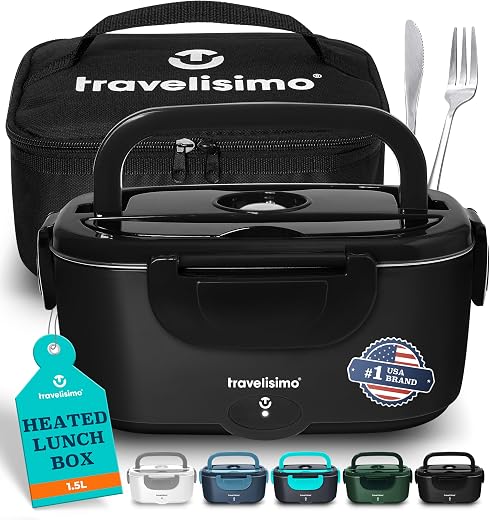
1. TRAVELISIMO Electric Lunch Box — Best Night Shift Essentials Pick for the 3am Meal
Price: $39.99 | Amazon rating: 4.5 from 24,848 ratings | Role: the meal | Key spec: 1.5 L stainless steel inner, 100 W, switchable 110V / 12V / 24V
The vending machine is the default night shift meal and it is the reason so many people come off nights heavier than they went on. What makes this one of the more defensible night shift essentials is the wattage. Most heated lunch boxes draw 40 to 50 watts and need the best part of an hour to bring a cold portion up to temperature, which is useless when your break is twenty minutes long. At 100 watts this one gets a 1.5 litre stainless inner from fridge-cold to steaming in roughly twenty to twenty-five minutes, so you can plug it in at the start of the break rather than half an hour before it.
The three voltage settings are the part that actually changes a shift. 110V runs it from a mains socket in a break room, 12V runs it from a car socket and 24V from a truck, which means a driver, a lone worker or anyone whose site has no kitchen can start it heating on the way in and eat when they arrive.
British readers need to read that specification carefully, because it is the clearest example in this whole guide of a product that does not cross the Atlantic cleanly: a 110V appliance on 230V British mains needs a step-down transformer, not a travel plug adapter. The 12V and 24V vehicle sockets are the same on both sides, which is the workaround.
The evidence base is one of the strongest here — 4.5 from 24,848 ratings — and the complaints cluster in a predictable place. It is a warmer, not a cooker. Food has to go in already cooked and it has to come out and be eaten; leaving it plugged in for the whole shift is neither safe nor pleasant. Of all the night shift essentials here it is the one with the most washing-up attached, and the stainless inner lifts out, which matters more than it sounds at six in the morning when you want to be asleep rather than scrubbing a plastic tray.
Best for: Anyone whose canteen, shop or hot-food counter shuts before their shift starts, and drivers and lone workers who can heat a meal from a vehicle socket on the way in.
Skip if: You are in the UK and expect to run it from a wall socket on a plug adapter, you want it to cook raw food, or you have nowhere to wash it out at the end of a shift.
Read the full TRAVELISIMO Electric Lunch Box review →
Where to Buy — TRAVELISIMO Electric Lunch Box
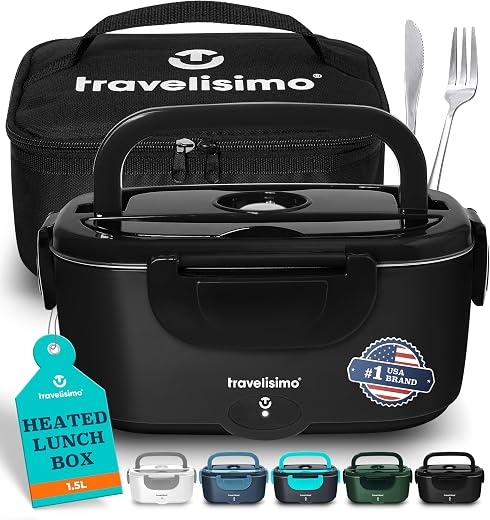
2. POMPONGO Rechargeable Hand Warmers — Best Night Shift Essentials Buy for Four in the Morning
Price: $16.99 (was $19.99) | Amazon rating: 4.7 from 2,421 ratings | Role: the cold | Key spec: 2-pack, up to 20 hours, three settings at 108°F / 120°F / 131°F
Four in the morning is both the coldest part of the outdoor night and the hour at which human alertness reaches its lowest point, and the two compound each other. Buildings do not help: almost every commercial heating system drops to a setback temperature overnight on the reasonable assumption that nobody is in the building, which is exactly the assumption a night shift breaks. Of all the night shift essentials on this list, a pair of pocket warmers is the one that most consistently gets described as trivial by people who have never done a January stock count in an unheated warehouse.
Three heat settings — roughly 42°C, 49°C and 55°C — is the right number, because the top setting is for standing still outdoors and the bottom one is for keeping a pocket warm for most of a twenty-hour run. Two in a pack is also the right number, and not for the reason the packaging gives: one in each coat pocket means you can keep both hands working, and the pair makes it easy to hand one to whoever on your shift is worse off than you. They warm in a couple of seconds, which matters when the break is short.
Be honest about what they are. They warm hands and pockets; they are not clothing and they will not keep you warm outdoors in place of a proper coat. They are lithium cells, so they should be charged indoors and not left overnight in a freezing van if you want the stated run time. And they are fundamentally a between-tasks product: you cannot hold one while you use both hands, so the honest use case is warming your hands back up after a job rather than during it.
Best for: Outdoor work, security rounds, unheated warehouses and stockrooms, long car-park walks, and anyone whose building runs a night-time heating setback.
Skip if: You need warmth while your hands are actually working, you want a substitute for proper gloves and a coat, or your kit has to be non-lithium for site rules.
Read the full POMPONGO Rechargeable Hand Warmers review →
Where to Buy — POMPONGO Rechargeable Hand Warmers
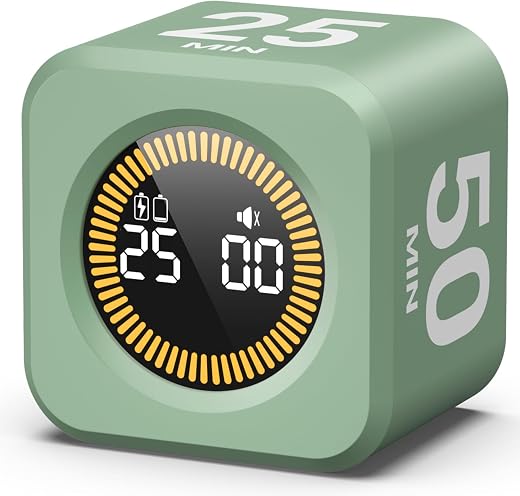
3. KADAMS Pomodoro Cube Timer — Best Night Shift Essentials Pick for the Twenty-Minute Nap
Price: $16.99 | Amazon rating: 4.7 from 594 ratings | Role: the nap | Key spec: rotating cube with 5, 10, 25 and 50 minute presets, visual LED ring, audible alarm
The break nap is the single most evidenced intervention available to a night worker, and it is the one most often ruined by the alarm. NIOSH’s own training material for nurses is specific: “a 30-minute nap can help you to feel more alert during an 8-hour night shift”, and for the long ones, “a night-shift nap of 2 to 3 hours was shown to maintain alertness and counteract fatigue during a 12- to 16-hour night shift”. A cube timer turned on its side and put on the table is the cheapest way to act on that, which is why it earns a place among the night shift essentials ahead of far more interesting gadgets.
The real argument for a physical timer is not the timer. It is the phone. If your alarm lives on your phone then your phone has to be next to your head, unlocked, screen-on, notifications live, at the exact moment you are trying to fall asleep in a break room chair — and the phone is the thing most likely to stop that happening. A cube you flip to 25 lets the phone go face down in a bag. The LED ring counts down visually without a sound, which is genuinely useful on a ward or a control desk where a ticking timer would be intolerable.
The limitations are real and they are all about the presets. You get 5, 10, 25 and 50 minutes and nothing else, so the twenty-minute nap that most fatigue guidance settles on has to be a twenty-five, and the wake-up is an audible beep with no vibration option — which in a shared break room means you will wake somebody else as well as yourself. It recharges over USB-C and holds a charge for weeks, so it is not a thing you have to think about.
Best for: Anyone whose employer permits a break nap, anyone using timed tasks through a long shift, and anyone who wants a working alarm without their phone beside their head.
Skip if: Break naps are not allowed where you work, you need a silent vibrating alarm, or you want an arbitrary duration rather than four fixed presets.
Read the full KADAMS Pomodoro Cube Timer review →
Where to Buy — KADAMS Pomodoro Cube Timer
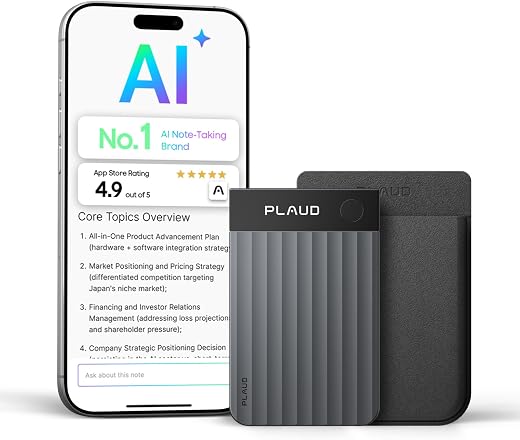
4. Plaud Note Pro AI Voice Recorder — Best Night Shift Essentials Upgrade for the Handover
Price: $189.00 | Amazon rating: 4.5 from 2,758 ratings | Role: the handover | Key spec: 64 GB, Bluetooth 5, card-sized, transcribes and summarises, press-to-highlight
The handover is the highest-consequence conversation of a night shift and it happens at the precise moment your recall is worst — the end of twelve hours, in the hour when everybody else is having breakfast. A card-sized recorder with 64 GB and on-device highlighting exists to take that load off memory: you press once when something matters, and the summary afterwards tells you what was actually said rather than what you think you heard. Among these night shift essentials it is by some distance the most expensive, at roughly four times the price of anything else here.
It is worth being blunt about who should not buy this one, because that is most readers. If your handover is four lines long, a notebook is a better product and it costs a pound. This earns its money in a narrow set of cases: long callouts you have to write up later, technical faults you need to describe to a day team who were not there, your own dictation on the drive home before it evaporates, and medical or professional appointments that you keep scheduling for the afternoon and then sleeping through. Those are all situations where you own the record.
The moment other people are in the room the calculation changes, and it changes differently depending on which country you are in. In the United States the federal wiretap statute at 18 U.S.C. §2511 is the starting point and a number of states go further by requiring every party to a conversation to consent; in Britain the question turns instead on data protection law once identifiable colleagues or patients are being recorded. Neither is a question to resolve at six in the morning. Check your employer’s policy before you press record, not afterwards.
Best for: Long or technical handovers, lone workers writing up callouts, and anyone who keeps sleeping through the appointment they needed to remember.
Skip if: Your handover fits on a sticky note, your workplace prohibits recording devices, or you would be recording colleagues or patients without asking them first.
Read the full Plaud Note Pro AI Voice Recorder review →
Where to Buy — Plaud Note Pro AI Voice Recorder
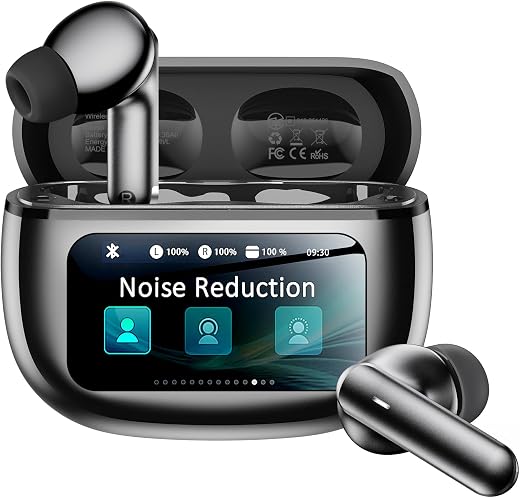
5. Bucephalus T27 Wireless Earbuds — Best Budget Night Shift Essentials Pick for the Commute
Price: $16.99 | Amazon rating: 4.1 from 171 ratings | Role: the noise | Key spec: Bluetooth 6.0, 40 hours total with the case, IPX7, smart touchscreen charging case
The commute is the dangerous half of a night shift, and this entry has to start by saying what a pair of earbuds does not do: audio does not fix fatigue. Loud music and an open window are the two most popular tired-driver remedies and the evidence for both is that they buy a few minutes and nothing more. What earbuds genuinely fix is the other commute — the five o’clock bus, the half-empty train carriage, the twenty-minute walk to a car park — and the phone call home made with cold hands, which is where the dual microphones matter more than the drivers do.
For seventeen dollars the specification is generous on paper. Bluetooth 6.0 is genuinely newer than most budget earbuds ship with, forty hours of combined playtime means you can leave the case in a locker for a fortnight, and IPX7 is the right rating for something that will live in a coat pocket through British weather. The touchscreen on the case is a gimmick and it costs battery; you can turn it off, and you should.
The honest problem is the evidence base. 4.1 from only 171 ratings is the thinnest sample of any product in this roundup, which is exactly why it scores 7.6 rather than 8-something, and it is the reason this is positioned as the budget pick rather than the recommendation. One more thing, because it is the mistake people make: these are not sleep earbuds. Hard-shelled buds in the ear you are lying on at nine in the morning will hurt within the hour, and NIOSH’s own advice on sleeping in the daytime is about darkness rather than sound.
Best for: The bus, the train and the walk at both ends of a shift, hands-free calls home, and anyone who will inevitably lose a pair and does not want that to hurt.
Skip if: You want to wear them in bed, you need proven active noise cancellation, or a 171-rating evidence base is not enough for you — which is a reasonable position.
Read the full Bucephalus T27 Wireless Earbuds review →
Where to Buy — Bucephalus T27 Wireless Earbuds
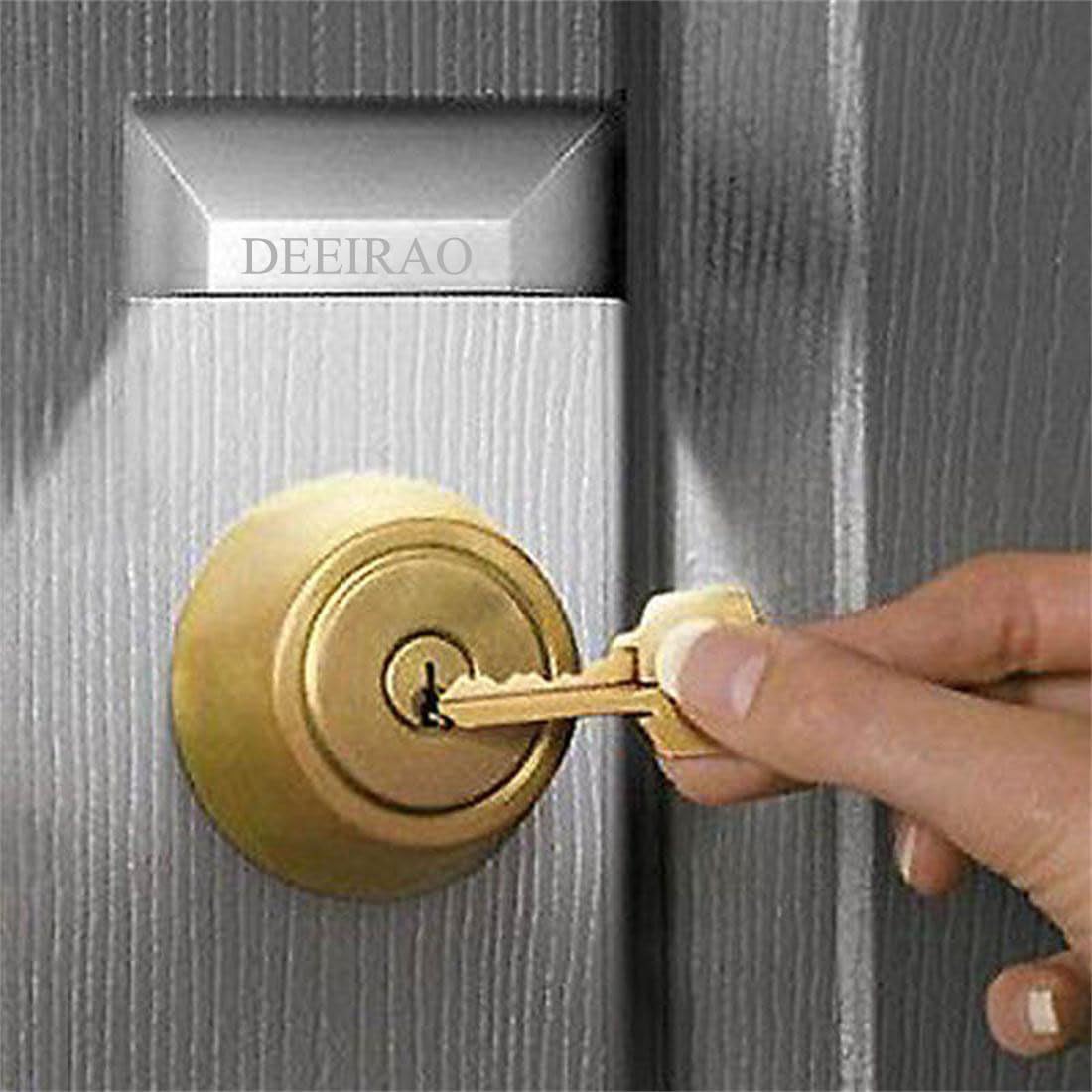
6. DEEIRAO Motion Sensor Keyhole Light — Cheapest of the Night Shift Essentials and the Most Used
Price: $9.99 | Amazon rating: 4.5 from 5,358 ratings | Role: the door | Key spec: 4 LEDs, infrared motion sensor, auto-off in daylight, 1×AA battery, adhesive mount
For about five months of the year a night worker leaves the house in the dark and comes back in the dark, which means the front door is the only task in the day that has to be done twice, blind, with cold hands and usually while holding something. A ten-dollar light with a motion sensor is the least glamorous item on this list and, judged by how many times a year it is actually used, the hardest-working of these night shift essentials. Four LEDs, an infrared sensor and a light sensor that stops it firing in daylight is the entire product.
The mounting method is what makes it one of the few night shift essentials that works in a rented flat. It sticks on with double-sided adhesive and takes a single AA cell, so there is no wiring, no drilling and nothing that has to be made good when you move out. The same logic applies inside the house at the other end of the shift: NIOSH’s sleep guidance for shift workers recommends keeping the route between bedroom and bathroom dark but navigable with a dim light rather than switching the main lights on, and a motion-triggered sensor at ankle height on a landing does that job as well as it does the lock.
Two limitations, and they are the reason this scores 7.8 rather than higher. The AA cell is not included, which is a small irritation and a reminder to keep a charged one in the drawer. More importantly it is rated for indoor use: adhesive on a wet, cold, textured surface is a losing proposition, and a British UPVC door in February is the hardest version of that test. The sensible placements are a covered porch, the inside of a communal entrance, or the door frame rather than the door itself.
Best for: Renters, anyone with an unlit front door or a shared entrance, and anyone who wants a dim landing light that does not mean switching on the hall.
Skip if: Your door is fully exposed to the weather with no porch, you need to light a whole path rather than a lock, or you want something mains-powered and permanent.
Read the full DEEIRAO Motion Sensor Keyhole Light review →
Where to Buy — DEEIRAO Motion Sensor Keyhole Light
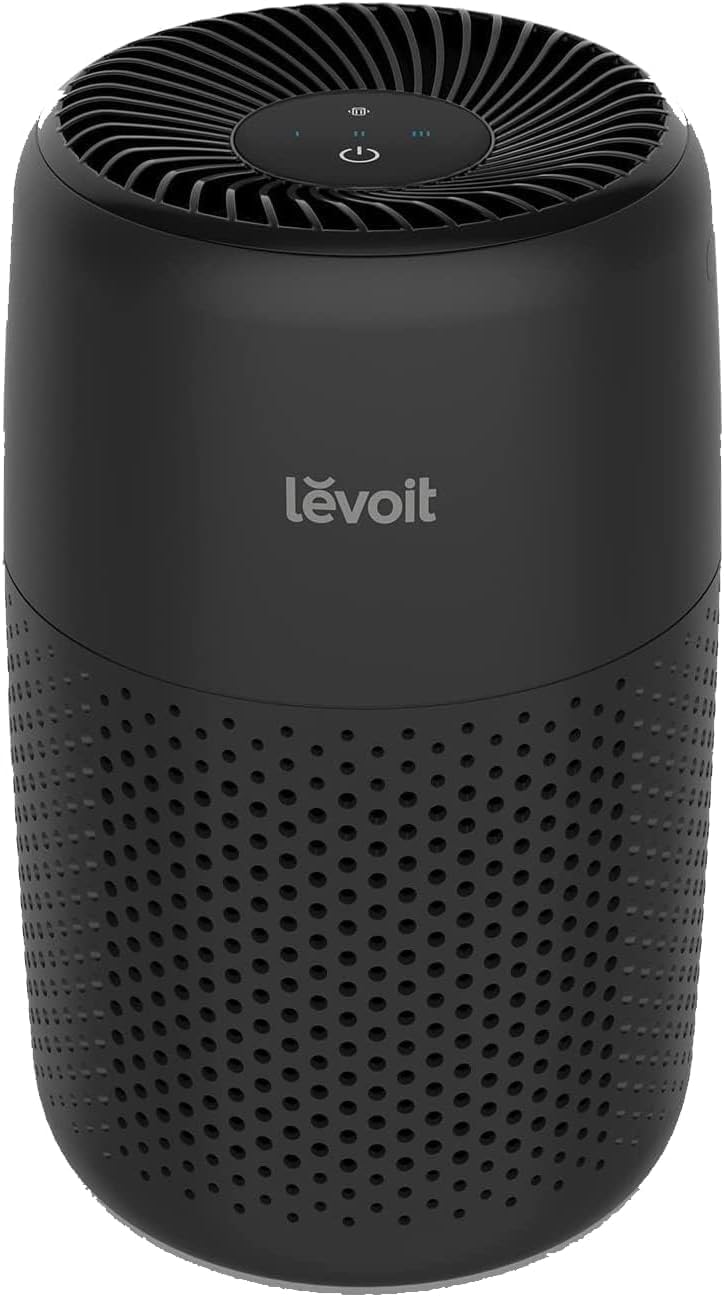
7. Levoit Core Mini-P Air Purifier — Best Night Shift Essentials Pick for the Bedroom at 9am
Price: $44.49 | Amazon rating: 4.6 from 45,314 ratings | Role: the bedroom | Key spec: 255 sq ft in 60 minutes, AHAM Verifide, 27–45 dB, 7 W, 100–240 V
This is the most honest entry in the roundup, so it starts with the caveat: it is being recommended here partly off-label. Nobody markets an air purifier as a sleep product. What it does properly is clean a small bedroom — 255 square feet in an hour, AHAM Verifide, at 7 watts, which is trivial to run for eight hours a day — and a bedroom being slept in at the wrong end of the day is a room that stays shut and unaired while the rest of the house is open, cooking and vacuuming.
It is also the only one of these night shift essentials rated 100–240 V, so unlike the lunch box it works on a British socket with nothing more than a plug adapter.
The incidental benefit is the one that gets this into a list of night shift essentials at all. Between 27 and 45 decibels of broadband fan noise is the cheapest sound masking available, and masking — not silence — is what makes a nine o’clock bedtime survivable on a street with a school run, a bin lorry and somebody’s extension being built. Running it on its middle speed rather than its lowest is the trick: you are buying the noise floor as much as the air, and a constant sound is far easier to sleep through than an intermittent one.
What it absolutely does not do is make the room dark, and darkness is the thing that matters most. NIOSH is unambiguous that a daytime sleeper’s bedroom “should be very dark”, that you should “block out all light coming in through windows by using room-darkening shades and/or heavy, lined draperies”, and specifically that “blinds can allow too much light to filter into the bedroom”. Blackout and an eye mask are the first purchase for a night worker and neither is in this list, because neither is a forty-dollar decision worth a product entry. Buy those first and this second.
Best for: Anyone sleeping in daylight on a noisy street, anyone whose bedroom stays shut and unaired all day, and allergy sufferers doing their sleeping in pollen season.
Skip if: Your problem is light rather than air or noise — buy blackout blinds or an eye mask first — or you need a filter for a room much larger than a single bedroom.
Read the full Levoit Core Mini-P Air Purifier review →
Where to Buy — Levoit Core Mini-P Air Purifier
Night Shift Essentials — Buyer’s Guide: What to Look For
Night Shift Essentials Start With the Hour, Not With the Product
The useful question is not “what do night workers buy”. It is “which hour of my
shift is the one that beats me”. For most people it is somewhere between three and five in the
morning, and what happens in that window is specific: the temperature outdoors bottoms out, the
building’s heating is still on setback, nothing is open, and human alertness is at its lowest point of
the entire twenty-four hours. Work out which of those four is your problem and you have chosen your
first of these night shift essentials without reading a single review. Good night shift essentials are answers to an hour,
not to a job title.
Night Shift Essentials Have to Work When You Are Clumsy
Everything you buy for nights will be operated by a tired person in poor light, often with one
hand, often wearing gloves, and often at the exact moment they have the least patience they will have
all week. That rules out more products than any specification does. A timer you flip beats a timer you
program. A light with a motion sensor beats a light with a switch. A lunch box with a physical toggle
beats one with an app. If setting a thing up requires you to pair it with a phone, log into an
account and accept a firmware update, it will not survive contact with a fourth consecutive night.
Night Shift Essentials, Batteries and the Charge-Retention Problem
Almost every item on this list is battery powered, and shift work punishes batteries in a
particular way: things get charged on days off, then sit in a locker or a coat pocket for a week
before they are needed. What matters is therefore charge retention and standby drain rather than peak
run time. Two practical rules follow. Standardise on USB-C so that one cable in your bag charges
everything, and prefer a device that holds a usable charge for a fortnight over one that claims a
spectacular number when fully topped up. This is the same principle as buying for a room you rarely
use, and it is the single most reliable filter for night shift essentials.
Buy Night Shift Essentials for the Commute Before the Shift
Most people buy night shift essentials for the shift, and it is the wrong half of the day. The shift is supervised, lit and staffed. The commute home is none of those things, and it is the
part of a night worker’s twenty-four hours where the serious harm actually happens. That should change
your spending order.
A light on the door you fumble at in the dark, a warm pair of hands for a
fifteen-minute walk to a car park, and a nap before you drive are all better value than anything that
makes the shift itself marginally nicer. Almost nobody shops in that order, which is why the cheapest
thing in this guide is also the one that gets used most.
What Night Shift Essentials Cannot Fix
This guide refuses several popular categories of night shift essentials outright. Caffeine pills and energy shots are a
scheduling problem sold as a product. So-called anti-sleep alarms, the devices that buzz when your
head nods while driving, are marketed to exactly the people who should have stopped driving twenty
minutes earlier. Blue-light glasses are not a fatigue countermeasure.
A smart ring will tell you, in
detail, that you slept badly, which you already knew. And the two most effective purchases a night
worker can make — a blackout blind or a decent eye mask, and a phone charger that lives in a
different room from the bed — cost almost nothing and are not on this list precisely because
they are too cheap and too obvious to need one.
US vs UK: What Changes When You Work Nights
Working nights is the subject on which British and American law diverge most sharply of anything
this site has covered. One country defines a night worker in statute, caps the hours, and obliges the
employer to pay for a health assessment. The other has no federal definition, no cap and no
assessment. That difference changes what night shift essentials are for on each side of the Atlantic:
in Britain they fill gaps the law has not thought about, and in America they fill gaps the law has
declined to address at all.
Graveyard Shift, Nights and Unsocial Hours: the Night Shift Essentials Vocabulary
The vocabulary around night shift essentials splits neatly. Americans say graveyard shift, third shift and swing shift; the British
say nights and, almost universally in the NHS and in local government, unsocial hours
— a phrase that has no American equivalent and which quietly carries the assumption that
somebody should be compensated for them.
An American gets a shift differential; a British
worker gets an unsocial hours payment or a night enhancement. Beyond that the usual
vocabulary applies: flashlight and torch, gas and petrol, parking lot and car park, break room and
staff room, and an American first floor is a British ground floor, which matters
when somebody tells you where to find the vending machine.
The Legal Definition of a Night Worker Exists in Britain and Not in America
Under the Working Time Regulations 1998, British night time is the period between 11pm and 6am,
and a night worker is someone who normally works at least three hours during it. That definition then
does real work: regulation 6 provides that “a night worker’s normal hours of work in any
reference period which is applicable in his case shall not exceed an average of eight hours for each
24 hours”, averaged over 17 weeks.
The United States has no equivalent, which is why American night shift essentials are bought against a legal vacuum rather than a legal floor. The Fair Labor Standards
Act sets a minimum wage and an overtime multiplier and then stops; there is no federal ceiling on how
many hours an adult may be required to work, and no federal recognition that night hours are different
from day hours at all.
The Break: Twenty Minutes by Law in Britain, or Nothing at All in America
This is the divergence a shift worker actually feels. HSE’s guidance on the Working Time Regulations
is plain: “A worker is entitled to an uninterrupted break of 20 minutes when daily working time is
more than six hours”, and that break “should not be taken either at the start, or at the
end, of a working day”.
The US Department of Labor’s position is equally plain and entirely the
opposite: “Federal law does not require lunch or coffee breaks.” Where short breaks are
offered voluntarily, federal law treats them as paid working time — but nothing obliges an
employer to offer them. Several states legislate their own meal periods; most of the difference in
practice comes down to which state you are standing in.
Nobody Has to Pay You More for Nights — on Either Side
Here the two countries agree, and the agreement surprises people. The Department of Labor states
that “extra pay for working night shifts is a matter of agreement between the employer and the
employee” and that “the Fair Labor Standards Act (FLSA) does not require extra pay for
night work”. Britain is in the same position: the night enhancements that feel like a universal
feature of shift work are the product of collective agreements and contracts, not of statute. The
British legal protection for night workers is expressed in hours and health, and the American
one is expressed in neither — but in money, neither country legislates at all.
Voltage: Why Some Night Shift Essentials Need a Transformer in Britain
Two of these night shift essentials illustrate the voltage problem exactly. The Levoit purifier is rated
100–240 V and therefore works anywhere with nothing more than a plug adapter. The TRAVELISIMO
lunch box is a 110 V appliance, and on 230 V British mains it needs a step-down transformer, not an
adapter — a distinction that costs people appliances every year.
The vehicle sockets are the
common ground: 12 V in a car and 24 V in a truck are the same on both sides of the Atlantic, so a
driver in Manchester and a driver in Michigan can use the identical product in the identical way. A
British plug also carries its own fuse, which an American one does not.
Driving Home: America Counts the Crashes, Britain Names the Hour
No list of night shift essentials can fix the drive home. Both countries know it is the dangerous part, and they say so in completely
different registers. The American answer is statistical: NHTSA reports that “in 2021 some 684
people were killed in crashes involving a drowsy driver”, and that drowsy driving “was
reportedly involved in 1.8% of fatal crashes from 2017 to 2021”.
The British answer is an
instruction. Rule 91 of the Highway Code tells drivers that “driving when you are tired greatly
increases your risk of collision” and to “avoid undertaking long journeys between midnight
and 6 am, when natural alertness is at a minimum” — which is, of course, a precise
description of the shift you have just finished.
Night Shift Essentials — Which One Should You Buy?
If you are buying night shift essentials for the first time, buy in this order rather than in price
order. The cheap tier is not the compromise tier here; it is the tier that changes the most days.
Night work is rarely only a sleep problem. The wind-down routine matters as much as the blackout, which our self care essentials guide covers, and if the house is shared the timing problems multiply — the shared house essentials guide deals with that directly.
Under $20: the Three Night Shift Essentials to Buy First
Start with the
DEEIRAO keyhole light at
$9.99, because a door you can find in the dark is used twice every working day for five months of the
year. Add the
POMPONGO hand
warmers at $16.99 if any part of your shift or commute happens outdoors, and the
KADAMS cube timer
at $16.99 if your employer permits a break nap. Under fifty dollars, those three cover the door, the
cold and the nap — the three problems the night creates that daytime work does not. The
Bucephalus T27
earbuds sit in this tier too, with the honest warning that their rating sample is small.
$20 to $60: the Night Shift Essentials That Fix the Meal and the Bedroom
This is where the two biggest quality-of-life night shift essentials live. The
TRAVELISIMO electric
lunch box at $39.99 replaces the vending machine, and the
Levoit Core Mini-P at
$44.49 makes a daytime bedroom tolerable on a noisy street. If you can only have one, the answer
depends on whether your shift or your sleep is the part that is failing. Buy the lunch box if you are
eating badly; buy the purifier if you are waking up at eleven and cannot get back off.
Over $60: the One Night Shift Essentials Upgrade Worth Considering
Only one product here crosses sixty dollars and it is not for everybody. The
Plaud Note Pro at
$189.00 is worth it if your handovers are long or technical, if you write up callouts after the fact,
or if you keep sleeping through appointments you needed to remember. If none of those describe you, it is not one of your night shift essentials at all: a
notebook does the job, and the money is better spent on blackout blinds. For comparison, the
Levoit and the
lunch box together
cost less than half of it.
What the Regulators Actually Say About Working Nights
Almost none of this is widely known by the people it applies to, and some of it is worth money and
time to a night worker who asks. It is also the part of the subject that no amount of night shift essentials can solve, which
is why it sits here rather than inside a review.
The Eight-Hour Average, and the Jobs Where It Is a Hard Ceiling
Regulation 6 of the Working Time Regulations 1998 caps British night work at an average of eight
hours per twenty-four, measured over a seventeen-week reference period — which is why twelve-hour
nights are lawful, because they average down across the roster. There is a second limb that is far less
known and is not an average at all: an employer “shall ensure that no night worker employed by him
whose work involves special hazards or heavy physical or mental strain works for more than eight hours
in any 24-hour period”. For those jobs the eight hours is a hard ceiling on every single shift.
The Free Health Assessment Almost Nobody Claims
Before someone starts night work in Britain their employer must offer them a health assessment, and
must repeat it at reasonable intervals, at the employer’s expense. Acas states the duty plainly: an
employer must provide “anyone a health assessment before they become a night worker” along
with “repeat assessments for as long as might be reasonable in the circumstances”. The
worker does not have to accept it, which is why so few are done — but it has to be offered, and
asking for one costs nothing. There is no American analogue whatsoever.
Night Work Was Classified as Probably Carcinogenic in 2019
In July 2019 the International Agency for Research on Cancer concluded that night shift work is
“probably carcinogenic to humans”, updating its 2007 evaluation. NIOSH’s summary is careful
about what that rests on: the conclusion was “based on evidence from human studies of breast and
prostate cancer, studies of laboratory animals, and research into the mechanisms of how cancer
develops”, with the highest exposure among people working nights for ten years or more, three or
more nights a week, or starting in early adulthood.
NIOSH’s practical advice is unglamorous, and no list of night shift essentials substitutes for it: keep up
with routine screening, report symptoms, and do not let the shift pattern become a reason to skip
appointments.
The Accident Numbers: Thirty Per Cent Higher on Nights
OSHA’s worker-fatigue material puts a figure on something every shift worker already suspects.
“Accident and injury rates are 18% greater during evening shifts and 30% greater during night
shifts when compared to day shifts”, and separately, “working 12 hours per day is
associated with a 37% increased risk of injury”. OSHA also notes the economic scale: an estimated
“$136.4 billion” a year in fatigue-related lost productive work time. The agency is
explicit that “the body operates on a circadian rhythm sleep/wake cycle” that is
“naturally programmed for sleeping during night hours”, which is the whole problem stated
in one line.
The Nap Is the Night Shift Countermeasure With the Best Evidence
NIOSH’s training material for nurses is the most quotable source on this, and its recommendations
are specific enough to act on: “a 30-minute nap can help you to feel more alert during an 8-hour
night shift”, while “a night-shift nap of 2 to 3 hours was shown to maintain alertness and
counteract fatigue during a 12- to 16-hour night shift”. It also makes the point that matters
most for the drive home: “taking a brief nap after the night shift might help you drive home more
safely”. A twenty-minute sleep in a car park before setting off is not weakness; it is the
recommendation, and it is free.
Sleeping in Daylight: Where Night Shift Essentials Rank Against a Blackout Blind
NIOSH’s advice on the daytime sleep environment is blunt about the hierarchy. “A good sleep
environment that is very dark, quiet, cool, and comfortable can improve sleep”, and for a night
worker the bedroom “should be very dark”: “block out all light coming in through
windows by using room-darkening shades and/or heavy, lined draperies”, because “blinds can
allow too much light to filter into the bedroom”. It also names the specific offenders —
clock displays, phones and televisions emitting white or blue light. Darkness comes first, quiet second,
temperature third. Any list of night shift essentials that puts a gadget above a blackout blind has the
order wrong.
Twelve Hours and Six Hours: the Two Numbers HSE Uses Offshore
For a sense of where a safety regulator draws its lines when it is actually enforcing rather than
advising, HSE’s operational guidance for offshore installations sets out “a maximum of 12 hours
continuous work, particularly when there are significant physical or cognitive demands” and
“a minimum of 6 hours uninterrupted sleep”. Its stated objective is to ensure that
employees “are awake, alert and healthy and in a fit state to undertake their duties safely”.
Those two numbers are a reasonable private benchmark for any shift worker, in any industry, in either
country.
Night Shift Essentials — Frequently Asked Questions
What are the most important night shift essentials to buy first?
A blackout blind or eye mask, which is not on this list because it costs almost nothing, and then
the cheapest item that is: a motion-sensor light for the door you have to open in the dark twice a day.
After that, buy night shift essentials for whichever hour beats you — hand warmers if you are cold at four in the
morning, a heated lunch box if you are eating from a vending machine, a timer if you can take a nap.
How many hours can I legally work on nights in the UK?
The Working Time Regulations 1998 cap night work at an average of eight hours in twenty-four,
averaged over a seventeen-week reference period, which is how twelve-hour nights remain lawful. If your
work involves special hazards or heavy physical or mental strain, the eight hours becomes an absolute
limit on any single twenty-four-hour period rather than an average. Night time is defined as 11pm to
6am, and a night worker is someone who normally works at least three hours in that window.
Is there an American equivalent of the UK night work limit?
No. The Fair Labor Standards Act does not limit the hours an adult employee can be required to work
and contains no special provision for night hours. OSHA treats fatigue as a hazard to be managed rather
than as an hours limit, and individual states legislate meal breaks but not night ceilings. This is the
single biggest difference between the two countries on this subject.
Am I entitled to a break on a night shift?
In Britain, yes: an uninterrupted twenty-minute break once daily working time exceeds six hours,
which may not be taken at the very start or the very end of the day. In the United States, federal law
requires no meal or rest break at all, although any short break an employer does offer counts as paid
working time. A number of states impose their own meal-period rules, so the answer in America depends
on where you work.
Does my employer have to pay me more for working nights?
Not by law in either country. The US Department of Labor is explicit that extra pay for night shifts
is a matter of agreement and that the FLSA does not require it. In Britain, night and unsocial hours
enhancements come from contracts and collective agreements rather than from the Working Time
Regulations. Both countries leave it to bargaining.
Should I nap during a night shift, and for how long?
If your employer permits it, yes. NIOSH’s guidance is that a thirty-minute nap helps alertness on an
eight-hour night shift, and that a two to three hour nap suits a twelve to sixteen hour one. It also
recommends a brief nap after the shift specifically to make the drive home safer. Set a physical timer
rather than a phone alarm, and expect to feel worse for the first few minutes after waking before you
feel better.
Do night shift essentials like light therapy lamps and blue-light glasses work?
Timed bright-light exposure is a real, well-studied countermeasure and the most over-sold of all night shift essentials, but it has to be timed correctly
for your rotation to help rather than hurt, which is why it is not in this roundup as a
buy-it-and-forget-it product. Blue-light glasses are a different thing altogether and are not a fatigue
countermeasure. The evidence-backed basics are darkness when you sleep, a nap when you can, and
consistency in when you sleep, not what you wear.
Is working nights actually bad for your health?
The International Agency for Research on Cancer classified night shift work as probably carcinogenic
to humans in 2019, on the basis of human studies of breast and prostate cancer, animal studies and
mechanistic research, with risk concentrated among long-term night workers. Separately, OSHA reports
accident and injury rates thirty per cent higher on night shifts than day shifts. That is a reason to
take screening, sleep and the drive home seriously, not a reason to panic.
Will these night shift essentials work in the UK?
Most will. The Levoit purifier is rated 100–240 V and needs only a plug adapter; the hand
warmers, earbuds, cube timer and voice recorder all charge over USB and are voltage-agnostic; the
keyhole light runs on a single AA cell. The exception is the electric lunch box, which is a 110 V
appliance and needs a step-down transformer on British mains — though its 12 V and 24 V vehicle
settings work identically in both countries.
What is the best way to sleep during the day after a night shift?
Before any of the night shift essentials above, make the room properly dark — NIOSH specifically warns that blinds let too much light
through and recommends room-darkening shades or heavy lined curtains, or an eye mask. Then deal with
noise by masking it with something constant rather than chasing silence. Keep the room cool, keep the
phone in another room, and try to keep your sleep window in roughly the same place on consecutive days
off rather than flipping back and forth.
Night Shift Essentials — Final Thoughts
The pattern in this list of night shift essentials is that the cheap things solve the problems the night actually creates and
the expensive things solve problems you would have anyway. A ten-dollar light on a dark door gets used
twice a day for five months. A $189 recorder is excellent and most readers should not buy it. That is
not an accident of this particular seven: it falls out of the constraint the whole guide is built on,
which is that a night shift takes away infrastructure rather than adding difficulty, and infrastructure
is usually cheap to replace one piece at a time.
The other thing worth carrying away is that a meaningful share of what makes nights hard is not a
shopping problem at all. Britain caps the hours, defines the worker, mandates a break and obliges an
employer to pay for a health assessment that hardly anybody claims; America does none of those things
and publishes the accident statistics instead. Both regulators agree on the nap, on the darkness and on
the drive home. Buy the night shift essentials that fix your worst hour, ask for the health assessment
if you are entitled to one, and treat the journey home as the most dangerous part of the whole
twenty-four hours — because on the numbers, it is.
Sources and Further Reading
- The Working Time Regulations 1998, regulation 6: length of night work — legislation.gov.uk
- Night workers: working time rules — Acas
- Rest breaks under the Working Time Regulations — Health and Safety Executive
- Assessing management of shift work and fatigue, and policy for working hours offshore — HSE
- Breaks and meal periods — US Department of Labor
- Night work and shift work — US Department of Labor
- Long work hours, extended or irregular shifts, and worker fatigue: hazards — OSHA
- Sleep-deprivation and fatigue hazards for night shift workers — OSHA standard interpretation
- Recent news about night shift work and cancer: what does it mean for workers? — NIOSH Science Bulletin, CDC
- Napping, an important fatigue countermeasure — NIOSH training for nurses, CDC
- Create a good sleep environment — NIOSH training for nurses, CDC
- The Highway Code, rules 89 to 102 (rule 91: tiredness) — GOV.UK
- Countermeasures that work: drowsy driving — NHTSA
Disclosure: this guide contains affiliate links. If you buy through them we may earn a
commission at no extra cost to you, and that has no bearing on which products appear or how they are
scored. Prices and Amazon ratings were read on 13 September 2026 and change frequently; check the
current figure before buying.
Product links go to Amazon.com and carry our US associate tag — UK
readers should search the same model numbers on Amazon.co.uk and check the voltage, because one of the
seven products here is a 110 V appliance that will not run on British mains without a step-down
transformer. Nothing in this article is legal, employment or medical advice; the working time rules
summarised here are simplified, vary by country and by state, and anyone relying on them should check
the primary sources linked above or take proper advice.