
Manual Paper Shredder Review — Is a Hand-Crank Shredder Worth $14?
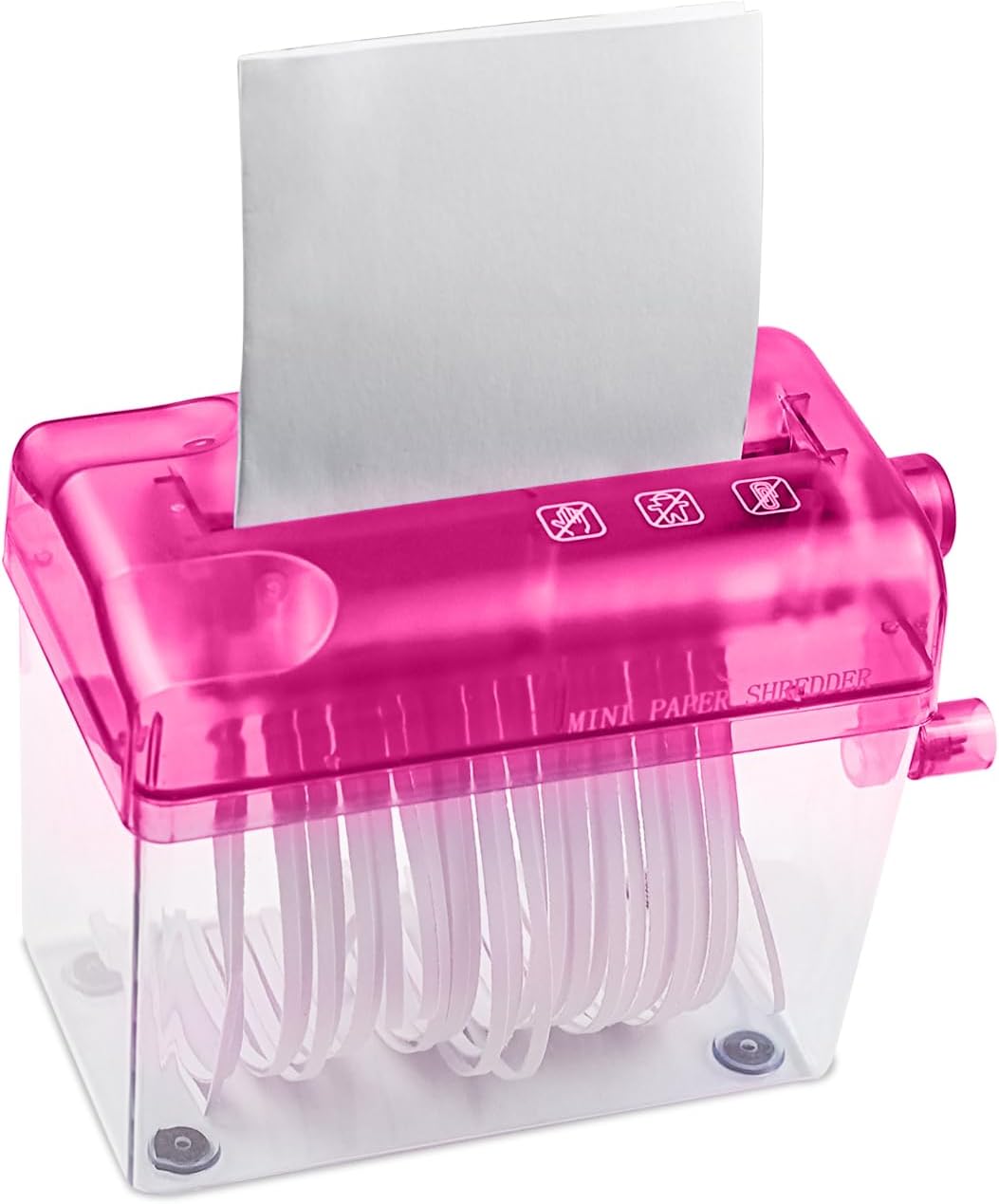
A hand-cranked mini shredder with a 4.92 inch inlet and a one-litre clear bin, sized for the everyday post that would otherwise go into recycling readable. No plug, no duty cycle and near silence are its real advantages. Two folded sheets at a time, no card, and strip-cut security only.
JIKIOU Mini Hand-Crank Shredder Review (2026) — Does a Manual Paper Shredder Beat Tearing It Up?
Most households do not have enough confidential paper to justify a motorised shredder, and know it. The machine costs sixty pounds or dollars, lives in a cupboard, overheats after four minutes and is used twice a year. So the post gets torn in half instead, which protects nothing.
A manual paper shredder is the small answer to that. It is a hand-cranked cutting head over a one-litre bin, it needs no socket, and it is quiet enough to use while somebody else is on a call. The strength is that it is cheap enough to leave on the desk where the post is opened. The compromise is that it takes two folded sheets at a time and your arm does the work.
In short: the manual paper shredder earns 7.4/10 from the Blue Rays Technologies team. The rest of this manual paper shredder review sets out exactly how that score was reached.
What is in this manual paper shredder review
- Key Specifications
- What a Manual Paper Shredder Will and Will Not Take
- Strip Cut Versus Cross Cut, and What 3 mm Actually Protects
- The Effort, the Noise and Why No Plug Is the Point
- Limitations and Compromises
- Assembly, Jams and Keeping the Cutters Sharp
- Who Should Buy It?
- The Verdict
- Frequently Asked Questions
- Related Reviews
Key Specifications
Published specifications for the manual paper shredder, taken from the manufacturer listing.
| Reviewed model | manual paper shredder |
| Brand | JIKIOU |
| Operation | Hand powered, manual crank |
| Cut type | Strip cut |
| Sheet capacity | 2 sheets of A4 folded in half |
| Inlet width | 4.92 in (12.5 cm) |
| Strip width | 0.12 in (3 mm) |
| Bin capacity | 1 litre, clear window |
| Dimensions | 6.1 in W x 3.3 in D x 5.7 in H |
| Materials | Metal cutting head, plastic housing and bin |
| Base | Four non-slip foam feet |
| Assembly | Handle ships uninstalled and clips on |
| Warranty | 3 years |
| Amazon rating | 4.1 / 5 from 400+ ratings |
Everything that follows is based on those published figures for the manual paper shredder, together with aggregated owner feedback from verified buyers.
What a Manual Paper Shredder Will and Will Not Take
The honest limit is two sheets of A4 folded in half, and the folding is not optional on anything wider than the 4.92 inch inlet. In practice that means a bank statement goes through as two passes rather than one, and a thick envelope does not go through at all.
It will not shred card, plastic, laminated paper or anything soft and fibrous. Credit cards and store cards are explicitly out of scope, which matters because that is exactly the job people buy a shredder for. Kitchen roll, napkins and till receipts printed on very thin thermal stock all jam it.
What it does take, reliably, is the everyday flow: statements, payslips, medical letters, delivery labels with your address on them, and the pre-approved credit offers that arrive with your full name and account details printed inside.
Strip Cut Versus Cross Cut, and What 3 mm Actually Protects
This is a strip-cut machine producing 3 mm ribbons. Strip cut is the lowest of the standard security grades, and a determined person with time and a flat table can reassemble strips from a single page.
That is a genuine weakness and it is worth stating plainly rather than glossing over. The realistic threat model for a household, though, is not a forensic reconstruction. It is somebody going through a wheelie bin looking for an account number they can read at a glance, and 3 mm strips defeat that completely.
If your risk is higher than that — you handle client records, or you are shredding documents relating to an ongoing dispute — buy a cross-cut or micro-cut machine instead. This is a domestic tool for domestic post.
The Effort, the Noise and Why No Plug Is the Point
Cranking two folded sheets takes about five seconds and no meaningful effort. Doing a month of accumulated post takes about ten minutes and your forearm does notice. It is the difference between a task and a chore, and where you draw that line decides whether this is the right product.
The upside of no motor is that there is nothing to overheat, nothing to burn out, and no duty cycle. A cheap electric shredder wants a twenty-minute cool-down after four minutes of work; this one does not care.
It is also close to silent. There is a mechanical ratchet sound and nothing else, so it can live on a desk in a shared room, which is precisely where post is opened and precisely where an electric shredder never gets used.
Limitations and Compromises
No product is without compromise, and the manual paper shredder has a clear set of them.
Two sheets folded in half is a hard ceiling, and the 4.92 inch inlet means almost everything needs folding first. Anyone with a real backlog of paper will find the process slower than they expect and should buy a motorised machine instead.
Strip cut at 3 mm is the lowest common security grade. It stops opportunistic bin-raiding and it does not stop anyone with time and motivation, so it is the wrong tool for genuinely sensitive material.
The 4.1 rating from around four hundred ratings is a thin evidence base by the standards of this site, and the recurring complaints are consistent: the crank handle ships detached and the plastic housing flexes if you push a jam rather than reversing it.
Assembly, Jams and Keeping the Cutters Sharp
Fit the handle before the first use rather than in the middle of a pile of post. It ships uninstalled deliberately so the crank does not snap in transit, and it clips on in a few seconds with no tools.
Clear a jam by reversing the crank rather than forcing it forward. Almost every broken unit in the review history was broken by somebody pushing harder against a fold that was too thick.
Empty the one-litre bin before it is completely full. Strips compact around the underside of the cutters when the bin overfills, and that is the other route to a jam. The clear window exists so you can see this coming.
Who Should Buy It?
The manual paper shredder suits some households far better than others.
- You open post at a desk and want to deal with it immediately
- You have a small, steady flow of confidential paper rather than a backlog
- You want something quiet enough to use in a shared room
- You do not want another appliance that needs a socket and a cupboard
- You want a low-cost way to stop putting readable addresses in the recycling
- You want something children can safely use under supervision
Look elsewhere if any of the following describes you.
- You need to shred credit cards, plastic or laminated documents
- You have boxes of old paperwork to clear rather than a weekly trickle
- You need cross-cut or micro-cut security for client or legal records
- You want to feed unfolded A4 without thinking about it
- You would rather spend more once than crank a handle every week
The Verdict
Judged strictly as a way to stop putting readable personal details into a recycling bin, this works and costs less than a takeaway. No plug, no duty cycle, near silence and a size that lets it live where the post is actually opened are all real advantages over a machine that gets used twice a year.
It scores in the low sevens rather than higher because the limits are genuine, not cosmetic. Two folded sheets at a time, no card, strip cut rather than cross cut, and a modest evidence base with consistent complaints about the crank and the plastic body. It is the right tool for a narrow job and the wrong one for anything beyond it.
Review score for the manual paper shredder: 7.4/10. Strong on price, silence, no duty cycle and desk-side convenience; the compromises are a two-sheet folded capacity, no card shredding, strip-cut security only and a thin review history. Blue Rays Technologies researches independently and earns a commission from qualifying purchases, which never affects the score.
If you want to see the current price, the full options and the latest buyer feedback, it is listed as the JIKIOU Mini Hand-Crank Manual Paper Shredder on Amazon. Knowing what to destroy matters as much as how, and the the US Federal Trade Commission advice on which documents to keep and which to shred is the clearest short guide available.
Frequently Asked Questions
The questions buyers ask most often about the manual paper shredder, answered plainly.
How many sheets can this manual paper shredder take?
Two sheets of A4 folded in half. The inlet is 4.92 inches wide, so anything larger has to be folded first, and pushing more than two folded sheets is the usual cause of a jam.
Will it shred credit cards?
No. It cannot handle card, plastic or laminated material. If cutting up old bank cards is your main reason for buying a shredder, choose a motorised machine rated for cards instead.
Is strip cut secure enough?
It produces 3 mm strips, which defeats casual bin-raiding but not a determined reconstruction. For client records, legal papers or anything genuinely sensitive, buy a cross-cut or micro-cut shredder.
Does it need batteries or a plug?
Neither. It is entirely hand powered, so there is no motor to overheat and no cool-down period between loads.
Related Reviews
If the manual paper shredder is not quite the right fit, these Blue Rays Technologies reviews cover the nearest alternatives.
- DocSafe fireproof document box review — for the papers you must keep
- OUTUXED 36-grid organizer review — desk-side storage for small things
- Master Lock key lock box review — from today’s batch, on controlling access
Last updated: 6 September 2026. Pricing and availability for the manual paper shredder change frequently; check the retailer listing for the current figure.



There are no reviews yet.