
Fly Tying Vise Review (2026): Worth It?
Peak Fishing Peak Rotary Vise — $239.95, 4.7 from 463 Amazon ratings. Jaws hold size 2/0 down to the smallest hooks made. Expert Score 8.8/10. Research-based review; figures read from the live listing on 12 October 2026.
$239.95
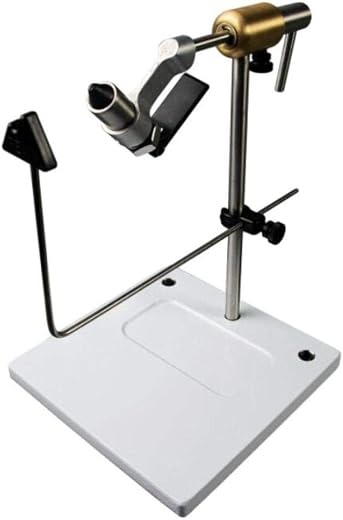
Peak Fishing Rotary Fly Tying Vise with Pedestal Base — Fly Tying Vise Review
The Peak Fishing vise costs $239.95 and carries 4.7 from 463 ratings, and it is the only listing on this shelf of five that publishes the one figure a vise is bought on — the range of hook sizes its jaws will hold. It scores 8.8, and the reason is that single line of specification rather than anything about the price.
This comparison is research-based. We did not physically test these products; specifications, ratings and prices are taken from the live listings on the date shown. This review belongs to our round-up of the best fly tying tools, where it is ranked first of five.
On this page
- Key Specifications
- The Only Jaw Range Published on This Shelf
- Why This Fly Tying Vise Needs No Table Edge
- A Material List That Names Four Metals
- Limitations of This Fly Tying Vise
- Setting Up This Fly Tying Vise
- Who Should Buy This Fly Tying Vise?
- The Verdict
- Fly Tying Vise — Frequently Asked Questions
Key Specifications
Every figure below is taken from the live listing for this fly tying vise on 12 October 2026.
| Reviewed model | fly tying vise |
| Model number | PRV-G2 |
| Published jaw range | Size 2/0 down to the smallest on the market |
| Rotation | Rotary |
| Mounting | Pedestal base, non-marking feet |
| Published materials | Stainless steel, brass, tool steel, aircraft aluminium |
| Structured material field | “Stainless Steel, Brass, Tool Aircraft Aluminum” |
| Published item weight | 2 ounces |
| Published dimensions | 10 x 7 x 7 inches |
| Published tensile strength | 500 psi |
| Warranty field | “Contact Manufacturer” |
| Owner rating | 4.7 from 463 ratings |
The Only Jaw Range Published on This Shelf
The description states that the jaws are hardened and tempered tool steel and that they “hold hooks securely, from size 2/0 (depending on exact hook wire diameter) down to the smallest on the market”. Hook size describes the gape — the distance from point to shank — and says nothing about how thick the wire is. A 2/0 hook in heavy wire and a 2/0 hook in fine wire are the same size and present different jobs to a pair of jaws.
No other listing in this group gives a range at all. Two of the five publish no hook guidance of any kind. A stated upper bound with a stated caveat is serious disclosure, and it is the main reason this product sits at the top of the ranking.
What the listing still does not give is a jaw opening in millimetres or a closing force. “Down to the smallest on the market” is a claim rather than a measurement. We report the range as published and note where it stops being a number.
Why This Fly Tying Vise Needs No Table Edge
This fly tying vise ships on a steel pedestal base with non-marking feet, and that decides where you can work. A C-clamp is cheaper but needs a table edge of the right thickness with clear space underneath, and many desks have an apron, a drawer rail or a thick rounded edge that defeats one. A pedestal sits anywhere flat.
The base is powder coated white, and the listing gives the reason: it “provides a backdrop you can see your materials against”. Grey hackle on a black surface is hard to see, and a white base is a working feature rather than a styling choice.
Two further details are published. The base has an integrated hook and bead pocket with rounded edges, which is a shallow well that stops size 20 hooks rolling onto the floor. It also has two accessory post mounting holes — and the listing says plainly that the accessory post is not included, which is the kind of qualification most of this shelf omits.
A Material List That Names Four Metals
The description names the materials individually: stainless steel, brass, tool steel and aircraft aluminium, “chosen to last a lifetime”. Naming four metals tells you which part is likely to be which: tool steel is the jaws, brass the collet and adjustment hardware, aluminium the body and stainless the shaft.
The structured field, though, reads “Stainless Steel, Brass, Tool Aircraft Aluminum”. The word “Steel” has fallen out between “Tool” and “Aircraft”, fusing two real materials into one that does not exist. It matters because the structured field is the one a shopping filter reads.
The same block publishes a tensile strength of 500 psi. Tensile strength is not a figure anyone needs for a vise, and 500 psi is far below any structural metal — mild steel runs to tens of thousands. The number is not load-bearing for the buying decision, and we flag it rather than repeat it as a virtue.
Limitations of This Fly Tying Vise
The honest objection is the price. At $239.95 this is seven times the cost of the next item on the shelf and more than ten times the cheapest vise here, and the marginal gain over a $40 vise for someone tying six flies a year is nil. The case for it is that the vise is the one component you cannot upgrade in stages: you can buy better scissors next month, but a vise is either holding the hook or it is not.
The specification block is also weaker than the description. Item weight is published as 2 ounces, which cannot be right for a vise with a steel pedestal base and overall dimensions of 10 by 7 by 7 inches — two ounces is roughly a small chocolate bar. The colour field answers “Pedestal”, which is a mounting type, and the style field answers “Modern”. The warranty field says “Contact Manufacturer”, which is an instruction rather than a term.
What the listing gets right
- The only listing on the shelf that publishes a hook-size range for its jaws
- Hardened and tempered tool steel jaws, stated as holding size 2/0 down to the smallest hooks on the market
- Large steel pedestal base with non-marking feet, so it needs no table edge
- Base powder coated white as a backdrop you can see materials against
- Integrated hook and bead pocket with rounded edges
- Two accessory post mounting holes in the base
- Highest rating count of any premium vise on this shelf at 463
- Materials named individually rather than as a marketing phrase
What it does not tell you
- The most expensive item on this shelf by a factor of seven
- Published item weight of 2 ounces is not credible for a steel pedestal base
- The structured material field fuses tool steel and aircraft aluminium into one material that does not exist
- Publishes a tensile strength of 500 psi, which is not a useful figure for a vise
- Accessory post is not included despite the mounting holes
- Warranty field says only “Contact Manufacturer”
- No jaw opening measurement in millimetres or inches
- Colour field answers “Pedestal”, which is a mounting type
Setting Up This Fly Tying Vise
Set the base where your forearm naturally rests, not where the light is. Tying height is wrong more often than tying light: if your shoulder rises to reach the hook, the session ends early. The pedestal lets you slide it rather than unclamp it.
Open the jaws only as far as the hook needs. Over-opening a collet jaw and then forcing it closed on a fine wire hook is how jaw tips get sprung, and a sprung tip will never hold a small hook again. Seat the hook in the jaws with the point and barb buried, not projecting — thread caught on an exposed barb is the most common self-inflicted injury on a bench.
Maintenance is mostly keeping the rotation clean. Dubbing wax, head cement and fine fur find their way into the rotary shaft, and the symptom is a rotation that goes stiff in one spot. A dry brush is the whole job; oil attracts more of what caused the problem.
Who Should Buy This Fly Tying Vise?
Buy this fly tying vise if you already know the hobby has taken, and especially if you tie across a range of sizes. The published jaw range is the reason: a tier moving between size 18 dries and size 2 streamers is the buyer for whom a stated range is worth money, because that buyer is the one who finds out the hard way when a jaw will not close on fine wire.
Do not buy it as a first vise. At this price the sensible path is the $22.99 vise lower down this page, ten or twenty dozen flies, and then this one if the habit stuck. A cheap vise teaches no bad habit; it holds fewer hook sizes well, and finding out which is part of learning what you tie.
The Verdict
At $239.95 this is the only vise on the shelf whose listing answers the question a buyer should actually ask, and that is why it scores 8.8.
| Published jaw specification | 9.6 / 10 |
| Build materials | 9.4 / 10 |
| Mounting stability | 9.2 / 10 |
| Owner evidence | 9.0 / 10 |
| Listing honesty | 8.2 / 10 |
| Portability | 6.4 / 10 |
| Value for money | 7.6 / 10 |
| Upgrade path | 9.0 / 10 |
Fly Tying Vise — Frequently Asked Questions
The questions buyers ask most often, answered from the listing.
What hook sizes does this fly tying vise hold?
The listing states that the hardened and tempered tool steel jaws “hold hooks securely, from size 2/0 (depending on exact hook wire diameter) down to the smallest on the market”. That qualification about wire diameter is doing real work: hook size describes the gape, not the thickness of the wire, so a heavy 2/0 saltwater hook and a fine 2/0 streamer hook do not present the same job to a pair of jaws.
Does a fly tying vise need to clamp to the table?
This one does not. It ships with a steel pedestal base and non-marking feet, which means it will sit on a desk, a kitchen table or a hotel chest of drawers without needing a free edge with clear space underneath. A C-clamp vise is lighter and cheaper but needs an edge of the right thickness, and many modern desks do not have one.
Why does the listing say it weighs 2 ounces?
Because the structured weight field on this listing is wrong. The same listing describes a “large stable pedestal base” made of powder-coated steel and gives overall dimensions of 10 by 7 by 7 inches. Two ounces is about the weight of a small chocolate bar. We report the figure as published and do not rely on it.
Is the accessory post included with this fly tying vise?
No. The listing says the base “includes an integrated hook/bead pocket with rounded edges for ease of removal and two accessory post mounting holes (accessory post not included)”. The holes are there; the post is a separate purchase.
Check the current price on Amazon
Listing figures last read on 12 October 2026. We earn a commission on qualifying purchases made through the Amazon link above, at no extra cost to you.
Related reviews
Other reviews from the same bench:


There are no reviews yet.