
Fly Tying Whip Finisher Review (2026): Worth It?
Creative Angler Rotatable Whip Finisher — $13.75, 4.6 from 338 Amazon ratings. Rotating head, stated as suiting hooks down to size 18–20. Expert Score 8.1/10. Research-based review; figures read from the live listing on 12 October 2026.
$13.75
Creative Angler Rotatable Whip Finisher — Fly Tying Whip Finisher Review
At $13.75 this is the cheapest item on the shelf and carries the second-largest rating sample at 4.6 from 338, and it is the only listing here that names the hook sizes its tool is aimed at. It scores 8.1, and the only thing holding it lower is a specification block that reports a pocket-sized tool as six feet five inches long.
This comparison is research-based. We did not physically test these products; specifications, ratings and prices are taken from the live listings on the date shown. This review belongs to our round-up of the best fly tying tools, where it is ranked third of five.
On this page
- Key Specifications
- The Knot This Tool Exists to Tie
- This Fly Tying Whip Finisher Names Its Hook Sizes
- Six Feet Five Inches of Whip Finisher
- Limitations of This Fly Tying Whip Finisher
- Setting Up This Fly Tying Whip Finisher
- Who Should Buy This Fly Tying Whip Finisher?
- The Verdict
- Fly Tying Whip Finisher — Frequently Asked Questions
Key Specifications
Every figure below is taken from the live listing for this fly tying whip finisher on 12 October 2026.
| Reviewed model | fly tying whip finisher |
| Part number | RWhipFinisher |
| Head | Rotatable |
| Published hook suitability | “especially awesome for smaller hooks, like size 18 and 20” |
| Published materials (prose) | Stainless steel and brass |
| Structured material field | None published |
| Published package dimensions | 4.17 x 2.48 x 0.35 inches |
| Published item dimensions | 77.17 x 26.77 x 3.94 inches |
| Package weight | 0.01 kg |
| Suggested users field | “Fly Tying Equipment, Fly Tying Tools” |
| First listed | 6 September 2016 |
| Owner rating | 4.6 from 338 ratings |
The Knot This Tool Exists to Tie
A whip finish is the knot that closes a fly, and it is locked by its own turns rather than by varnish. The tool holds a loop of thread open so you can wrap that loop around the standing thread four or five times and then draw the loop closed underneath the wraps. The result cannot work loose without the wraps unwinding first.
The alternative most beginners use is a half hitch, which does roughly the same job with one turn. It holds while the fly is dry and in the box, and it is the reason half-hitched flies come apart at the head after a few fish. Head cement hides the difference for a while and then stops hiding it.
The listing’s own framing is about the knot too — the first bullet promises “perfect, neat flies every time” and the second is about threads fraying on dry hands. The remaining three bullets are about getting back on the water sooner, which tells you the listing was written for anglers rather than for tiers, but the first two are on the subject.
This Fly Tying Whip Finisher Names Its Hook Sizes
The description says this fly tying whip finisher is “especially awesome for smaller hooks, like size 18 and 20”. That is marketing phrasing, and it is also the only hook-size statement anywhere on this shelf apart from the Peak vise’s jaw range. Two of the five listings here publish no hook guidance whatsoever.
It is also the right claim to make, because small hooks are exactly where a finisher earns its price. On a size 8 streamer there is room to whip finish with fingers alone; on a size 20 there is no room for a fingertip between the eye and the hackle, and the tool is the only way to lay a controlled wrap. A product that names the size where it matters is giving a buyer something to check.
The materials are named in prose as stainless steel and brass. There is no structured material field at all — nine fields are published in total, and three of those are sizes and weights, one is the ASIN and one is the date it was first listed.
Six Feet Five Inches of Whip Finisher
The structured block publishes “Item Dimensions LxWxH: 77.17 x 26.77 x 3.94 inches”. Taken at face value that is a tool six feet five inches long and over two feet wide. The same listing publishes package dimensions of 4.17 by 2.48 by 0.35 inches, so by its own account the tool is roughly eighteen times longer than the packet it arrives in.
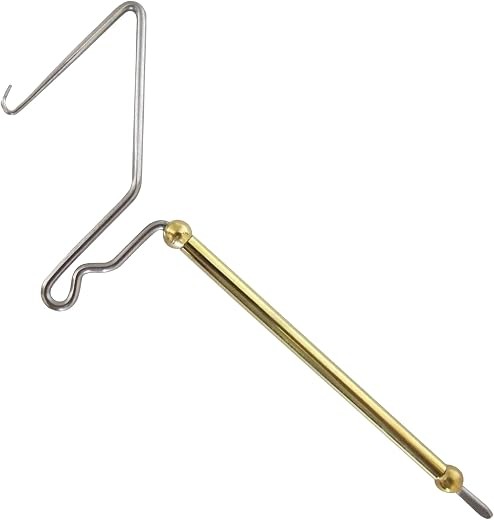
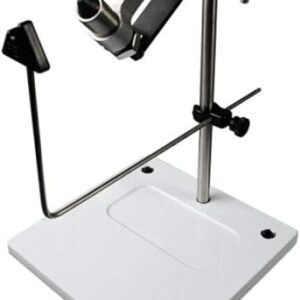
The figures are millimetres. 77.17, 26.77 and 3.94 millimetres come to about 3.0 by 1.05 by 0.16 inches, which matches the photograph, matches the package dimensions and matches a tool the listing elsewhere describes as compact enough to fit a tackle bag. The numbers are correct; the unit attached to them is not.
This is worth more than a shrug, because it is the clearest example of what goes wrong across this whole shelf. The data exists. It was measured. It was entered. And it was filed against the wrong unit, which makes it look like a specification while being unusable as one — a worse outcome than leaving the field blank, because a blank field is visibly empty.
Limitations of This Fly Tying Whip Finisher
The tool itself is small-framed, which is the trade-off behind the hook sizes it names. On large saltwater and pike patterns a bigger frame is easier to steer, because the loop has to clear a bulky head and a short tool brings your knuckles into the hackle. Nothing on the listing addresses the upper end.
The specification block is the thinnest on the shelf. There is no warranty field, no structured material field and no weight for the tool itself — only a package weight of 0.01 kg. The “Suggested Users” field answers “Fly Tying Equipment, Fly Tying Tools”, which names the product category rather than any kind of user, and the part number is “RWhipFinisher”, which is the product’s own name with the spaces taken out.
What the listing gets right
- Second-highest rating count on this shelf at 338, at the lowest price
- The only listing on the shelf that names a hook size its tool is aimed at
- Rotating head, which is what makes a whip finish possible one-handed
- Stainless steel and brass construction, named in the description
- Cheapest item on this shelf at $13.75
- Listed since September 2016, so the rating count has nine years behind it
- Compact enough to live in a travel kit
- Addresses the one knot most beginners get wrong
What it does not tell you
- Publishes item dimensions of 77.17 x 26.77 x 3.94 inches — the figures are millimetres
- Those dimensions make the tool eighteen times longer than its own package
- Only nine structured fields, three of which are sizes and weights
- No structured material field, despite naming materials in prose
- No warranty field at all
- The “Suggested Users” field answers with the product category
- The part number is the product name with the spaces removed
- Four of the five description bullets are about fishing, not about the tool
Setting Up This Fly Tying Whip Finisher
Learning the tool takes about twenty minutes and is best done on a bare hook with no materials on it. Hook the thread, rotate the head so the loop opens, orbit the hook four or five times keeping the loop under light tension, then unhook one arm and pull the thread tight. The wraps pull down under themselves and the knot is finished.
The usual failure is tension. Too loose and the loop collapses off the arms mid-orbit; too tight and the wraps bind before they seat. Light and even is what works, and the rotating head is what makes even tension possible, because you are turning the tool rather than your wrist.
Maintenance is nothing beyond keeping head cement off the arms. Cement sets on the wire and then the thread catches on the ridge instead of sliding. If it does set, it comes off with a fingernail rather than a solvent.
Who Should Buy This Fly Tying Whip Finisher?
Buy this fly tying whip finisher if you are tying small flies, or if you are still finishing heads with half hitches and wondering why they come apart. At $13.75 it is the cheapest genuine capability on this shelf: nothing else here changes what you can tie, and this does, because it makes a size 20 head possible at all.
Skip it if your tying runs to large streamers and saltwater patterns, where a longer-framed finisher is less awkward, or if you have already built the finger technique and are happy with it. Plenty of good tiers never use one. They also do not tie many size 20 midges.
The Verdict
At $13.75 with 338 ratings behind it and a named hook size, this is the best-value purchase on the shelf and scores 8.1 — held back only by a specification block that reports the tool as six feet five inches long.
| Value for money | 9.6 / 10 |
| Owner evidence | 9.2 / 10 |
| Hook-size disclosure | 8.6 / 10 |
| Mechanism | 8.8 / 10 |
| Structured specification depth | 4.0 / 10 |
| Unit accuracy | 2.0 / 10 |
| Build materials | 8.0 / 10 |
| Beginner suitability | 9.4 / 10 |
Fly Tying Whip Finisher — Frequently Asked Questions
The questions buyers ask most often, answered from the listing.
What does a fly tying whip finisher actually do?
It holds a loop of thread open so you can wrap the loop around the standing thread several times and then pull the loop closed under the wraps. The result is a knot that is locked by its own turns rather than by varnish. A half hitch does roughly the same job with one turn, which is why half-hitched flies come apart at the head first.
What hook sizes does this fly tying whip finisher suit?
The listing says it is “especially awesome for smaller hooks, like size 18 and 20”. That is marketing language, but it is also the only hook-size statement on any of the five listings on this shelf apart from the Peak vise’s jaw range, and small hooks are precisely where a finisher earns its money, because there is no room for fingers.
Why do the published dimensions say 77 inches?
Because the figures are millimetres with the wrong unit attached. 77.17, 26.77 and 3.94 millimetres come to about 3 by 1 by 0.16 inches, which matches both the photograph and the listing’s own package dimensions of 4.17 by 2.48 by 0.35 inches. Read as inches, the field claims a tool six feet five inches long inside a four-inch packet.
Is a rotating head worth paying for on a fly tying whip finisher?
The rotating head is the mechanism, not an upgrade. A fixed hook finisher forces you to turn your whole wrist to lay each wrap, and the loop collapses. A head that swivels lets the loop stay open while the tool orbits the hook. At this price there is no fixed-head version worth buying instead.
Check the current fly tying whip finisher price on Amazon
Listing figures last read on 12 October 2026. We earn a commission on qualifying purchases made through the Amazon link above, at no extra cost to you.
Related reviews
Other reviews from the same bench:


There are no reviews yet.