
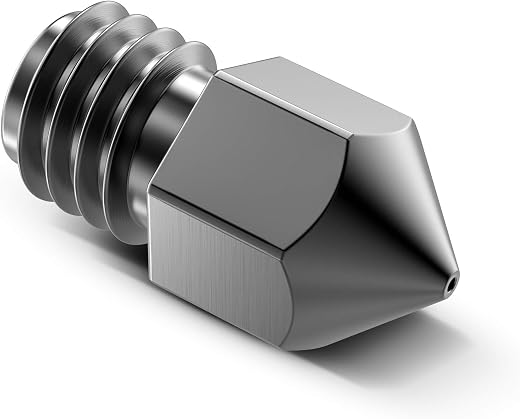
Dawnblade Tungsten Carbide Nozzle Review (2026): Worth It?
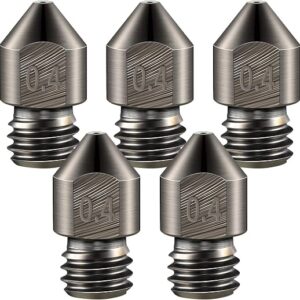
A single tungsten carbide MK8 nozzle at $26.39 that publishes four material properties no other listing on this shelf discloses: 9 Mohs hardness, 550 degrees Celsius temperature resistance, 130 W/m.K thermal conductivity and a 4.5 um/m.C expansion coefficient.
$26.39
Dawnblade Tungsten Carbide Nozzle Review (2026): The Only Listing That Publishes Its Numbers
Forty-two nozzle listings were gathered for this comparison and exactly one of them publishes a material property. This is it.
A single tungsten carbide MK8 nozzle at $26.39, with a stated hardness of 9 Mohs, temperature resistance to 550 degrees Celsius, thermal conductivity of 130 W/m.K and an expansion coefficient of 4.5 micrometres per metre per degree. It also publishes the equivalent figures for ruby and hardened steel, which is a comparison the rest of the shelf declines to invite.
In short: this tungsten carbide nozzle earns 8.4/10 from the Blue Rays Technologies team. The rest of this tungsten carbide nozzle review sets out exactly how that score was reached.
This review is research-based. We did not physically test these products; specifications, ratings and prices are taken from the live listings on the date shown. The full group comparison is in our Best 3D Printer Nozzle (2026): 5 Picks Compared guide.
What is in this tungsten carbide nozzle review
- Key Specifications
- Why This Tungsten Carbide Nozzle Is the Most Useful Page on the Shelf
- The Specification Fields Describe a Pipe Fitting
- Nine Listings, One Price, Seven Rating Pools
- Limitations and Compromises
- Setting Up This Tungsten Carbide Nozzle
- Who Should Buy This Tungsten Carbide Nozzle?
- The Verdict
- Tungsten Carbide Nozzle — Frequently Asked Questions
- Related Reviews
Key Specifications
Published specifications for this tungsten carbide nozzle, taken from the manufacturer listing.
| Reviewed model | tungsten carbide nozzle |
| Brand | Dawnblade |
| Material | Tungsten carbide |
| Stated hardness | 9 Mohs |
| Stated temperature resistance | 550 degrees Celsius |
| Stated thermal conductivity | 130 W/m.K |
| Stated expansion coefficient | 4.5 um/m.C |
| Orifice diameter | 0.4 mm |
| Filament inlet | 1.75 mm |
| Thread type | M6 |
| Exterior finish | Nickel |
| Fitting standard | MK8 |
| Quantity | 1 count |
| Item dimensions | 0.51 x 0.31 x 0.31 in |
| Manufacturer | Dawnblade |
| Manufacturer part number | Dawnblade210315 |
| Stated compatibility | MK8 hotends on Ender and CR series, CR-10 all-metal hotend, Prusa i3, Anet A8, RepRap |
| Stated filaments | Carbon fibre, PEEK and similar |
| Amazon rating | 4.3 from 81 ratings |
| Price at review | $26.39 |
Why This Tungsten Carbide Nozzle Is the Most Useful Page on the Shelf
This listing publishes four numbers: hardness of 9 Mohs, temperature resistance up to 550 degrees Celsius, thermal conductivity of 130 W/m.K and an expansion coefficient of 4.5 micrometres per metre per degree. No other listing gathered for this comparison publishes a single material property. The buyer of a $8.49 five-pack is told the steel is hard; the buyer of this part is told how hard, how hot, how conductive and how much it grows when heated.
The listing goes further and publishes its rivals’ figures too. It puts ruby at 45 W/m.K and hardened steel at 26 W/m.K for thermal conductivity, and copper-plated at 16.7 micrometres per metre per degree for expansion. Whether or not those comparative values are exact, a product page that invites the comparison is doing something the rest of the category refuses to do.
The Specification Fields Describe a Pipe Fitting
The structured specification block on this listing reads: “Inlet Connection Type = Barb”, “Outlet Connection Type = Barb”, “Number of Ports = 1”, “Inlet Connection Size = 6.35 millimeters”, “Outlet Connection Size = 7.9 millimeters” and “Thread Type = M6”. Only the last of those is a nozzle specification. The rest is the field set Amazon uses for hydraulic and plumbing fittings, filled in because it was the template available.
The two connection sizes are the revealing part. The hole that matters on this product is 0.4 mm and the filament that enters it is 1.75 mm. Neither 6.35 mm, which is exactly a quarter of an inch, nor 7.9 mm describes any part of the filament path. They describe the outside of the body. A shopping filter reading these fields would class this part alongside brass barb fittings for garden irrigation, which is a reasonable summary of how little the retail taxonomy understands what it is selling.
Nine Listings, One Price, Seven Rating Pools
The forty-two listings gathered for this comparison include seven separate tungsten carbide nozzles all priced at exactly $27.92, each cut for a different printer: Prusa MK4, QIDI Q2, Creality K2, FlashForge AD5X, Bambu Lab H2D, E3D V6 and a generic MK8. Their rating counts are 40, 35, 32, 20, 18, 11 and 9. An eighth sits at $39.77 and shares its rating count of exactly 35 with one of the $27.92 listings.
This is the opposite of the pooled-rating problem that normally distorts this catalogue, where one product’s reviews are shared across six merged listings and flatter all of them. Here a single product has been split into eight pages by printer fitment, so a part with roughly 165 buyers behind it presents as eight products with fewer than fifty each, and every one of them falls below the fifty-rating threshold this comparison applies or sits barely above it. The consolidated Dawnblade listing reviewed here, with 81 ratings on one page, is the only carbide nozzle on the shelf with enough feedback in one place to assess.
Limitations and Compromises
The price is the obvious objection. $26.39 buys one nozzle. The same money buys three five-packs of hardened steel, and for most abrasive printing hardened steel is sufficient. The case for carbide is specific: continuous abrasive printing, or materials like PEEK that need the 550-degree headroom.
Eighty-one ratings is the smallest evidence base of the five products here, against 2,186 for the hardened steel pick. For a part sold on lasting a long time, that is an uncomfortable combination, because a small sample of recent buyers cannot yet have discovered whether it lasts.
Carbide is hard but brittle, and the listing says nothing about that. Hardness of 9 Mohs is close to sapphire; sapphire chips. A dropped carbide nozzle, or one cross-threaded into a hotend, is more likely to fracture than a steel one is to deform. Two of the competing carbide listings in this comparison advertise themselves as “Less Brittle” bimetal designs, which is an admission from inside the category that brittleness is a real concern.
Setting Up This Tungsten Carbide Nozzle
Fit this nozzle hot, like any other, but with more care than usual. Heat the hotend to printing temperature, retract the filament, and use a correctly sized socket on the hex flats. Carbide will not forgive being gripped in pliers or cross-threaded, and at this price a fractured nozzle is an expensive mistake.
The thread is M6 and the fitting is MK8, listed as compatible with Ender and CR series machines, the CR-10 all-metal hotend, Prusa i3, Anet A8 and RepRap. The nickel exterior finish is a plating on the body rather than part of the carbide tip, and it is cosmetic.
Because carbide conducts heat better than steel at 130 W/m.K against 26, a printer tuned for a steel nozzle will usually want its temperature brought back down a few degrees after fitting this one. That is the reverse of the adjustment most buyers expect when moving up the price ladder.
Who Should Buy This Tungsten Carbide Nozzle?
This one suits some workshops far better than others.
- You print carbon fibre, glass-filled or metal-filled filament continuously
- You print PEEK, PEI or polycarbonate and need headroom above 300 degrees
- You want material properties published rather than adjectives
- You would rather buy one nozzle every two years than five every six months
- You run a machine with an MK8 hotend and an all-metal hot zone
- You value a single consolidated rating pool over a fragmented one
Look elsewhere if any of the following describes you.
- You print PLA and PETG and nothing else
- You want the lowest cost per nozzle on the shelf
- You change nozzles often and sometimes clumsily
- Your printer uses a proprietary nozzle assembly
- You need a large body of long-term buyer feedback before spending
The Verdict
This is the best-documented product in the comparison and the one that makes the rest of the shelf look evasive. Four published material properties, a stated comparison against ruby, hardened steel and copper-plated alternatives, and a clear statement of the filaments it exists for. On specification quality alone it would top the list.
It scores 8.4 rather than higher on price and evidence. $26.39 for a single nozzle is three times the cost of the hardened steel five-pack that will serve most buyers, and 81 ratings is a thin record for a part whose whole claim is longevity. For the specific buyer printing abrasive filament every week, it is the right purchase and the honest one.
Review score for this tungsten carbide nozzle: 8.4/10. Strong on hardness, thermal conductivity, temperature headroom and published specification; the compromises are a high single-unit price, only 81 ratings, plumbing-template specification fields and no stated service life. Blue Rays Technologies researches independently and earns a commission from qualifying purchases, which never affects the score.
If you want the current price and the latest buyer feedback, it is listed as the Dawnblade tungsten carbide nozzle on Amazon. For the regulatory background on nozzle alloys, the EPA definition of lead free under the Safe Drinking Water Act sets the American figure at a weighted average of 0.25 per cent.
Tungsten Carbide Nozzle — Frequently Asked Questions
The questions buyers ask most often about this tungsten carbide nozzle, answered plainly.
Is a tungsten carbide nozzle worth the money?
If you print abrasive filament continuously, yes, because the orifice holds its diameter far longer than brass or steel. If you print PLA, the money is better spent on a five-pack of hardened steel.
How hard is tungsten carbide compared with a ruby nozzle?
This listing states 9 Mohs for both, and claims a thermal conductivity advantage: 130 W/m.K against 45 W/m.K for ruby. Those are the listing’s own figures.
Can it print PEEK?
The stated temperature resistance is 550 degrees Celsius, which is well above PEEK’s processing range, and the listing names PEEK directly. Whether your printer’s hotend and heater can reach those temperatures is a separate question.
Why are there so many versions of this nozzle at the same price?
Sellers list the same part separately for each printer fitment. Seven listings in this comparison sit at exactly $27.92 with rating counts from 9 to 40, which splits the evidence base into pieces too small to judge.
Related Reviews
If this nozzle is not quite the right fit, these Blue Rays Technologies reviews cover the nearest alternatives.
- Mudder hardened steel nozzle review — best overall in this group
- Creality brass nozzle review — best budget and size sampler in this group
- SUNLU S1 Plus 3D printer filament dryer review — the other half of keeping an extruder working
Last updated: 7 October 2026. Pricing and availability for this nozzle change frequently; check the retailer listing for the current figure.


There are no reviews yet.