
Philips 3300 Espresso Machine Review — Best LatteGo Bean-to-Cup Machine?
Philips 3300 Series Fully Automatic Espresso Machine Review (2026) — Enough Café for a Kitchen Counter?
A bean-to-cup machine only earns its counter space if the coffee is good enough to stop you buying it elsewhere and the cleaning is quick enough that you still use it on a Tuesday morning. Most fully automatic machines get the first part right and lose on the second, because the milk system is a nest of silicone tubes that has to be flushed, stripped and rinsed every single day.
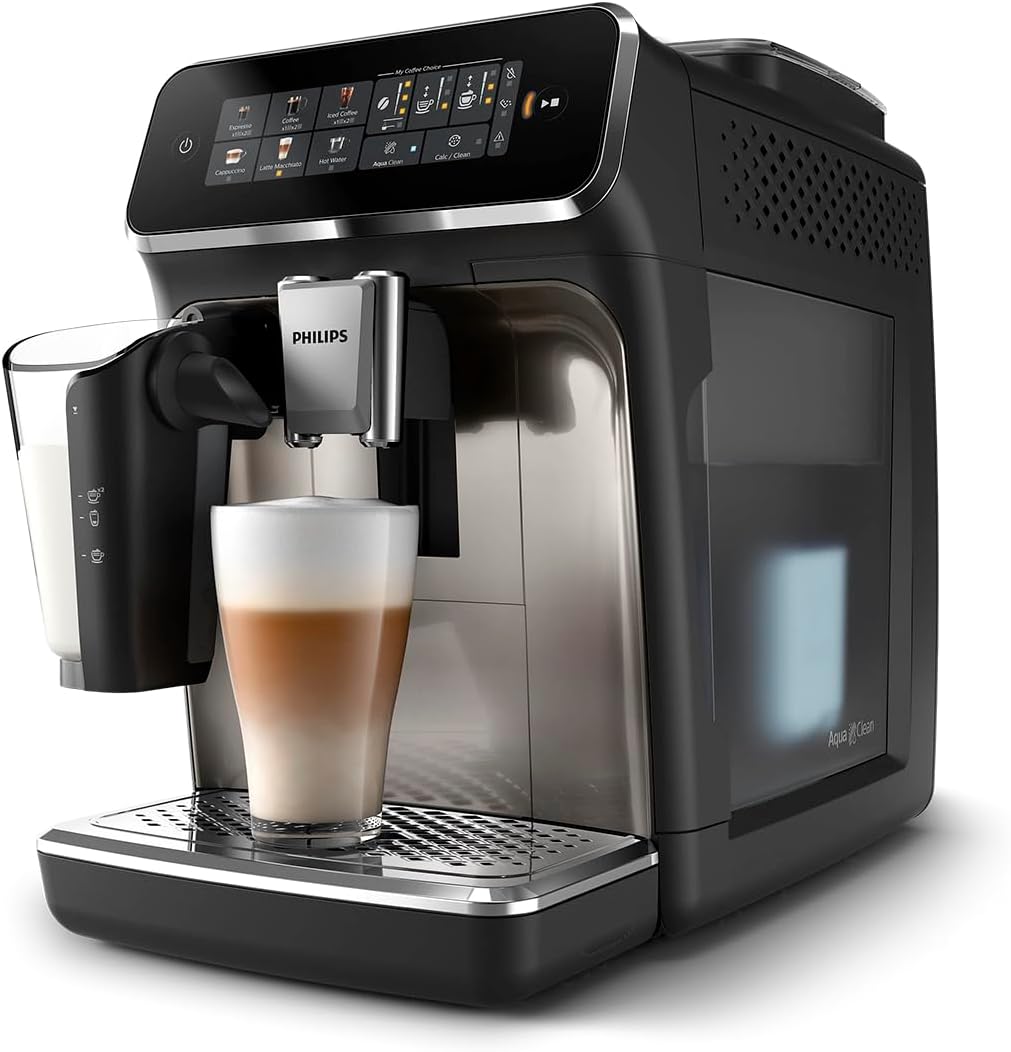
That is the specific problem this machine was built around. The Philips 3300 espresso machine (EP3347/90) replaces the usual tubing with LatteGo: a two-piece carafe that separates in seconds and goes in the dishwasher. Add a 100% ceramic grinder with twelve settings, a colour touch display, SilentBrew noise reduction and an AquaClean filter rated for 5,000 cups without descaling, and you have a machine that is trying to win on maintenance rather than on specification sheets. It holds a 4.2-star average across more than 2,100 Amazon ratings at around $420.
In short: the Philips 3300 espresso machine earns 8.3/10 from the SoftPickr team. The rest of this review sets out exactly how that score was reached.
What is in this Philips 3300 espresso machine review
- Key Specifications
- Coffee Quality, Grinder and the SilentBrew Claim
- LatteGo Milk System on the Philips 3300 Espresso Machine
- Maintenance, AquaClean and Running Costs
- Limitations and Compromises
- Setup, Cleaning and Daily Routine
- Who Should Buy It?
- SoftPickr Verdict
- Frequently Asked Questions
- Related Reviews
Key Specifications
Published specifications for the Philips 3300 espresso machine, taken from the manufacturer listing.
| Reviewed model | Philips 3300 espresso machine |
| Brand | PHILIPS |
| Model | EP3347/90 — 3300 Series LatteGo |
| Type | Fully automatic bean-to-cup |
| Grinder | 100% ceramic burrs, 12 settings |
| Milk system | LatteGo, 2 parts, no tubes |
| Beverages | Espresso, coffee, iced coffee, cappuccino, latte macchiato, hot water |
| Display | Colour touchscreen |
| Water tank | 1.8 litres |
| Filter | AquaClean, up to 5,000 cups |
| Noise | SilentBrew, 40% quieter than previous generation |
| Dimensions | 17.04″W x 9.68″D x 14.6″H |
| Weight | 8 kg |
| Amazon rating | 4.2 / 5 from 2,100+ ratings |
Everything that follows is based on those published figures for the Philips 3300 espresso machine, together with aggregated owner feedback from verified buyers.
Coffee Quality, Grinder and the SilentBrew Claim
The grinder is the part that matters most and the part buyers can least easily judge. This is a 100% ceramic burr set with twelve grind settings, and ceramic matters for two practical reasons: it stays sharp far longer than coated steel, and it transfers less heat into the beans during grinding, which protects the aromatics you paid for. Philips rates the burrs for the life of the machine, and long-term owner reports broadly support that.
Brewing runs through a removable brew group at up to 15 bar, with an adjustable spout that clears a tall travel mug. The My Coffee Choice function stores strength, volume and milk level per drink, so the espresso your partner likes and the long black you like are one button apart rather than a nightly negotiation. Five varieties come preset — espresso, coffee, iced coffee, cappuccino and latte macchiato — plus hot water for tea.
SilentBrew is marketed as 40% quieter than the previous generation. In practice this is not a silent machine; grinding still wakes a light sleeper through a closed door. What the damping actually changes is the pitch: the grind is a lower, shorter growl rather than the shriek of a cheap steel burr, and the brew cycle itself is genuinely quiet. Treat it as a meaningful improvement rather than the whisper the name implies.
LatteGo Milk System on the Philips 3300 Espresso Machine
LatteGo is the reason to buy this machine over its rivals. The carafe is two plastic parts with no tubes, no valves and no third-party cleaning cartridges. Milk is drawn up, mixed with steam in a high-speed chamber and dropped into the cup as microfoam. When you are done, the two parts pull apart and rinse under a tap in about fifteen seconds, or go on the top rack of the dishwasher.
The froth itself is dense and stable rather than airy, and it works with semi-skimmed, whole, oat and soy milk with only minor texture differences. It will not produce latte art — the foam is too stiff and it lands after the coffee rather than being poured — but for a cappuccino or a flat white you drink at home, it is comfortably better than a wand you have not practised with.
The trade is capacity and temperature. The carafe holds enough for roughly two milky drinks before a refill, and the finished drink lands warm rather than hot, which is normal for automatic frothers and still catches people out. Pre-warming the cup with the hot-water function solves most of it.
Maintenance, AquaClean and Running Costs
The machine rinses its own brew circuit at power-on and power-off, and the brew group slides out for a rinse under the tap once a week — no tools, no lubricant beyond the occasional grease tube Philips supplies. That weekly rinse is the entire mandatory routine besides emptying the grounds drawer.
AquaClean is the headline maintenance feature: fit the filter when prompted and Philips states you will not need to descale for up to 5,000 cups, which for a two-cup-a-day household is roughly seven years of filters instead of descaling chemicals. The catch is that filters cost money and must be replaced roughly every three months, so you are trading a messy annual job for a small recurring one. In hard-water areas that trade is worth making; in soft-water areas the maths is closer.
Limitations and Compromises
No product is perfect at this price. Here is where the Philips 3300 espresso machine asks you to compromise.
The first is price. At around $420 this sits above every pod machine and most manual espresso setups, and you can buy a very good grinder and a semi-automatic for the same money if you enjoy the process. This machine is for people who want the coffee without the ritual.
The second is the milk temperature and carafe size already covered — fine for one or two drinks, frustrating when you are making four. The third is the 4.2-star average itself, which is honest rather than flattering: the recurring complaints in lower-scored reviews concern grinder noise, occasional brew-group error messages and customer service response times rather than coffee quality.
Finally, this is a European-specification appliance in places; listings vary between 230 V and 120 V versions depending on the seller, so confirm the voltage and plug type on the specific listing before ordering, particularly from a marketplace seller rather than Philips directly.
Setup, Cleaning and Daily Routine
Setup takes about twenty minutes: fit the AquaClean filter to the 1.8-litre tank, run the priming cycle, set water hardness from the supplied test strip and dial the grinder to a middle setting. Adjust grind only while the machine is actually grinding — turning the collar on a stationary burr set is the fastest way to damage it, and it is the single most common owner mistake.
Day to day: empty the grounds drawer every twelve to fifteen drinks, rinse the two LatteGo parts after milk use, and pull the brew group weekly for a warm-water rinse with no detergent. Wipe the drip tray when the red float appears. Everything else the machine prompts you for on the touch display, including the filter change and the rare descale.
Who Should Buy It?
The Philips 3300 espresso machine is the right buy for the following people.
- Households drinking two or more coffees a day who want café-style drinks without learning to pull shots
- Anyone who has abandoned a previous automatic machine because cleaning the milk system was a chore
- Milk-drink drinkers — cappuccino, latte macchiato and flat white are where this machine is strongest
- Offices and home offices where several people want different drinks from one button
- Buyers in hard-water areas who want to avoid regular descaling cycles
Look elsewhere if you want latte art, if you enjoy the manual espresso process and would rather spend the budget on a grinder and portafilter, or if you only drink one black coffee a day — a filter machine or a moka pot will serve you better for a fraction of the outlay.
SoftPickr Verdict
SoftPickr score: 8.3/10. This is a machine that solves the right problem. Coffee quality from the ceramic burrs is very good for the class, but the reason the Philips 3300 espresso machine keeps getting used is that the milk system takes fifteen seconds to clean instead of five minutes, and the AquaClean filter removes descaling from the calendar for years at a time.
- 100% ceramic grinder with 12 settings and long service life
- LatteGo carafe strips to two dishwasher-safe parts with no tubes
- AquaClean filter avoids descaling for up to 5,000 cups
- Touch display with per-drink strength, length and milk memory
- Removable brew group makes weekly maintenance a two-minute job
The compromises are real: warm rather than hot milk drinks, a small carafe, audible grinding despite SilentBrew, and a price that only makes sense at a genuine two-or-more-cups-a-day habit. Meet that habit and the machine pays for itself against café prices inside a year, which is the only arithmetic that matters here.
This Philips 3300 espresso machine verdict is assigned by the SoftPickr editorial team from published specifications, manufacturer documentation and aggregated owner feedback. We do not accept payment for a score. Prices and availability change often — check the retailer listing before you buy.
Frequently Asked Questions
Common questions buyers ask about the Philips 3300 espresso machine, answered.
Does the Philips 3300 espresso machine take ground coffee as well as beans?
Yes. There is a separate pre-ground chute alongside the bean hopper, which is the standard way to make a single decaf without emptying the hopper. It takes one dose at a time and bypasses the grinder entirely for that drink.
How often does it actually need descaling?
With the AquaClean filter fitted and replaced when prompted, Philips rates the machine for up to 5,000 cups before a descale is required. Without the filter, or in very hard water, expect the descale prompt every few months instead.
Can it make latte art?
No. LatteGo produces dense microfoam that is dispensed after the coffee rather than poured, so the pattern cannot be formed. The foam quality itself is good; it is the delivery method that rules art out.
What is the difference between the 3300 and the 5500 series?
The 5500 adds more preset beverages, a larger display and extra customisation profiles. The grinder, brew group and LatteGo system are broadly comparable, which is why the 3300 is the better value of the two for most households.
Bean-to-cup machines are discounted heavily around holiday sales and the EP3347/90 often drops well below list. Check the current Philips 3300 price and voltage on Amazon — confirm the model code and plug type on the listing before ordering.
Related Reviews
If the Philips 3300 espresso machine is not the right fit, these SoftPickr reviews cover the nearest alternatives.
- Ninja ProChef Wireless Thermometer Review
- OXO Good Grips Kitchen Scale Review
- Cuisinart Fondue Set Review
Last updated August 2026. This Philips 3300 espresso machine review is written and maintained by the SoftPickr editorial team.


There are no reviews yet.